
Why Different Hair Origins Create Completely Different Wig Experiences
How Hair Source Affects Texture, Longevity, and the Overall Wig Experience
Why Different Hair Origins Create Completely Different Wig Experiences
When I first started exploring human hair products, I honestly didn't quite understand why so many people placed such a strong emphasis on "hair origin" when purchasing wigs or bundles. Back then, I assumed that as long as it was genuine human hair, the differences couldn't be all that significant. However, after wearing wigs more frequently—and having the opportunity to experience various types of straight wigs, curly wigs, and bundles—I gradually came to a realization: where the hair originates truly has a direct impact on the wearing experience, styling results, and overall longevity of the product.
Often, when you perceive a particular hair type as exceptionally smooth and fluid, or find a specific curly texture to look remarkably natural, these qualities are fundamentally rooted in the inherent characteristics of the hair itself. Because human hair from different regions varies in strand thickness, cross-sectional shape, and natural texture, the final aesthetic results they produce are entirely distinct.
Chinese Hair: Ideal for Sleek, Straight Styles with Excellent Drape
Chinese hair has long been a staple raw material for many mid-to-high-end straight wigs; in particular, hair sourced from regions such as Yunnan, Xinjiang, Hunan, and Sichuan remains highly sought-after within the industry.
Its defining characteristic is that the individual strands are relatively thick with a predominantly circular cross-section. Consequently, the hair appears exceptionally straight and sleek, possessing a strong, fluid drape.
I first truly appreciated the advantages of Chinese hair when wearing a "silky straight" wig. Rather than floating lightly on the surface, the hair fell naturally downward, creating a visually sophisticated and premium aesthetic. Furthermore, because it is inherently resistant to both heat and washing, the hair maintains its structural integrity remarkably well—even with frequent use of flat irons.
This quality aligns perfectly with the specific needs of many Caucasian users regarding straight hair. Since users in Western markets often favor high-temperature styling, hair of lesser durability can easily become dry and brittle over time. However, the greatest strength of Chinese hair lies in its stability and longevity; even after repeated washing and styling, it rarely succumbs to severe frizz or damage.
Indian Hair: Characterized by a Distinctive, Natural Fullness
Indian hair represents a stylistic departure entirely distinct from that of Chinese hair. Overall, it possesses a softer texture, and many strands naturally feature a gentle curvature; as a result, wigs crafted from Indian hair tend to avoid looking overly "stiff" or rigid. Textures such as "body wave" and "loose wave" look particularly natural when created using Indian hair.
This is, in fact, the very reason why so many Black women in Western countries prefer Indian hair. Its individual strands are relatively fine, and their cross-section resembles an inverted figure-eight; consequently, the overall texture closely mimics the natural hair characteristics of many Western women. When incorporated into a lace wig, it exhibits a very natural movement and avoids looking overly dense or heavy.
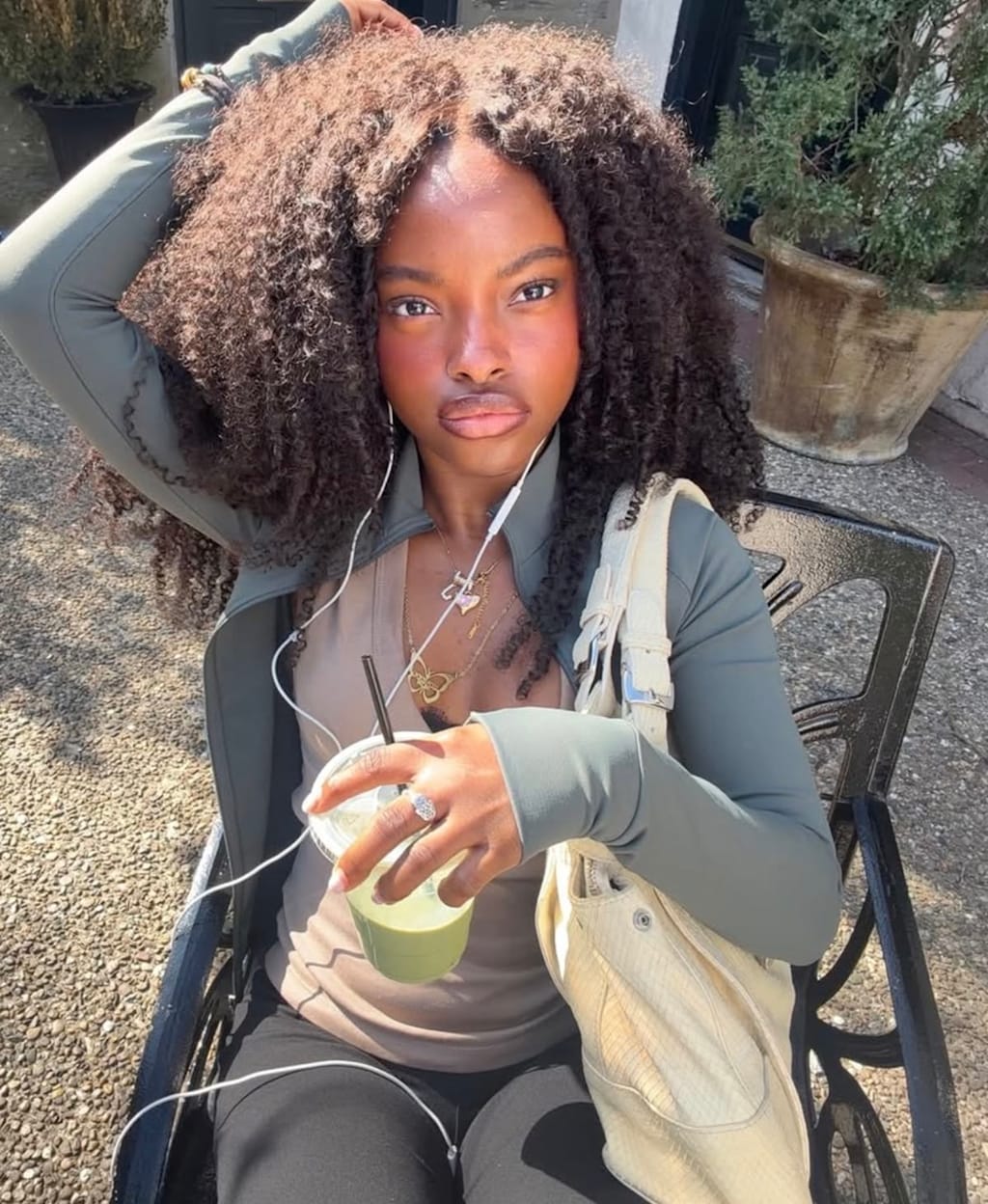
I once wore a kinky curly wig made from Indian hair, and my strongest impression was how incredibly lightweight it felt. The hair didn't weigh down my scalp, and the airy volume felt wonderfully comfortable—even a casual toss of the hair looked completely natural.
However, compared to Chinese hair, it is not quite as resilient to rigorous styling. If subjected to prolonged bleaching and dyeing, or frequent heat straightening, its lifespan will diminish somewhat more noticeably. For this reason, many people regard Indian hair as the quintessential choice for a "natural aesthetic," rather than a variety prized primarily for extreme durability.
European Hair: Highly Realistic, Yet High in Price
European hair has long been considered a relatively rare and scarce commodity. Its individual strands are exceptionally fine and soft, featuring a cross-section that resembles an ingot shape; as a result, the overall appearance is remarkably airy and lightweight. This is particularly true for naturally light-colored varieties, which possess an incredibly authentic and lifelike quality. Many high-end Jewish wigs specifically utilize European hair, largely because the result—once worn—closely mimics the natural texture and appearance of Caucasian hair.
However, the high cost of European hair isn't solely due to its "rarity"; it stems primarily from its inherently limited supply, as well as the fact that much of this hair is preserved in its natural, unprocessed state.
To be honest, while European hair is undeniably premium, it isn't necessarily the right choice for everyone. Because of its fine, soft texture, its durability isn't quite as robust as many people might imagine. In fact, if subjected to frequent heat styling, it is actually more prone to damage than Chinese hair.
Ultimately, I realized: finding what suits *you* is far more important than simply choosing "the most expensive" option.
As I gained more experience with a wider variety of human hair wigs, I gradually came to understand that no single hair type is universally suitable for everyone.
Those who prefer a "silky straight" aesthetic tend to favor Chinese hair; those seeking a natural, voluminous look often gravitate toward Indian hair; and Black women who regularly wear curly wigs frequently show a preference for Burmese hair.
As for European hair, it serves more as a high-end, niche option.
What truly matters isn't which hair type holds the "highest rank," but rather whether it aligns with your daily habits, your styling requirements, and your overall personal aesthetic.
About the Creator
Enjoyed the story? Support the Creator.
Subscribe for free to receive all their stories in your feed.
Comments
There are no comments for this story
Be the first to respond and start the conversation.