
Why Calling a Blocked Drain Plumber Early Saves You From a Much Bigger Mess
Blocked Drain Plumber
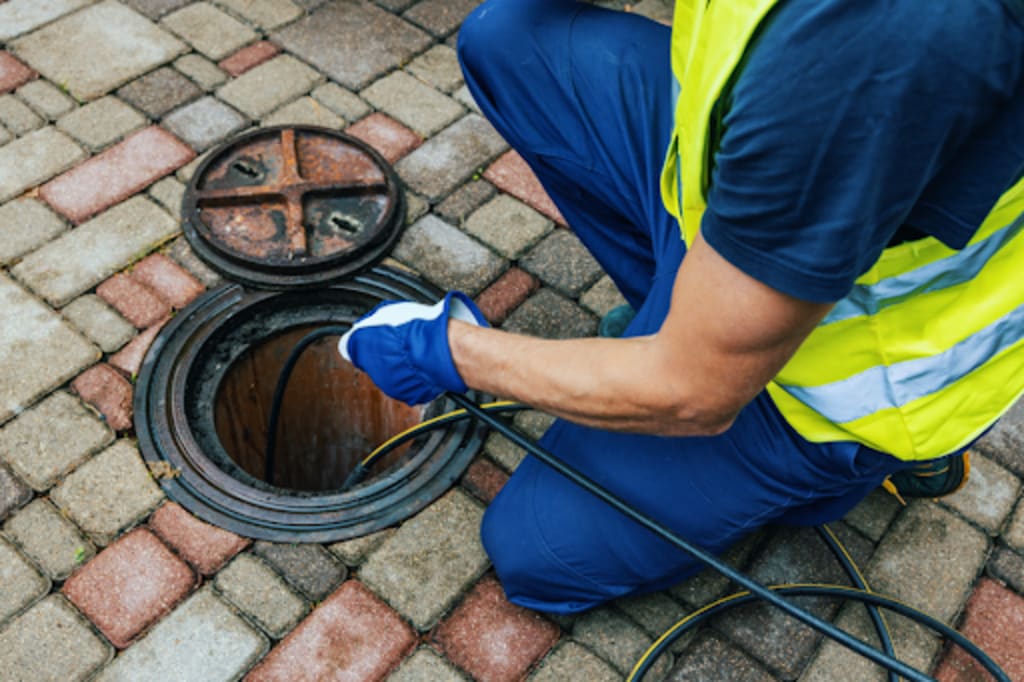
A slow drain gets ignored more often than almost any other household problem. Water takes longer to clear; people adjust their habits around it, and life continues. What does not continue is the blockage staying the same size. Grease hardens. Hair binds with soap residue and thickens. Tree roots that found a hairline crack in a pipe last spring have been growing steadily ever since. The drain that was slow in February is completely blocked by August, and by then there is usually water backing up somewhere it should not be. A blocked drain plumber called at the slow-drain stage costs far less in time, disruption, and repair work than the same plumber called when the situation has already turned into an emergency.
That Gurgling Sound Means Something
When a drain gurgles, it is not a plumbing quirk. It is air being forced back up through a partial blockage – the pipe pushing back against something that is already restricting the flow. Most households respond to this with a bottle of chemical drain cleaner, which addresses the problem in the same way that cough syrup addresses pneumonia. It may reduce the immediate irritation while the underlying condition continues developing. Chemical cleaners dissolve soft organic matter near the drain opening. They do not reach compacted grease further down the line. They have no effect on root intrusion. They cannot tell anyone what condition the pipe wall is in behind the blockage. The gurgling returns within weeks, and the cycle repeats.
Grease Does Not Leave the Way It Enters
Kitchen drain blockages are misunderstood in one specific way that causes repeated problems. Grease enters a drain as a warm liquid — it pours in easily and seems to clear without issue. What happens inside the pipe is different. As the grease cools, it solidifies against the pipe wall, narrowing the internal diameter incrementally with every wash-up. Food particles catch on it. More grease layers over the top. Over months, what was a clear pipe becomes a significantly restricted one, and the blockage that eventually forms is dense, compacted, and entirely unresponsive to anything that does not involve mechanical force or high-pressure water jetting. A blocked drain plumber with a jet-rodding machine clears this in minutes. A homeowner with a plunger does not
Roots Are the Problem Nobody Expects
Tree root intrusion is one of the most common causes of serious drain blockages, and it is almost always a surprise to the homeowner when it is identified. Fine feeder roots enter pipes through joint gaps or hairline cracks — gaps that may have existed for years without causing obvious symptoms. Once inside, roots grow towards moisture and nutrients, expanding until they fill the pipe cross-section entirely. Properties with mature trees anywhere near underground drain lines are consistently at higher risk, but even smaller ornamental shrubs can cause significant root intrusion given enough time. A blocked drain plumber using a CCTV camera identifies this immediately. Nobody finds it with a plunger.
The Camera Changed Drain Work Permanently
Before CCTV drain cameras became standard equipment, blocked drain work involved a fair amount of educated guessing. A plumber would clear a blockage and hope the underlying cause had been addressed. If the problem returned, the process repeated. Camera inspection changed this entirely. Feeding a camera directly into the pipe shows exactly where a blockage sits, what it is made of, and critically, what the pipe structure looks like behind it. A pipe that has partially collapsed, shifted at a joint, or developed a belly — a low point where debris consistently collects — will keep producing blockages regardless of how many times it is cleared. The camera finds this. Without it, the same drain gets cleared repeatedly without the actual problem ever being resolved.
Recurring Blockages Are Not Bad Luck
A drain that blocks once is a drain that needs clearing. A drain that blocks repeatedly, or that develops problems in several locations across the property within a short period, is describing a systemic issue. Ageing clay pipes that have cracked and shifted, a main sewer connection running at reduced capacity, or a shared drain line carrying more than it was designed to handle — these produce recurring symptoms that look like individual blockages but are not.
Conclusion
Calling a blocked drain plumber at the first sign of trouble rather than the last possible moment changes what the job involves and how disruptive it turns out to be. Early intervention means clearing a partial blockage before it becomes a full one, identifying a structural issue before it causes damage, and understanding what is actually happening inside the pipe rather than reacting to whatever symptom appears next. Drains that are dealt with properly do not keep coming back — and that alone makes early action the more sensible choice every time.
About the Creator
Enjoyed the story? Support the Creator.
Subscribe for free to receive all their stories in your feed.
Comments
There are no comments for this story
Be the first to respond and start the conversation.