
What Severe Thunderstorms Actually Do to Your Roof (And How to Spot Hidden Damage)
Why the most expensive post-storm damage isn't the fallen tree branch on your lawn, but the subtle structural breakdowns hiding in plain sight.

Severe summer thunderstorms can reset a neighborhood's rhythm in minutes. High wind gusts bend tree canopies, torrential downpours blur streetlights, and driving hail rattles windowpanes. But as quickly as dark clouds roll in, the skies clear, leaving homeowners to step outside onto damp driveways to assess the aftermath.
Most people perform a quick visual sweep, looking for tree branches resting on the ridgeline or bare spots where shingles tore away. If the yard looks clean and the structure appears intact, it is easy to assume the house made it through unscathed.
Unfortunately, that quick glance creates a false sense of security. Roofing systems rarely fail in a single, catastrophic moment. More often, severe weather triggers a quiet, progressive degradation that remains invisible from the driveway until secondary damage takes hold inside the house.
The Unseen Physics of Storm Damage
An asphalt shingle roof is engineered to withstand environmental stress, but severe weather forces act on building materials in subtle ways. You do not need a gaping hole in your ceiling to have compromised weatherproofing.
When a thunderstorm pummels a roof, three distinct physical breakdowns typically occur beneath the surface:
Adhesive Seal Failures: High wind gusts catch shingle edges, creating upward aerodynamic lift that breaks the factory thermal seal holding the shingle down. Once the gust passes, the shingle drops back into place, looking normal from the ground. However, because the adhesive bond is snapped, the shingle can no longer seal out wind-driven rain during the next downpour.
Accelerated Granule Scouring: Asphalt shingles rely on an outer layer of mineral granules to reflect UV radiation and shield the underlying asphalt substrate. Heavy precipitation and hail scour these granules loose into gutters. Without this protective coating, solar heat rapidly degrades the raw asphalt, causing it to dry out, crack, and lose flexibility.
Sub-Surface Fiber Fractures: Hailstones leave subtle impact bruises on the shingle surface while fracturing the flexible fiberglass matting underneath. While the outer surface might appear intact today, water gradually works through these microscopic cracks over subsequent months, eventually penetrating the roof decking.
Conducting a Safe Ground-Level Inspection
Climbing onto a steep, wet, or compromised roof after a storm is an unnecessary risk. Wet materials are slick, and loose debris can cause severe falls. Fortunately, you can gather critical information while keeping your feet planted safely on the ground.
Walk the perimeter of your house and look for these specific exterior indicators:
Downspout Aggregate Piles: Inspect the ground where your downspouts discharge. Finding thick piles of coarse, sand-like grit after a rainstorm means your shingles lost a substantial portion of their protective coating.
Deformation on Auxiliary Metals: Examine aluminum gutters, downspouts, and metal vent flashing. Soft metals record kinetic impact clearly. If hail left small dings on metal downspouts, surrounding shingles almost certainly took direct impacts as well.
Horizontal Creasing: Scan the roofline for faint horizontal lines running across shingle faces. That creasing proves wind gusts flexed the shingle backward beyond its flexible limit, snapping its internal matrix.
Checking the Interior for Warning Signs
After evaluating the exterior, take a flashlight and perform a careful walkthrough of your upper floor and attic space. Indoor clues often reveal leaks long before water drips onto the living room floor:
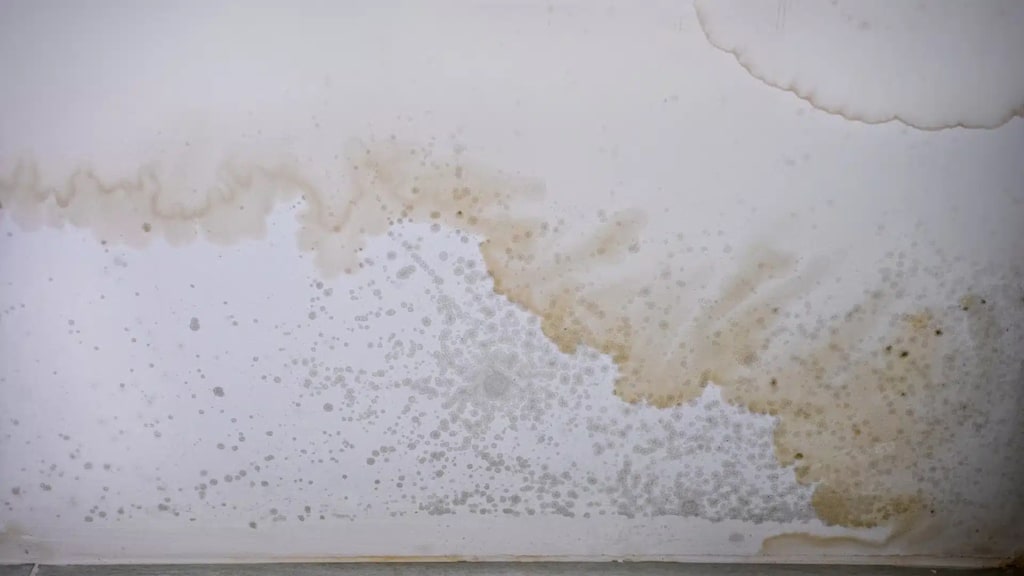
Displaced Water Spots: Look for new yellowish or brown stains on upper ceilings or walls. Water rarely travels straight down; it migrates laterally along roof decking and rafters before bleeding through drywall feet away from the entry point.
Electrical Hazards: Pay close attention to any moisture near ceiling light fixtures, fans, or electrical junction boxes. Water interacting with active wiring presents immediate shock and fire risks that require swift, professional intervention.
Taking Action After the Storm
Leaving subtle storm damage unaddressed turns a simple surface fix into a complex structural repair. Ignoring broken adhesive seals or granule loss allows water to quietly rot roof decking and support framing over several seasons.
If you suspect your property sustained storm damage, take photos of visible warning signs from ground level, contain active indoor leaks with buckets, and schedule a comprehensive evaluation with a qualified professional to assess your building envelope.
About the Creator
ORB Tree Service Marketing
ORB Tree Service Marketing provides SEO and local search strategies for the tree care and roofing industries. Follow us for insights on search optimization and lead generation for home services.
Enjoyed the story? Support the Creator.
Subscribe for free to receive all their stories in your feed.
Comments
There are no comments for this story
Be the first to respond and start the conversation.