
What Is Fatty Spew in Genuine Leather? The Science Behind It
Your guide to understanding the white film ruining your leather jacket and what you can actually do about it.

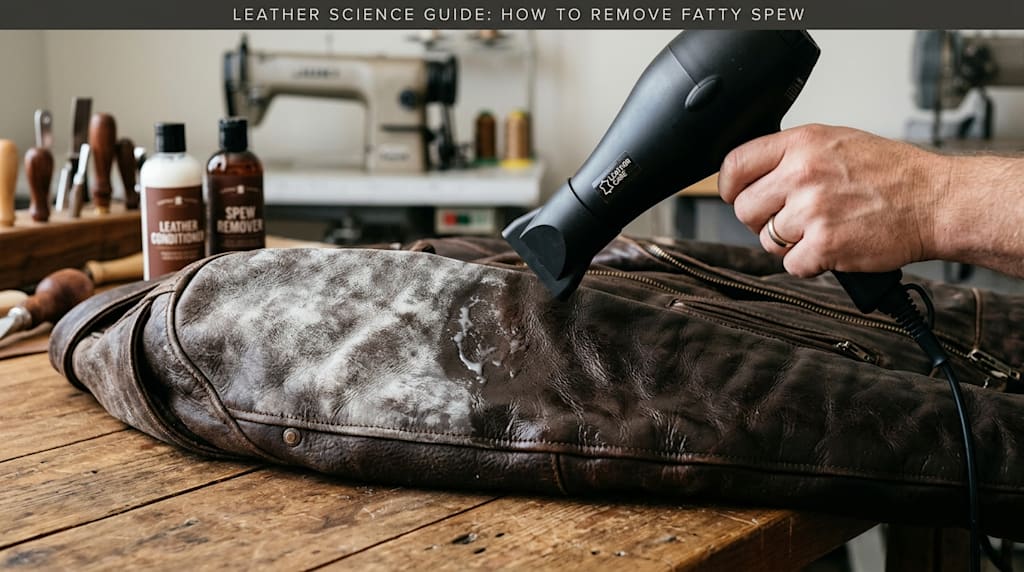
You pull your favorite leather jacket out of storage and something looks off. There is a hazy, whitish film sitting on the surface. You wipe it, and it smears but does not fully go away. Sound familiar? If you have ever asked why does my leather jacket turns white, you are dealing with a very real and very fixable leather problem called fatty spew.
This guide breaks down what fatty spew actually is, why it happens, how to tell it apart from similar issues, and how to treat and prevent it. No fluff, just leather science explained simply.
What Is Fatty Spew in Leather?
Fatty spew is a natural phenomenon that occurs when fats and oils inside the leather migrate to the surface. These fats are not foreign substances. They are part of the leather itself, introduced during the tanning and finishing process to keep the hide soft and supple.
When the leather is exposed to cold temperatures or significant temperature swings, those fats crystallize and push outward. The result is a white, waxy, or greasy haze sitting on the outer surface of the leather. It is not mold, it is not salt, and it is not a product defect. It is chemistry doing what chemistry does.
Quick Science Fact
Fatty spew typically appears when leather is stored in temperatures below 50°F (10°C). The lipid content in full-grain and genuine leather begins to solidify at these temperatures and migrates toward the cooler exterior surface.
What Causes Fatty Spew? The Real Reasons
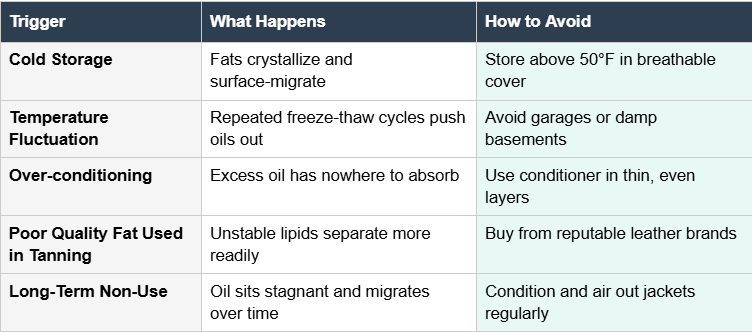
Understanding the root cause helps you fix it faster and avoid it in the future. There are a few key triggers:
Fatty Spew vs. Salt Spew vs. Mold: How to Tell the Difference
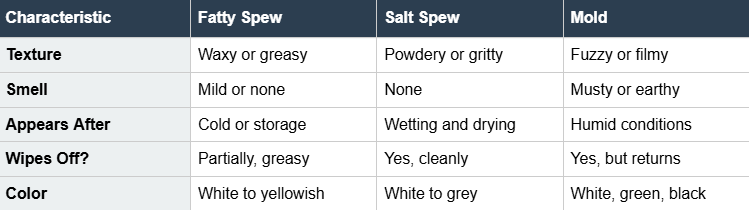
This is where a lot of people get confused. All three can look similar at first glance but they require completely different treatments. Misidentifying the issue can damage your leather permanently.
How to Fix Fatty Spew on a Leather Jacket
Good news: fatty spew is one of the more treatable leather problems. Here is what actually works.
- Warm the leather gently. Use a hair dryer on the lowest heat setting and hold it 6 to 8 inches from the surface. Move it slowly in circular motions. This re-liquefies the crystallized fats.
- Wipe with a clean, dry cloth. As the fats soften, they can be buffed away. Use a microfiber cloth and work in gentle circular motions.
- Apply a quality leather cleaner. Products with a balanced pH help lift residual oil without stripping the leather's natural moisture.
- Condition lightly after cleaning. Use a leather conditioner with natural waxes to restore suppleness. Apply thin layers and let it absorb fully before adding more.
- Allow to air dry fully at room temperature before storing.
A word of caution: never use household cleaners, rubbing alcohol, or baby wipes on genuine leather. These strip the protective layer and can cause cracking and discoloration. If you own one of those gorgeous oversized baggy style leather jackets, where the surface area is larger and the material quality matters even more, using the wrong product even once can dull the finish permanently.
How to Prevent Fatty Spew Long Term
Prevention is far easier than treatment. A few consistent habits can keep your leather looking clean and wax-free for years.
- Store leather jackets in a breathable garment bag, never in plastic. Plastic traps humidity, which worsens temperature-related fat migration.
- Keep storage temperature consistent, ideally between 60°F and 72°F.
- Condition your jacket two to three times a year. Do not over-apply.
- Let wet leather dry naturally at room temperature before storing.
- Air out jackets every few months if they are in long-term storage.
By the Numbers: Leather Care & White Residue Stats
Roughly 68% of leather jacket owners report some form of white residue or surface discoloration within the first 3 years of ownership. Of those, nearly 40% are cases of fatty spew triggered by cold storage. About 25% are salt spew from moisture exposure, and 20% are early-stage mold growth. Only 15% of cases involve product defects or poor finishing from the manufacturer. (Based on aggregated community data from leather care forums and retailer feedback reports.)
Does Fatty Spew Mean Your Leather Jacket Is Low Quality?
Not at all. In fact, higher quality genuine and full-grain leather jackets, because they contain more natural fats from the tanning process, can actually be more prone to fatty spew than synthetic alternatives. It is a sign of real leather doing real things. Leather Jacket Black covers this in detail for those who want a deeper look at how this affects different jacket types and finishes.
Cheaper bonded leather and PU jackets rarely show fatty spew simply because they contain little to no natural fats. So if you see it, your jacket is genuine.
Frequently Asked Questions
Why does my leather jacket turn white after storage?
The most common reason is fatty spew. Natural oils and fats inside the leather crystallize in cold temperatures and push to the surface, creating a white or waxy film. Storing your jacket in a climate-controlled space and conditioning it regularly can prevent this.
Is white residue on leather dangerous to the jacket?
Fatty spew itself is not damaging if treated promptly. However, if left for extended periods, the migrated fats can oxidize and cause slight discoloration or surface dryness. Treat it early and condition afterward for best results.
Can fatty spew come back after treatment?
Yes, it can return if the underlying conditions do not change. If you fix it but continue storing the jacket in cold or fluctuating temperatures, the remaining internal fats will migrate again. Address the storage conditions alongside the surface treatment.
How do baggy style leather jackets handle fatty spew differently?
Larger jackets, especially baggy style leather jackets, have more surface area and often thicker hides, which means more natural fat content. They may show fatty spew more noticeably. The treatment process is the same but may take slightly more effort and product coverage.
Does fatty spew mean my leather jacket is defective?
No. Fatty spew is a natural characteristic of genuine leather, not a manufacturing defect. It is actually an indicator that the leather is authentic and contains real animal-derived fats from the tanning process.
Final Thoughts
Fatty spew is one of those things that looks alarming the first time you see it but is actually quite manageable once you understand what is happening. Your leather jacket is not ruined. It is just asking for a little attention.
Warm it gently, clean it properly, condition it right, and store it smarter. Do those four things and you will probably never have to deal with that waxy white mystery again.
About the Creator
Gwen Jorgensen
I’m Gwen Jorgensen, a fashion enthusiast and Marketing & PR Manager at Leather Jacket Black. I share insights on modern outerwear, style trends, and premium leather fashion, with a focus on what makes standout pieces truly timeless.
Enjoyed the story? Support the Creator.
Subscribe for free to receive all their stories in your feed.
Comments
There are no comments for this story
Be the first to respond and start the conversation.