
What I'd Tell a Mate Before They Buy a Toyota HiAce Campervan
The Essential Things to Check Before Hitting the Road

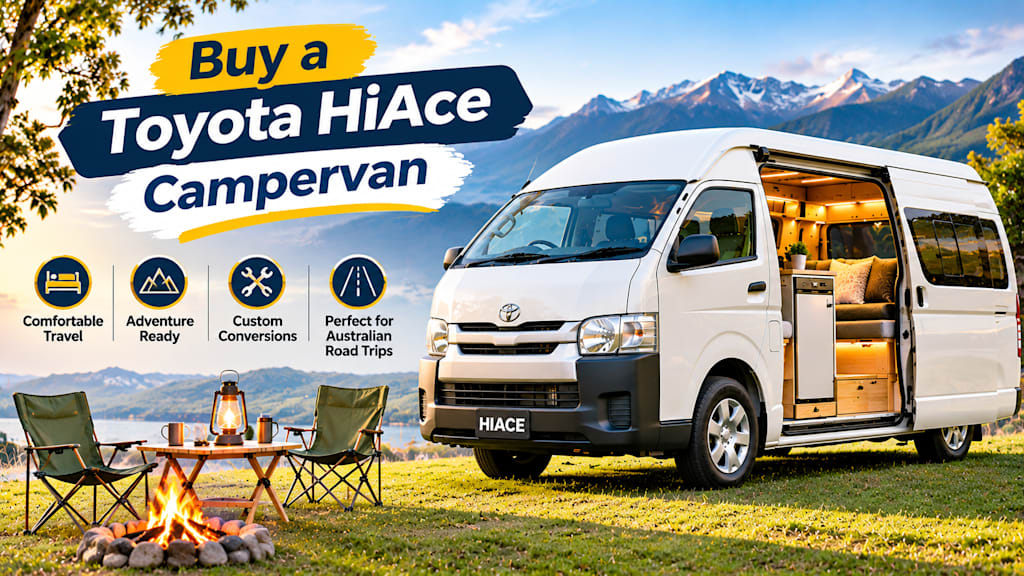
My phone buzzes. It's a link to a van, followed by "thoughts??" with two question marks, which is how I know they're already halfway in love with it.
This happens a lot. Friends, friends of friends, my cousin's partner once. And every time I end up typing the same long rambling reply, so I thought I'd finally write it down somewhere I can just send people.
So. You're looking at a Toyota HiAce campervan. Good. I'm biased, I'll admit that up front, because I spend a lot of my week around them. But there's a reason they're everywhere. They're tough. They're comfortable enough that a long drive doesn't wreck you. And when something does need looking at, you're rarely far from someone who knows the van. I've lost count of the people who only appreciated that last bit once they were a long way from home.
The newer H300 is a different beast from the old ones too, quieter and much more like driving a car. It's got a 2.8L turbo diesel, a 6-speed auto, adaptive cruise, blind spot monitoring, the works. You don't think about any of that in the showroom. You think about it around hour seven. If you want to do your homework properly, start with our Toyota HiAce campervan buying guide. It walks through new versus used, roofs, layouts and real costs, and there's an inspection checklist you can print and take with you.
Right, the actual advice.
Ignore the photos. Seriously. Every listing is shot at sunset with the doona fluffed up and a little candle on the bench. That's not a criticism, it's just how it works. When you go and see it in person, be a bit annoying. Lie on the bed. Pull out every drawer. Stand at the kitchen and pretend it's pouring outside and you're trying to make dinner. If there are two of you, both pile in at once and see if you can move without elbowing each other. Ten minutes of that tells you more than a fortnight of scrolling.
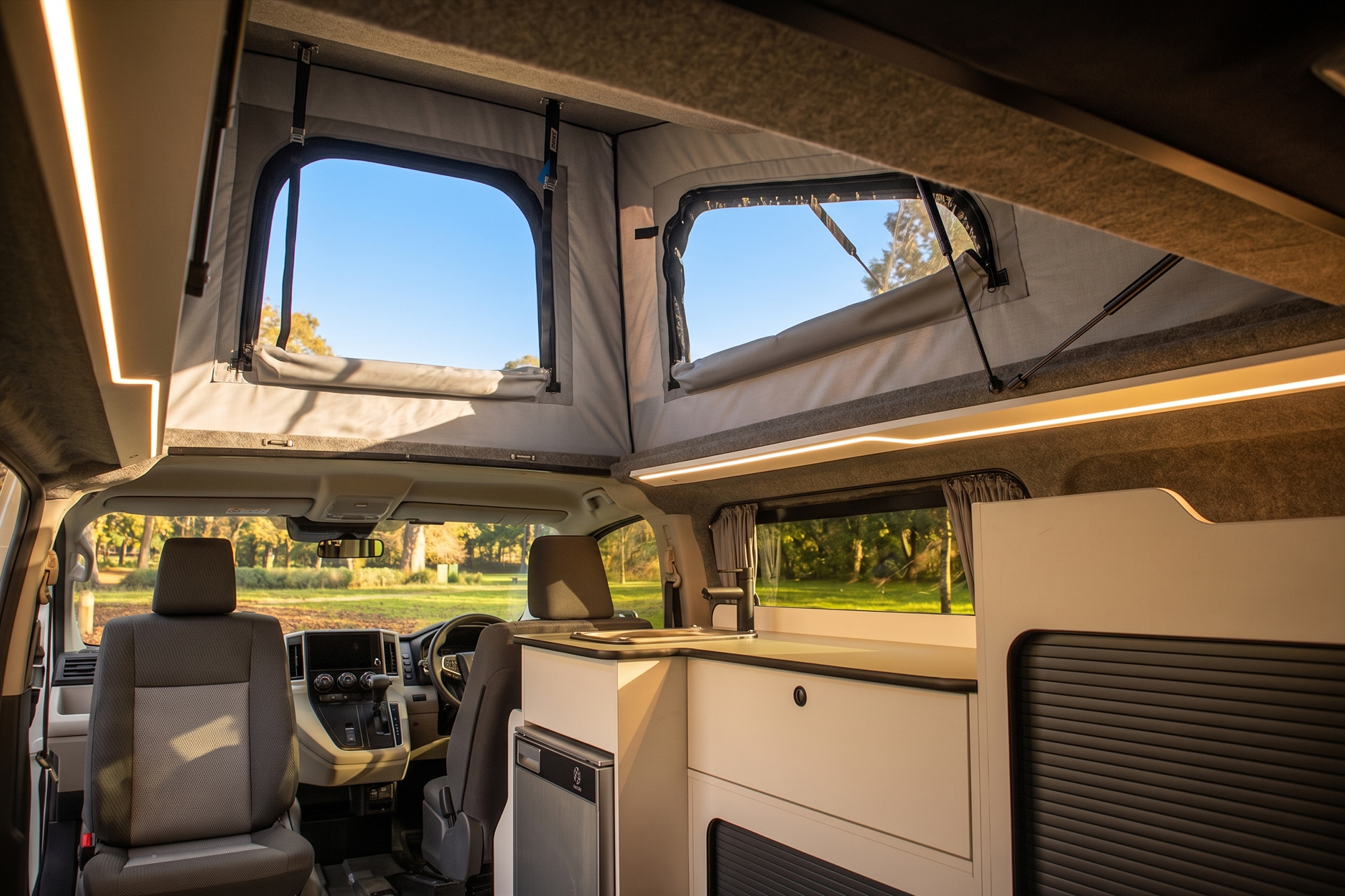
Pop-top or high-top is the next question, and it's the one I get asked most. My answer's always the same: think about a normal week, not the dream trip. If this is also your everyday car, a pop-top's easier, because it stays close to normal van height and fits in car parks. If you're disappearing for months, a high-top's permanent headroom starts making a lot of sense. Neither is the wrong answer. Just be honest about which life you're actually living.
Then the bit nobody wants to hear. Paperwork.
I know. There's a van with fairy lights in front of you and I'm banging on about documents. But ask anyway. Who built it? Was the conversion certified? If it's new, can you find it on the Register of Approved Vehicles? Were the gas and 240V done by licensed trades? What warranty is there on the van, and what's there on the fit-out? If you get clear answers and actual paperwork, great. If the answers get a bit wobbly, walk away and keep looking. There are plenty of good vans out there.
Money's the last thing. The price on the ad is rarely the price you end up paying. Depending on how it's listed, you might need to add stamp duty, rego, insurance, any extras and delivery. Then every year there's fuel, servicing and tyres. My rule of thumb: get the drive-away price in writing, add a realistic yearly running budget on top, and see if you still feel good about the number. If you do, brilliant.
Buying a campervan in Australia should feel exciting. It's freedom you can park in your driveway. The homework just makes sure it stays that way, so you're out there enjoying the coastline instead of lying awake wondering what you missed.
And if you're still unsure, send me the link. Two question marks are fine.
About the Creator
Kate Brownell
Independent Teacher, Freelance Writer, Conservationist, Eco Friendly Environment Crusader. A life hack writer by choice. Published articles on Ezines and Lifehacker.
Enjoyed the story? Support the Creator.
Subscribe for free to receive all their stories in your feed.
Comments
There are no comments for this story
Be the first to respond and start the conversation.