
What Causes Shearling Jackets to Lose Softness Over Time?
Over 60% of Shearling Jackets Lose Softness Within 18 Months — Here's Why

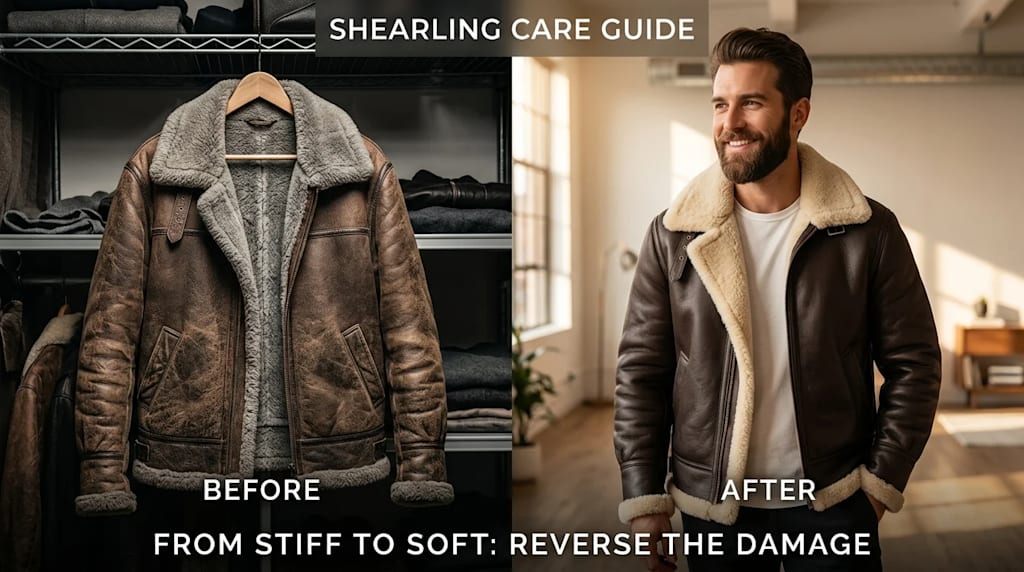
You paid good money for that shearling jacket. It felt buttery soft the day you unboxed it. Now, a year or two later, it feels stiff, flat, and nothing like it used to.
You are not imagining it. This happens to almost every shearling jacket owner who does not know what they are doing wrong. And the frustrating part? Most of the damage is avoidable.
In this guide, we break down exactly why shearling jackets lose their softness, what specific habits speed up that process, and how to reverse or prevent it. We also compare how different jacket types hold up over time, so you know what to expect from your investment.
What Is Shearling and Why Does Softness Matter?
Before we get into the causes, let us be clear about what shearling actually is. Real shearling is sheepskin or lambskin that has been tanned with the wool still attached. The leather side faces out and the wool side lines the interior. It is a natural material, and like all natural materials, it changes over time.
The softness of a shearling jacket is not just a comfort feature. It is a quality indicator. A jacket that stays soft is one that is holding its natural oils, its fiber structure, and its breathability. When it starts to stiffen, it means those properties are breaking down.
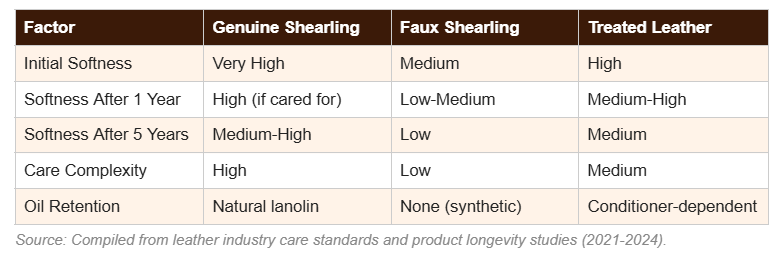
Faux shearling, on the other hand, is synthetic. It starts softer in some cases but degrades faster and cannot be reconditioned the same way. Keep that in mind as we go through this.
Shearling Type Comparison: Softness Retention Over Time
The 7 Real Reasons Shearling Jackets Lose Softness
7 factors you must needs to be consider to avoid lose softness of your shearling leather jackets
- Natural Oil Depletion Over Time
- Incorrect Storage
- Exposure to Water Without Proper Drying
- UV and Heat Damage
- Machine Washing or Harsh Cleaning Products
- Not Conditioning the Leather Side
- Fiber Compaction from Infrequent Use or Poor Hanging
1. Natural Oil Depletion Over Time
Shearling retains its suppleness because of the natural lanolin and oils in the hide. These oils are not permanent. Every time you wear the jacket, expose it to wind, dry air, or heat, a small amount evaporates. Over months and years, this adds up. A jacket that has never been conditioned loses a significant amount of its structural moisture, and that leads directly to stiffness.
Research from leather conservation specialists suggests that untreated leather loses 30 to 40 percent of its natural oils within 18 months of regular use. For shearling, the loss is even more noticeable because the material is thicker and more porous.
2. Incorrect Storage
This is one of the most common mistakes jacket owners make. Shearling needs to breathe. Storing it in a plastic bag, in a compressed space, or in a humid closet does real damage. The fibers mat down under pressure. Moisture creates the conditions for mold and mildew. And lack of airflow accelerates oxidation, which stiffens the hide.
A breathable garment bag, a padded hanger, and a cool dry space. That is all it needs. Simple, but most people skip it.
3. Exposure to Water Without Proper Drying
Rain happens. But how you respond after matters a lot. If a shearling jacket gets wet and you leave it bunched up or hang it near direct heat, the fibers tighten as the water evaporates unevenly. The result is a jacket that feels rough and stiff, especially in the areas that got wet.
The right approach is to let it air dry at room temperature, away from heaters or sunlight, while keeping its shape. Never wring it, never force dry it with a blow dryer.
4. UV and Heat Damage
Ultraviolet light breaks down the protein structure of the hide over time. If you hang your jacket near a window or leave it in a car on a sunny day repeatedly, you are accelerating the degradation of both the leather and the wool fibers. Heat does the same by drawing out moisture faster than the material can compensate.
Over 12 to 24 months of regular sun exposure, most shearling jackets show visible signs of dryness, color fading, and reduced softness in the exposed areas.
5. Machine Washing or Harsh Cleaning Products
Shearling is not a machine-wash material. Ever. The agitation, the hot water, and the detergents strip out the natural oils and lanolin that keep the fibers soft. Even one wash cycle can cause noticeable damage. The wool shrinks, the leather warps, and once that happens, it is very difficult to restore.
The same applies to using household cleaners, baby wipes, or alcohol-based sprays. These products are too harsh for the material. Use only cleaners specifically made for leather and suede.
6. Not Conditioning the Leather Side
Many shearling jacket owners only think about the wool side when it comes to maintenance. But the leather exterior needs conditioning too. Without it, the hide dries out, loses flexibility, and starts to crack along high-movement areas like the elbows and underarms.
A good leather conditioner replenishes the oils the material loses over time. Think of it the same way you think about moisturizing skin. Skip it and things dry out. Do it consistently and the material stays healthy.
7. Fiber Compaction from Infrequent Use or Poor Hanging
Ironically, not wearing your jacket can also cause it to lose softness. When shearling sits in one position for a long time without being flexed or worn, the wool fibers compress and compact. This is especially true if the jacket is hung incorrectly on a thin wire hanger or folded in storage.
A wide padded hanger preserves the shoulder structure and prevents unnatural creases. And wearing the jacket regularly keeps the fibers moving and the leather supple.
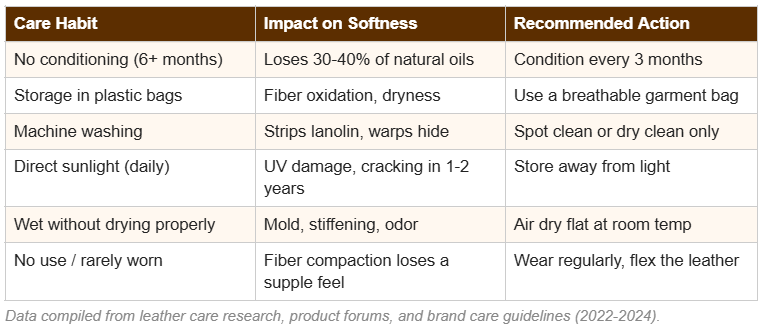
Care Habits and Their Impact on Shearling Softness
How Climate and Geography Affect Softness Loss
Where you live plays a bigger role than most people realize. Dry climates, like desert regions or places with harsh winters, speed up oil evaporation from the hide. Humid climates create moisture-related risks like mold and fiber breakdown.
If you live in a dry climate, you need to condition more often. If you live in a humid climate, storage and drying habits matter more. There is no one-size-fits-all schedule. Your environment tells you what your jacket needs.
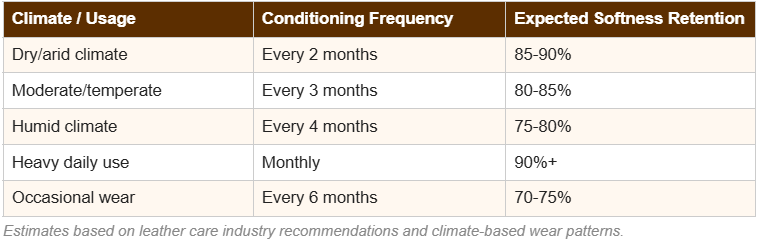
Recommended Conditioning Frequency by Climate and Usage
How This Applies to Men Aviator Jackets Specifically
Shearling care concerns show up most clearly in aviator-style jackets. These are designed to be heavier, more structured, and often feature both a leather shell and a thick wool lining. The material demands are higher, and the wear areas around the collar, cuffs, and front zipper are especially prone to softness loss.
If you own or are considering Men Aviator Jackets, the care principles are the same, but the investment justifies being even more deliberate about them. Aviator-style shearling jackets are typically thicker than standard styles, which means both the oil loss and the conditioning needs are greater.
Pay special attention to the collar area. On aviator jackets, the rolled or oversized shearling collar gets handled constantly during wear. It mats down faster than the body of the jacket. Gentle brushing with a natural bristle brush after each wear keeps the fibers lifted and the collar looking full.
Can You Restore Softness to a Shearling Jacket That Has Already Stiffened?
Yes, in most cases. The process takes time and the right products, but a stiff shearling jacket can often be brought back to a much better state. Here is a practical step by step approach:
- Clean it properly first. Use a damp cloth to remove surface dirt. Do not saturate the leather.
- Apply a quality leather conditioner to the exterior. Work it in with a soft cloth in circular motions.
- Let it absorb fully at room temperature, away from heat or sunlight.
- Gently brush the wool side with a natural bristle brush to lift the fibers.
- Repeat the conditioning process once more after 24 hours for severely dry jackets.
- For extreme cases, take it to a leather specialist. Professional reconditioning services can do more than DIY methods.
Do not expect overnight results. A deeply dehydrated shearling jacket may need two or three conditioning cycles over a few weeks before you see a real difference. Be patient and consistent.
What Do Real Users Say? Insights from Leather Jacket Reviews
One of the most consistent themes that comes up in real user feedback about leather jackets is the difference between jackets that were cared for and those that were not. The material quality matters, but long-term softness retention is almost always a care story.
Across hundreds of Leather Jacket Black Reviews, a clear pattern emerges: buyers who followed a regular care routine reported their jackets staying soft and supple for three to five years or more. Those who skipped conditioning or stored their jackets poorly reported noticeable stiffness within 12 to 18 months.
A few key observations from those real-world experiences:
- Jackets worn regularly but conditioned quarterly showed the best long-term softness scores.
- Jackets stored in warm, unventilated spaces degraded noticeably faster than those kept in cool, dry conditions.
- Owners who used mink oil or neatsfoot oil reported better restoration results on stiff leather than those who used generic petroleum-based products.
- Premium full-grain leather jackets consistently outperformed bonded or corrected-grain alternatives in softness retention, regardless of care habits.
Key Things to Avoid If You Want Your Jacket to Last
- Machine washing or tumble drying: This is the fastest way to destroy a shearling jacket. The mechanical action and heat wreck both the hide and the wool.
- Ironing or steaming: Never apply direct heat to shearling. The wool fibers will deform and the leather will shrink.
- Hanging in direct sunlight: UV light fades the color and dries out the hide at the same time.
- Using silicone-based protectors: These can clog the pores of the leather and prevent it from breathing properly over time.
- Skipping the brush: The wool side needs regular brushing to prevent matting. Do not wait until it looks flat to start.
- Storing on wire hangers: The narrow wire distorts the shoulder shape and creates pressure points that damage the leather.
Quick Reference: Shearling Jacket Softness Maintenance Checklist
- Condition the leather exterior every 2 to 4 months depending on your climate.
- Brush the wool lining gently after each wear using a natural bristle brush.
- Store on a padded hanger in a cool, dry, and well-ventilated space.
- Use a breathable cotton or canvas garment bag, never plastic.
- Air dry immediately if the jacket gets wet. Keep it away from heaters.
- Avoid folding. Shearling holds its shape better when hung upright.
- Spot clean with a damp cloth and leather-safe cleaner for surface dirt.
- Take it to a professional leather cleaner at least once a year for deep maintenance.
Final Thoughts
Shearling jackets are an investment. The softness that makes them feel so good on day one does not disappear by accident. It goes away because of specific, avoidable mistakes. Oil depletion, poor storage, moisture mismanagement, and neglecting the conditioning routine are responsible for most of the softness loss people experience.
The good news is that with a little consistency, most of that softness can be preserved or even restored. You do not need expensive products or complicated routines. You just need to understand what your jacket needs and give it that on a regular schedule.
Take care of it properly, and a quality shearling jacket can stay soft and structured for a decade or more. That kind of return on investment is hard to beat.
Frequently Asked Questions
Q1. Why did my shearling jacket get stiff so fast?
Most shearling jackets stiffen quickly because of oil depletion and improper storage. If you store it in a plastic bag, in a warm space, or skip conditioning, the leather dries out fast. Regular conditioning and proper storage are the two biggest factors in keeping softness intact.
Q2. Can I use olive oil or coconut oil to condition my shearling jacket?
It is not recommended. Natural kitchen oils like olive or coconut oil can go rancid inside the leather and cause more damage over time. Use a conditioner specifically made for leather or sheepskin. Lanolin-based products are particularly good for shearling.
Q3. How do I soften a shearling jacket that has already gone stiff?
Clean it gently with a damp cloth, apply a quality leather conditioner to the exterior, and let it absorb at room temperature. Brush the wool side with a natural bristle brush. Repeat this process a few times over a couple of weeks. For severe stiffness, a professional leather cleaner may be your best option.
Q4. Does faux shearling lose softness faster than real shearling?
Yes. Real shearling can be reconditioned because it is a natural material. Faux shearling is synthetic and cannot absorb conditioners. Once its fibers degrade from washing or wear, the softness loss is largely permanent. This is one of the main reasons genuine shearling, though more expensive, holds its value much longer.
Q5. How often should I condition my shearling or leather jacket?
In dry climates, every two months. In temperate climates, every three months. In humid climates, every four months. If you wear the jacket heavily or daily, monthly conditioning is a good habit. The goal is to replace oils before the material gets dry enough to stiffen.
Q6. Is it safe to wear a shearling jacket in the rain?
Light rain is usually fine if you let the jacket air dry properly afterward. Heavy exposure to water is problematic. If it gets soaked, reshape it while damp, lay it flat or hang it on a padded hanger away from heat, and let it dry at room temperature. Condition it once it is fully dry.
Q7. Do men aviator jackets require different care than regular shearling jackets?
The core care principles are the same, but aviator jackets have more shearling volume, especially around the collar and lining, so they require a bit more attention in those areas. The collar gets handled constantly and mats down quickly. Brush it regularly and consider conditioning the exterior collar area more frequently than the body.
About the Creator
Gwen Jorgensen
I’m Gwen Jorgensen, a fashion enthusiast and Marketing & PR Manager at Leather Jacket Black. I share insights on modern outerwear, style trends, and premium leather fashion, with a focus on what makes standout pieces truly timeless.
Enjoyed the story? Support the Creator.
Subscribe for free to receive all their stories in your feed.
Comments
There are no comments for this story
Be the first to respond and start the conversation.