
Under Canvas and Stars: Why We Build Pop-Top Campervans
The Bit the Spec Sheet Leaves Out


People usually come to us with their homework done. Printed comparisons, a phone full of screenshots, a dozen forum threads about pop-tops and high-tops. They know the heights. They know the fuel figures. And most of them are more confused than when they started.
So we skip the numbers for a minute and ask them to raise the roof themselves.
You unlatch it, give it a push, and up it goes. It takes about a minute. The van that looked like any other HiAce in the car park suddenly has room to stand at the sink. Soft light filters through the canvas. It's a small moment, but it tends to change the whole conversation.
It isn't a sales trick. It's just the quickest way we know to show what a pop-top is actually like to live with.
The night the roof makes sense
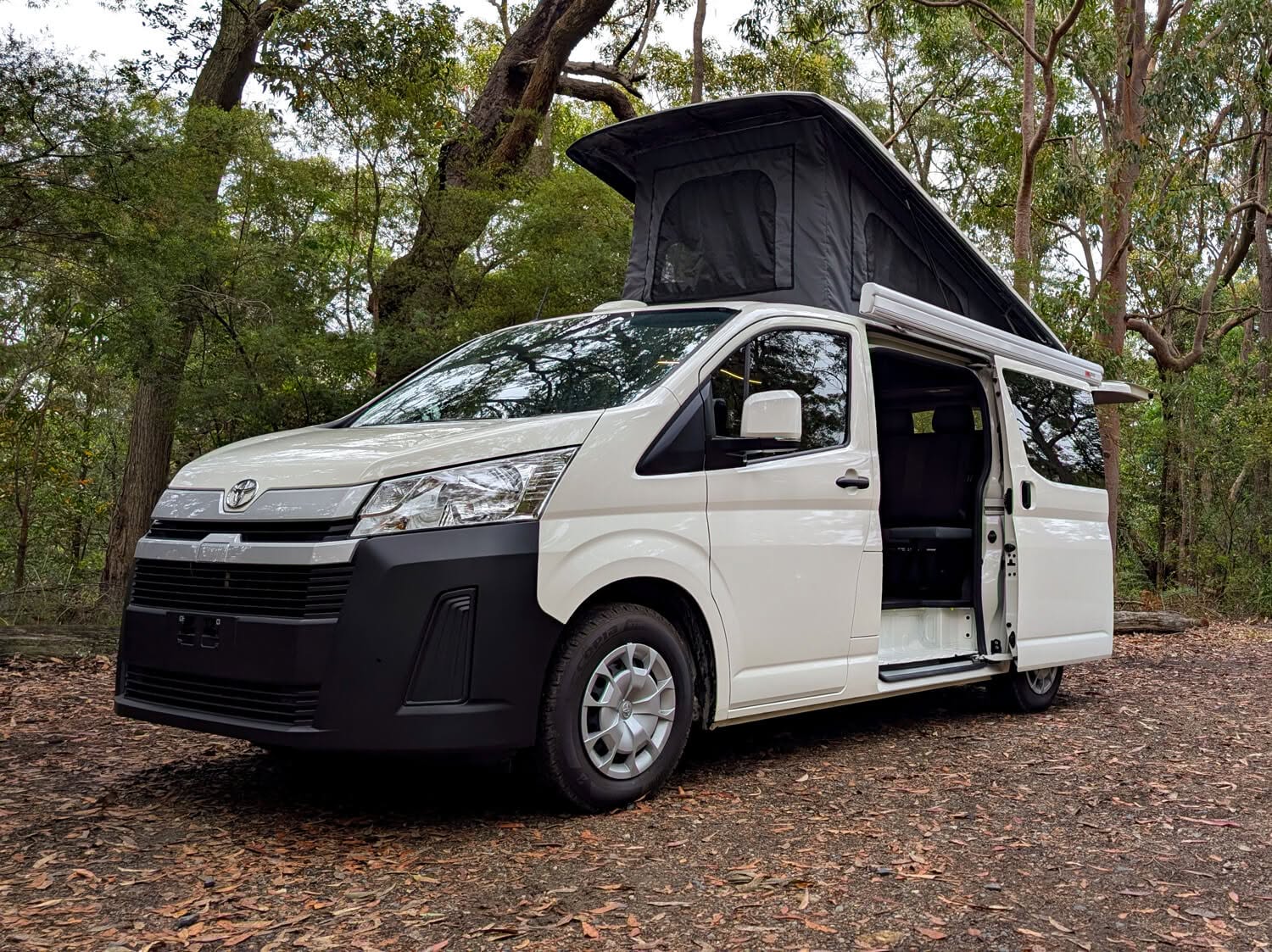
We could talk clearance heights all day. Honestly, we often do. But the real reason we build pop-top campervans isn't on a spec sheet. It's about a certain kind of night.
Picture a warm evening somewhere on the coast between Gosford and the Gold Coast. You've parked up after a long drive and the roof goes up. Three windows unzip. Within minutes the sea breeze is drifting through, carrying salt and the faint sound of waves.
The light goes soft and orange, then blue. You cook dinner standing up, induction cooktop on, the fridge humming away in the corner. Nothing fancy. Pasta, maybe, and a cold drink. You don't check your phone once.
Later, you fold the rear seat into a bed and lie back. Through the canvas you can hear the campground winding down. Someone's laughing a few sites over. A bird you can't name gives one last call. It doesn't feel like being shut inside a vehicle. It feels like being inside the night itself.
A solid-roofed van is warmer and quieter, and on a cold night that's a real gift. We'd never pretend otherwise. But on nights like this, you don't want to be sealed off. You want to hear it.
If you're weighing up the practical side too, we've put together the full pop-top vs high-top breakdown, with heights, layouts and what to check before you buy.
The bit nobody posts on Instagram
Here's the less romantic part, and it matters just as much.
The next morning you drop the roof, and the same van drives home like a van. At around 2.065m, it slips under car park barriers a high-top would never clear. It fits in plenty of home garages. Come Monday, it can be the car you take to work.
It's kinder on a gusty highway, too. With less height catching the wind, the van feels planted rather than pushed around. You'll appreciate that somewhere along the Pacific Highway.
That everyday ease is what a lot of owners end up loving most, even if it was never on their wish list.
Need a spot for a third sleeper? An optional roof bed sits up top, rated to 120kg. It's handy for a child, or just for stashing bedding and gear out of the way.
There are trade-offs, of course. Canvas needs a chance to dry if you pack it away wet. In strong wind you might leave the roof down and sit for a while. And if you're planning months in an alpine winter, a high-top's solid walls will serve you better. We tell people that, even though we don't build them.
Why we keep coming back to it
There's no single right roof for everyone, and we're upfront about that. Plenty of people leave that conversation choosing a high-top, and that's fine. A van that suits how you travel beats one that wins arguments online.
But after all the vans and all the debates, it comes down to something simple. A high-top gives you a room on wheels. A pop-top gives you a van that opens up to wherever you've parked.
For us, that's the whole point. Waking up with the roof still up, a bit of morning light coming through, the sound of the beach not far away. Even rain has its charm. Roof down, doona up, listening to it drum on the van while you stay dry inside. You can't really put that in a comparison table.
Every build uses the space a little differently, so it's worth seeing how it all comes together. Have a look at these Toyota HiAce campervan layouts, or better still, come and raise a roof yourself. It only takes a minute.
About the Creator
Kate Brownell
Independent Teacher, Freelance Writer, Conservationist, Eco Friendly Environment Crusader. A life hack writer by choice. Published articles on Ezines and Lifehacker.
Enjoyed the story? Support the Creator.
Subscribe for free to receive all their stories in your feed.
Comments (1)
I loved the image of raising the roof in about a minute and suddenly having room to stand and cook dinner as the light turns orange, then blue. The honesty about the trade-offs stood out too, especially canvas needing time to dry and the extra wind noise. It makes the pop-top sound less like a compromise and more like a deliberate choice for trips where the evening outside matters most.