
Thrift Store Treasures
How to Spot Quality Vintage Clothing
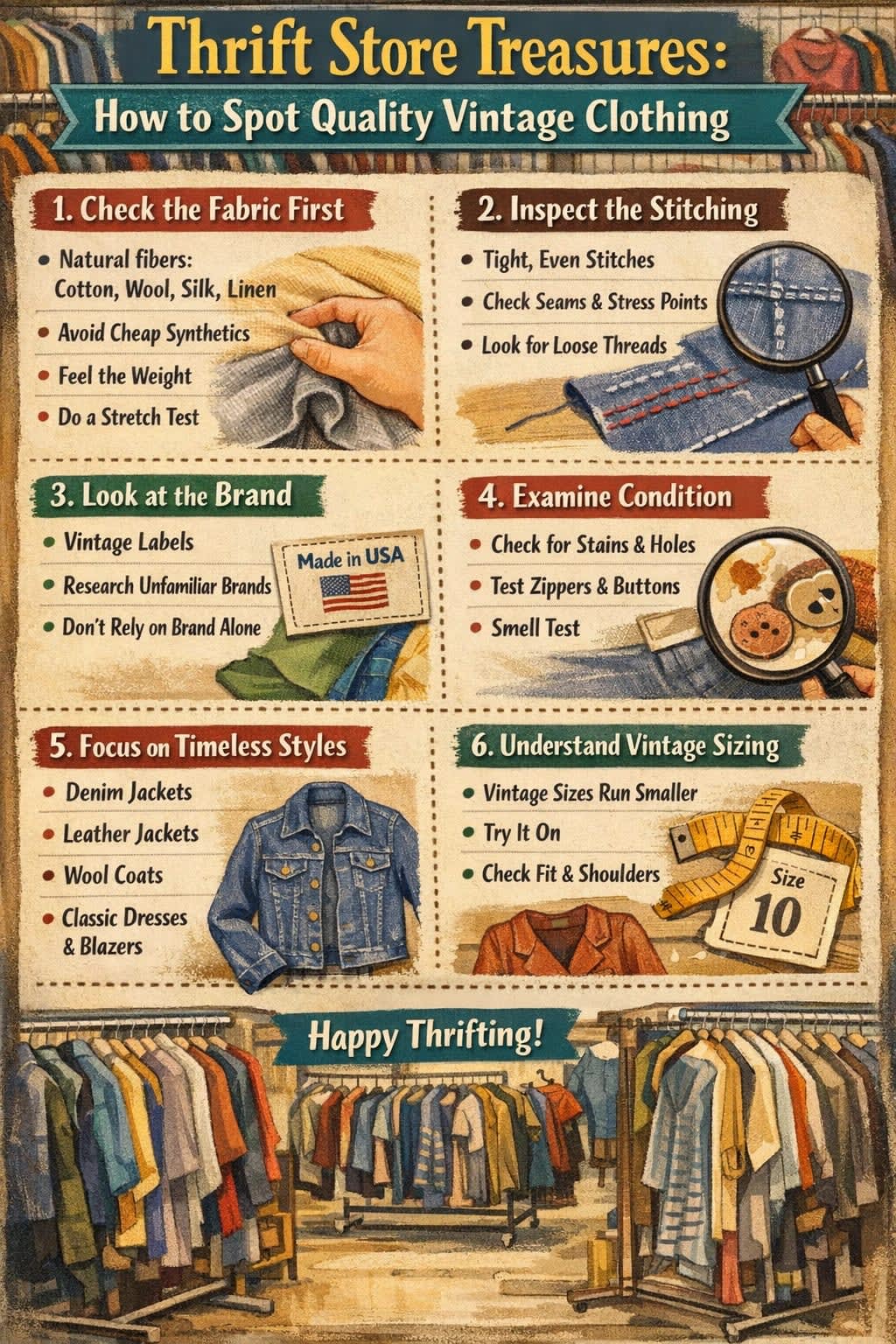
Introduction
You walk into a thrift store. Racks are packed with clothes. Prices are low. But here is the problem – how do you know what is worth buying and what is just old junk?
I have been thrifting for over 8 years. In that time, I have found genuine vintage Levi's for $8, a pure wool coat for $12, and a leather jacket that retailed for $400 originally. But I have also wasted money on things that fell apart after two washes.
The difference? Knowing how to spot quality.
In this guide, I will share exactly what to look for. No fluff. Just practical tips you can use on your next thrift trip.
How do you spot quality vintage clothing at a thrift store?
Check these 5 things before buying: fabric composition (natural fibers last longer), stitching (tight and straight), zippers and buttons (metal is best), tags (union labels indicate pre-1980s), and overall condition (no stains, holes, or excessive fading). Always inspect in natural light.
What Makes Vintage Clothing Different From Modern Clothes?
Before you learn what to look for, understand this one fact. Vintage clothing was made differently.
In the 1970s, 1980s, and 1990s, most clothes were made in the USA, Europe, or Japan. Factories used heavier fabrics, metal zippers, and double stitching. Clothes were meant to last decades.
Today, most clothes are made in fast fashion factories. Fabrics are thinner. Stitching is weaker. Zippers are plastic. A modern t-shirt might last one year. A vintage t-shirt can last thirty years.
That is why thrifting is worth your time. You are not just buying cheap clothes. You are buying better clothes.
In my experience, a wool sweater from 1985 will outlast a polyester sweater bought last year. Every single time.
Feel the Fabric
Do not just read the tag. Touch the fabric. Rub it between your fingers. Quality fabric feels dense and heavy. Cheap fabric feels thin and flimsy.
Hold the item up to light. Can you see through it? That is a bad sign.
Stitching and Seams – What to Look For
Bad stitching is the first sign of a cheap garment. Good stitching means the item was made with care.
What Good Stitching Looks Like
- Stitches are straight, not wavy
- Stitches are close together (more stitches per inch)
- Seams have extra fabric inside (called seam allowance)
- No loose threads hanging everywhere
What Bad Stitching Looks Like
- Crooked or wavy stitch lines
- Large gaps between stitches
- Seams that pull apart when you stretch gently
- Thread that looks thin or cheap
Quick test: Gently pull on both sides of a seam. Does it hold? Or do you see gaps? If you see gaps, put it back.
Zippers, Buttons, and Hardware – Small Details Matter
This is where vintage clothing really shines. Old clothes used better hardware.
Zippers
Vintage Zippers (Good) Modern Zippers (Often Cheap)
Metal teeth Plastic teeth
Brand names (YKK, Talon, Ideal) No brand name
Heavy pull tab Thin, flimsy pull tab
Pro tip: A metal YKK zipper is a great sign. Many vintage denim jackets and pants use these.
Buttons
Quality vintage clothing uses:
Buttons made of metal, wood, or thick plastic
Buttons sewn on tightly with thick thread
Extra buttons attached to the care tag
Cheap clothing uses thin plastic buttons that crack easily.
Reading Tags – How to Date Vintage Clothing
Tags tell you the story. Here is a simple guide to guess the age.
Tag Feature Approximate Era
Union label (ILGWU) 1930s – 1990s
"Made in USA" 1960s – 1990s
Care instructions with symbols 1970s+
RN number (5-6 digits) 1950s+
No care tag at all Pre-1970s
What is a union label? In the mid-1900s, many clothes had a small tag saying "ILGWU" (International Ladies' Garment Workers' Union). If you see this, the item is likely pre-1990s and made in America.
I found a denim jacket last year with a union label and "Made in USA." Paid $15. Researched it later – worth over $200.
Common Flaws to Avoid (Even If the Price Is Low)
- Not every cheap item is a treasure. Avoid these problems.
- Stains That Will Not Come Out
- Some stains fade with washing. Others do not. Avoid:
- Grease stains on silk or wool
- Rust stains (impossible to remove)
- Bleach marks (fabric is damaged, not just stained)
Holes and Tears
Small holes near seams can be fixed. Holes in the middle of a shirt? Hard to repair. Unless you want a distressed look, leave it.
Excessive Fading
Some fading looks cool (think vintage band tees). But uneven fading or fading around the collar and cuffs looks tired, not trendy.
Smells
Thrift stores often have a specific smell. That usually washes out. But cigarette smoke and mildew sometimes do not. Smell before you buy.
How to Wash Your Vintage Finds
You found something great. Now do not ruin it in the washing machine.
- Rule 1: Turn everything inside out before washing.
- Rule 2: Use cold water. Heat destroys old fabrics.
- Rule 3: Air dry only. Never put vintage clothing in a dryer.
- Rule 4: For wool and silk, hand wash or dry clean.
I learned this the hard way. Shrunk a perfect 1980s wool sweater in the dryer. Never again.
Frequently Asked Questions (FAQs)
Q1: How can you tell if vintage clothing is real or just old?
Look for union labels, metal zippers, and single-stitch hems. Real vintage was made with better materials. Also check the tag font and style – modern "vintage style" tags look too new.
Q2: What is the best day to go thrifting?
Monday and Tuesday mornings. Most stores restock over the weekend. Go early before other resellers clear out the good stuff.
Q3: How much should you spend on vintage clothing?
Depends on the item. T-shirts under $10. Jeans under $20. Jackets under $30. Leather and wool can go higher. If a store charges more than $50 for a common item, walk away.
Q4: Is thrifted clothing sanitary?
Yes. Wash everything before wearing. Hot water and detergent kill bacteria. Dry cleaning works too. Most thrift stores also steam or spray items before putting them on racks.
Q5: How do you remove thrift store smell from clothes?
Wash with white vinegar (half cup) plus regular detergent. Air dry in sunlight. Sunlight naturally kills odors. Repeat if needed.
Q6: What are the best thrift store chains for vintage?
Goodwill, Salvation Army, Value Village, and local charity shops. Independent thrift stores often have better finds than big chains.
Q7: Can you find luxury brands at thrift stores?
Yes, but rare. Look in wealthy neighborhoods. Check every label. I have found genuine Coach, Burberry, and even a small Chanel piece over the years.
Q8: How do you know if vintage clothing fits?
Try it on. Vintage sizes run smaller than modern sizes. A 1990s large is often a modern medium. Do not trust the tag size – trust how it feels on your body.
Conclusion
Thrifting is a skill. The more you do it, the better you get. Start with these tips. Check fabric first. Inspect stitching. Look at zippers and buttons. Read the tags. Avoid stains and holes.
And most importantly – be patient. Some trips you find nothing. Other trips you find treasures. That is part of the fun.
Your action step this week: Visit one thrift store. Spend 30 minutes. Use the tips from this guide. See what you find. You might be surprised.
For more fashion tips, style guides, and thrift store advice, visit FabSwingers – your daily destination for fashion and lifestyle inspiration.
About the Creator
Backlinks Cart
Mohsin (CEO BacklinksCart Agency).
Our Backlinks Platform " Backlinkscart.com"
For any edits or link insertions. +92-309-1821105
Gmail: [email protected] OR
Enjoyed the story? Support the Creator.
Subscribe for free to receive all their stories in your feed.
Comments
There are no comments for this story
Be the first to respond and start the conversation.