
The Spelling Mistake That Made Millions: Why the World's Biggest Brands Got It "Wrong" on Purpose
Exploring how intentional spelling variations shape modern digital brand identity.
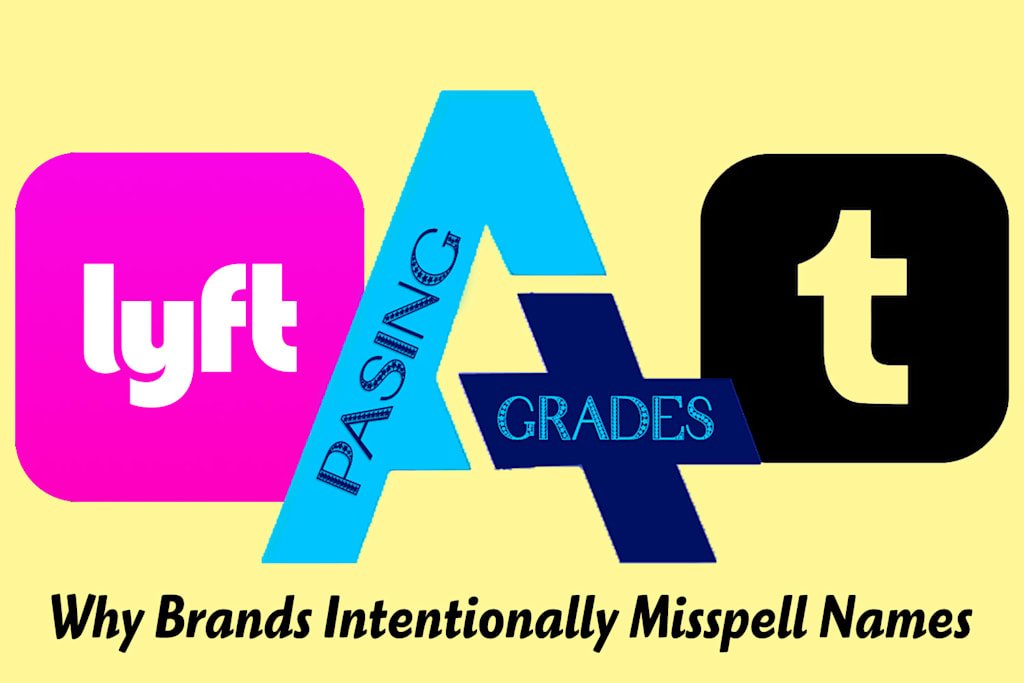
You've typed it a thousand times. You've clicked it, shared it, scrolled through it. But have you ever stopped to notice that Tumblr is missing a letter? That Flickr dropped its "e"? That Lyft isn't really how you spell anything?
Probably not and that's precisely the point.
Behind some of the most recognizable names in digital culture lies a deliberate, calculated decision to break the rules of language. What looks at first like a typo is actually a carefully engineered branding move. It is this move that has quietly shaped how billions of people discover, remember, and trust the platforms they use every day.
When "Wrong" Is Right
Let's go back to the early days of blogging culture. The year is 2007, and a new platform called Tumblr is gaining traction among artists, writers, and teenagers who want somewhere to post without the formality of a traditional blog.
Why not "Tumbler"? That's how you'd find it in the dictionary, after all.
The answer is both simple and surprisingly deep. "Tumbler" is a word that already belongs to the world. It means a glass, a gymnast, a component in a lock. Searching for it online would drown you in noise. "Tumblr," on the other hand, belongs to nobody except the brand itself. It's ownable. Searchable. Distinct.
The same logic drove the founders of Flickr, the photo-sharing platform that rose to prominence in the mid-2000s. Strip the "e" from "Flicker" and you no longer have a word that competes with candles, lights, and old film projectors. You have a brand.
Lyft followed the same playbook years later. Swap the "i" in "Lift" for a "y" and the transportation startup instantly separates itself from every elevator manufacturer and moving company on the planet. It signals something, too, what is that? a fresh, modern identity that the conventional spelling simply couldn't carry.
The Psychology Nobody Talks About
Here's what makes this strategy genuinely fascinating: it works because of how human memory operates, not despite it.
Usually when we encounter something slightly unusual, it can be a word that's almost familiar but not quite, our brains pay closer attention. That momentary double-take, that half-second of "wait, is that right?" is not confusion. It's engagement. And engagement is the first step toward memory.
The second step is repetition. After you've seen "Tumblr" a dozen times, your brain stops processing it as an error and starts storing it as an identity. The unusual spelling doesn't just become normal but rather becomes brand's signature. Try imagining Tumblr spelled correctly and something feels off about it.
This is the quiet genius of unconventional naming: the very thing that initially demands attention eventually becomes invisible, folded seamlessly into how we experience the product itself.
The Practical Problem With Playing It Safe
Choosing a straightforward, dictionary-perfect name sounds sensible. It feels professional, trustworthy, easy to communicate. But in the digital landscape, it often becomes a liability.
Consider what happens when a company calls itself something entirely generic, for instance, "Top Grades," "Fast Rides," or "Photo Share." That name was never theirs to own. It belongs to every search query, every forum thread, every competitor who thought of something similar. Getting your brand to rise above that noise in search results is not just difficult; it can be nearly impossible without spending enormous sums.
A distinctive name, by contrast, creates its own gravitational field. When every article, social post, and user review uses the same unique term, search engines learn to associate that term with a single entity. instead of the brand just existing online it ends up dominating its own corner within the wide world web.
This is why you can type "Flickr" into a search engine and land exactly where you intended. No disambiguation. No confusion. Just the brand.
How This Shows Up in Education
The strategy isn't limited to Silicon Valley social networks. You can see the same thinking applied across industries where digital competition has intensified including education.
Take PasingGrades, an online learning platform that chose to simplify "PassingGrades" to a single "s." On the surface it's a small change, easily dismissed as a quirk. But in a sector absolutely saturated with study tools, academic platforms, and tutoring services all fighting for the same students and the same search rankings, that small change carries real weight.
"PassingGrades" reads like a generic description of what a student wants to achieve. "PasingGrades" is a name that can be owned, searched for directly, and remembered independently of what the words literally mean. Moreover, since PasingGrades was derived from passing grades, students can easily pick from the brand domain what the platform is about. Over time, repeated exposure builds exactly the kind of brand recognition that a conventional name would struggle to earn.
It's the same principle that made Tumblr, Flickr, and Lyft stick. Applied to a different industry, but driven by the same understanding of how people process and remember names in a noisy digital world.
What This Means for Anyone Building a Brand
The lesson here isn't "misspell your company name and watch the money roll in." It's something more nuanced than that.
The brands that benefit from unconventional naming are the ones that understand the difference between being memorable and being forgettable. They make deliberate choices accordingly. The altered spelling is a tool, not a trick. Used well, it creates a name that is distinctive enough to cut through noise, simple enough to be recalled without effort, and ownable enough to build real equity over time.
The internet rewards distinctiveness in ways that traditional markets never did. A name that can be universally searched, that has no close competitors in a query box, that exists as its own category, that's not just a branding asset. It's a competitive moat.
And it all started, in some cases, with the removal of a single letter.
The next time you find yourself typing an app name that looks slightly wrong, take a moment to appreciate what's actually happening. Someone made a careful, considered decision to hand you a name you'd remember. And it worked so well that you never thought to question it until now.
Enjoyed this piece? Follow for more writing on digital culture, brand psychology, and the ideas shaping the modern internet.
About the Creator
Clinton Wanjala
Full time Blogger: "Blogging Isn't Dead, It's on Vocal"
Enjoyed the story? Support the Creator.
Subscribe for free to receive all their stories in your feed.
Comments
There are no comments for this story
Be the first to respond and start the conversation.