
The Silent Damage: What Storms Actually Do to a Roof
Why high winds and hail cause invisible structural issues—and how to spot them safely from the ground.

A distinct quiet settles over a neighborhood right after a severe storm passes. The wind dies down, hail stops clattering against windows, and front doors slowly open. Homeowners step onto driveways, glance up at the roofline, and breathe a sigh of relief when they see no shingles scattered across the lawn.
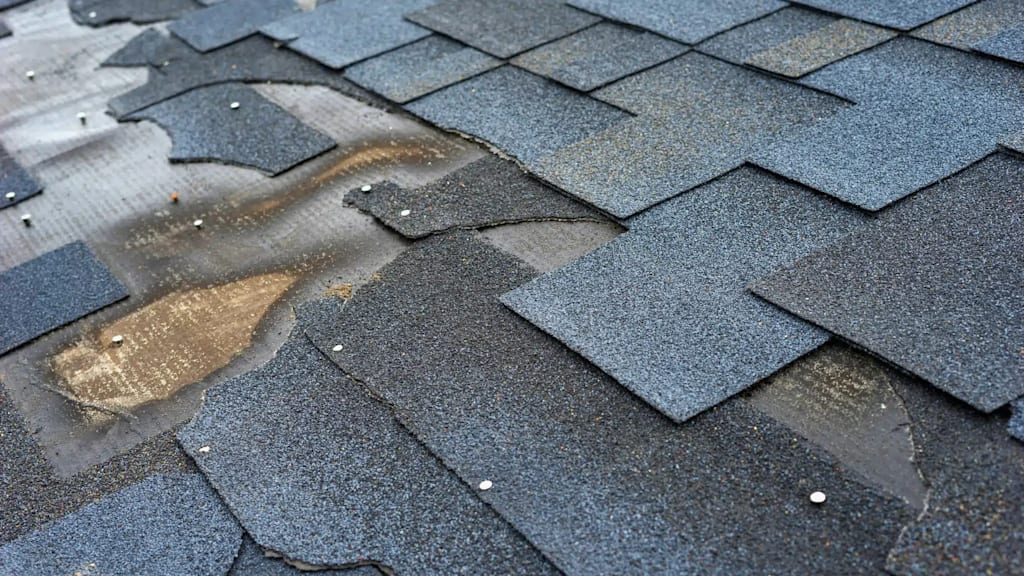
It is an understandable reaction, but often an expensive mistake. Roofs rarely fail with dramatic flair. Unless a falling limb punctures your rafters, severe weather does its worst damage through quiet erosion. High gusts shear heat-activated sealant strips, while hailstones strip away ceramic granules that protect asphalt from the sun. From the driveway, everything looks intact. Months later, the first sustained rainstorm turns your attic into a moisture trap.
Understanding how storm wear works—and knowing what to look for without climbing a ladder—is vital to protecting your home.
The Silent Erosion of Hail Impact
Hail damage is fundamentally an erosion issue rather than a structural puncture. Modern asphalt shingles depend on an outer coat of dense, ceramic-coated mineral granules. These granules serve as your roof’s sunblock, deflecting ultraviolet rays and preventing the asphalt core from baking and drying out.
When hailstones strike at high speeds, they knock those granules clean off the mat. Exposed to direct sunlight, the bare asphalt quickly turns brittle, develops hairline cracks, and allows water to seep down toward the underlayment. While weather agencies consider one-inch hail severe, smaller hail driven by high winds can scour older shingles just as effectively.
Because dark impact spots blend into asphalt from the lawn, look for clues on softer surfaces:
Downspout exits: Fresh mounds of dark, gritty granules washed out at gutter drains indicate heavy shingle abrasion above.
Thin-gauge metals: Gutters, downspouts, and aluminum flashing dent easily. Dimpled downspouts mean shingles took that exact same pounding.
Roof penetrations: Metal vent hoods, exhaust pipes, and flashing reveal impact marks long before missing granules stand out from below.
Wind Uplift and the Broken Seal Trap
Wind damage behaves differently. Rather than blunt impact, severe gusts generate powerful aerodynamic suction along roof edges, eaves, and ridges. As wind rushes over peaks, it pulls upward on shingle tabs, placing mechanical stress on the manufacturer's sealant strip underneath.
Once that adhesive bond shears, the tab lifts. The real danger is what happens next: once the gust subsides, gravity drops the shingle right back flat. From the driveway, the roof appears undisturbed. In reality, the seal is broken. During the next storm, that unbonded shingle flutters, funneling water beneath the overlap and rusting the fasteners holding your decking together.
To spot uplift from the ground, sight across your roof planes at an angle. Look for tabs sitting slightly higher than their neighbors, horizontal creases across bent shingles, or shifted ridge caps along the peaks.
Catching Moisture Early
Water takes time to travel through layered construction. A broken seal rarely causes an immediate living room drip. Moisture must soak through underlayment, saturate plywood decking, and seep through thick insulation before leaving a visible ceiling stain.
Check your attic with a flashlight: inspect the underside of the decking for dark moisture rings or rusted nails, examine insulation beneath valleys for matted patches, and pay attention to sudden musty odors upstairs.
Safety and Early Detection
Addressing storm wear promptly prevents minor issues from spiraling into structural repairs. Industry data shows average storm-related roof repairs sit around $12,300, with severe wood rot pushing costs well above $20,000. Furthermore, insurance policies often require claims to be documented within specific windows tied to verified storm dates, making prompt assessments essential.
Most importantly, keep your feet on the ground. Damp shingles, loose granules, and steep slopes turn post-storm roofs into serious fall hazards. Ground-level clues provide all the justification needed to schedule an evaluation with a certified professional equipped with proper safety gear.
About the Creator
ORB Tree Service Marketing
ORB Tree Service Marketing provides SEO and local search strategies for the tree care and roofing industries. Follow us for insights on search optimization and lead generation for home services.
Enjoyed the story? Support the Creator.
Subscribe for free to receive all their stories in your feed.
Comments
There are no comments for this story
Be the first to respond and start the conversation.