
The Science of Wavy Walls: Why Vinyl Siding Buckles
An architectural look at thermal movement, installation mistakes, and hidden wall cavity risks.

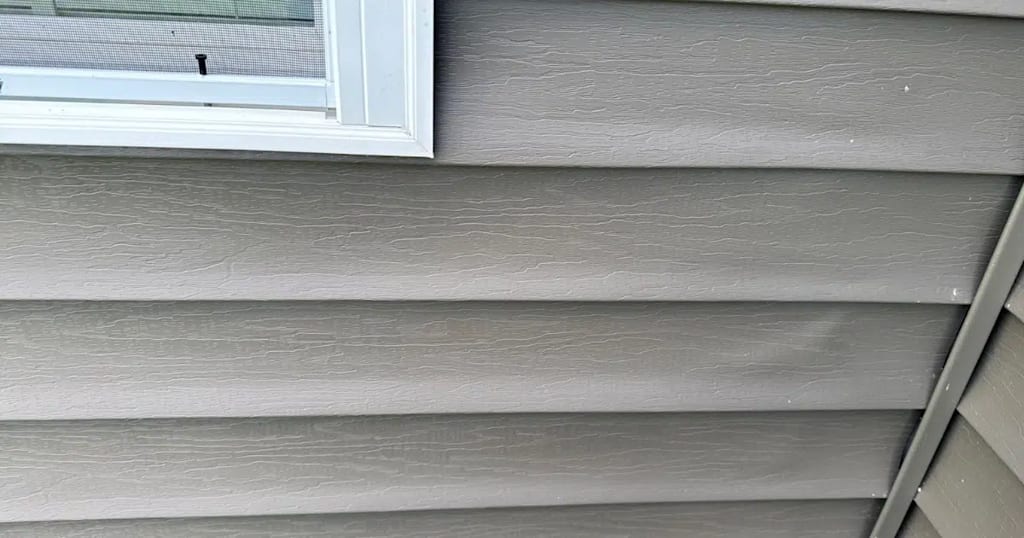
Few sights provoke a faster spike of homeowner anxiety than walking into the backyard on a sunny afternoon and noticing that the side of the house looks like a series of ocean waves. The immediate reaction is almost always financial dread. Most people assume the foundation is settling, the framing is warping, or the house is undergoing major structural failure.
Fortunately, exterior wall distortion is rarely a sign of impending structural collapse. In the building trades, warped or buckled siding is one of the most common issues inspectors and contractors evaluate. While it can occasionally point to structural movement, the underlying culprit is usually far more straightforward: vinyl siding is a dynamic material that has been forced to act like a rigid structure.
Understanding why exterior panels buckle requires examining basic building science, thermal physics, and how a home's outer envelope functions to resist weather.
The Physics of Thermal Movement
To understand why vinyl siding deforms, you have to look at how the material behaves under normal environmental stress. Residential vinyl siding is made of polyvinyl chloride (PVC), a thermoplastic that reacts continuously to temperature changes. On a standard twelve-foot panel, thermal expansion and contraction can alter the length of the vinyl by up to half an inch between winter cold and summer heat.
Because of this constant physical movement, vinyl siding is engineered to "float" on a wall rather than be nailed tight. Unlike traditional wood cladding or fiber cement, which are anchored securely to wall studs, vinyl panels hang loosely from factory-punched slots.
When an installer hammers a nail flush against the plastic or fails to leave expansion room at corner posts, that natural lateral movement gets blocked. As heat warms the panel, the expanding plastic hits an immovable fastener, builds up kinetic pressure, and snaps outward into a visible wave.
Four Common Drivers of Siding Failure
When evaluating warped exterior walls, the root cause almost always boils down to one of four specific mechanisms:
1. Over-Tightened Fasteners
This is by far the leading cause of buckled siding. Installation guidelines require fasteners to be driven straight into the center of factory slots, leaving a small gap—roughly the thickness of a dime—between the fastener head and the vinyl. This allows the panel to slide freely as temperatures shift. When installers treat vinyl like drywall and hammer nails flush, they clamp the plastic tight, guaranteeing it will bow under heat.
2. Concentrated Heat and Window Reflection
Direct sunlight alone rarely melts quality vinyl siding. However, concentrated thermal energy easily pushes PVC past its heat deflection point. Barbecue grills set too close to an exterior wall are a well-known hazard. A less obvious threat comes from modern Low-E glass windows on neighboring homes. Under certain conditions, double-pane glass can bow slightly, acting like a concave mirror that focuses reflected sunlight into intense heat beams exceeding two hundred degrees Fahrenheit.
3. Substrate Moisture Intrusion
If water sneaks past unsealed cladding seams, it eventually reaches the underlying plywood or OSB wall sheathing. As that damp wood absorbs water, it swells outward. This expansion creates uneven pressure behind the siding, driving the panels out into a distorted profile. In these cases, wavy siding is an early warning sign of rot developing inside the wall cavity.
4. Low Material Grade and Solar Absorption
Budget-tier vinyl siding features thin profiles that lack structural rigidity. When paired with dark color pigments that absorb high amounts of solar radiation, low-tier siding becomes far more vulnerable to softening and sagging during summer heatwaves.
Diagnostic Protocols: Repair vs. Replace
Deciding how to address buckled siding comes down to catching the issue early:
Fastener Adjustments: If the buckling is recent and caused strictly by tight nailing on a sound wall, a professional can unhook the panels, back off the fasteners, and snap the panels back into place.
Sectional Replacements: If a localized heat source melted a small area, individual rows can be swapped out. Keep in mind that finding an exact color match on siding older than five years is challenging due to natural sun fading.
Full System Replacement: If buckling is widespread or the wall sheathing is soft and rotted underneath, the exterior cladding must be stripped, damaged wood replaced, a continuous house wrap applied, and new panels installed correctly.
Maintaining Your Building Envelope
Your roof, gutters, and exterior cladding function as a unified barrier against the elements. Addressing surface distortion as soon as it appears protects the underlying wall assembly, maintains your home's curb appeal, and ensures your building envelope performs as intended for decades to come.
About the Creator
ORB Tree Service Marketing
ORB Tree Service Marketing provides SEO and local search strategies for the tree care and roofing industries. Follow us for insights on search optimization and lead generation for home services.
Enjoyed the story? Support the Creator.
Subscribe for free to receive all their stories in your feed.
Comments
There are no comments for this story
Be the first to respond and start the conversation.