
The Real Reason Retirees Are Choosing a Toyota HiAce Campervan Over a Cruise
Life in Australia at This Stage is Different

My dad retired on a Friday afternoon in April 2022 after forty-three years in the same industry. By Sunday he was reorganising the garage. By the following Wednesday he had called my mum into the kitchen three times to "just have a look at something" on his laptop.
The something was campervans.
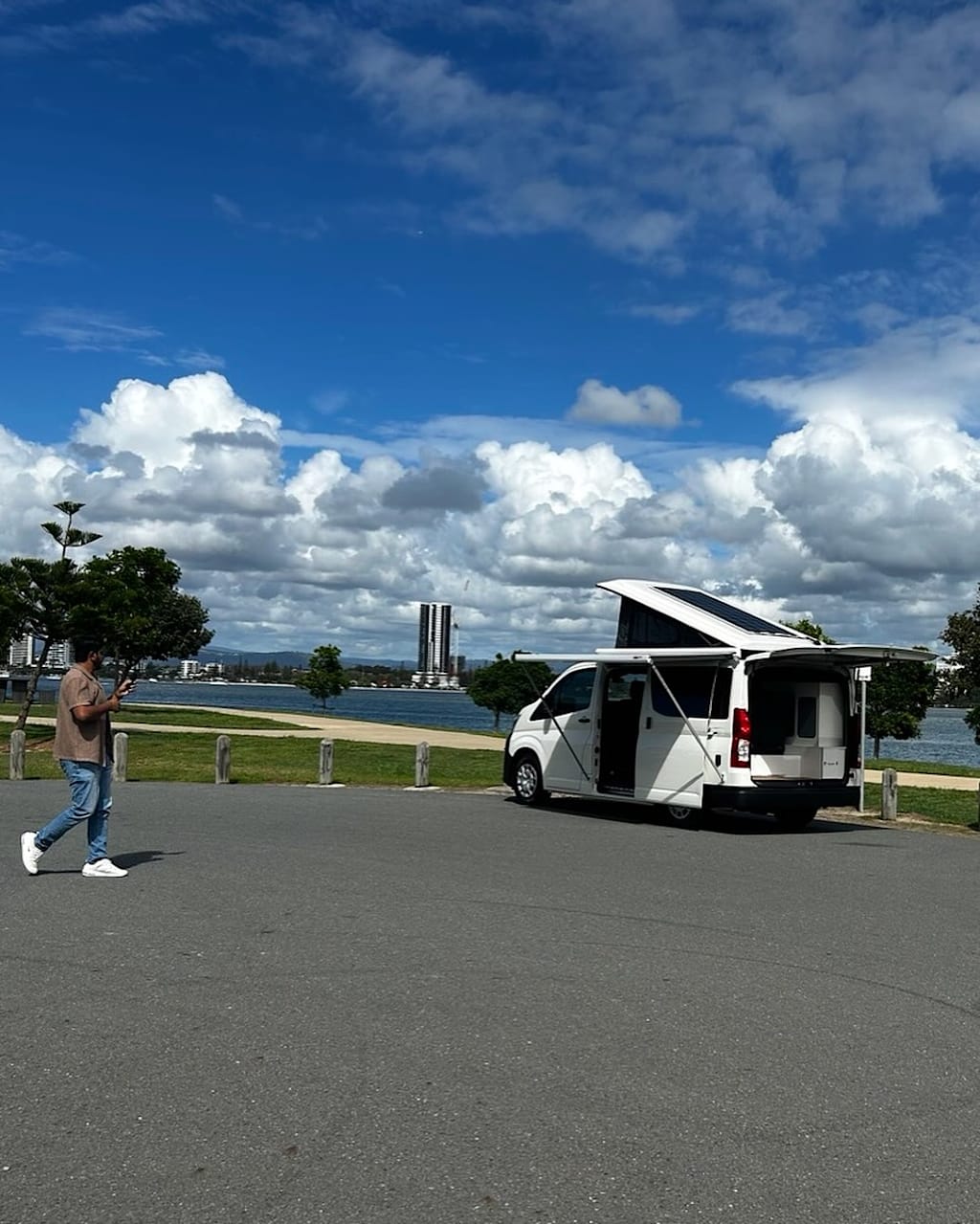
Not cruises. Not a European river tour. Not the resort in Bali that their friends kept recommending. Campervans. Specifically, a Toyota HiAce campervan sitting in a Gold Coast showroom that he'd been quietly reading about for longer than any of us realised.
I didn't fully understand it at the time. My parents aren't particularly outdoorsy people. Dad's idea of roughing it had always been a hotel without room service. But something had shifted in him — and I've since spoken to enough people in the same situation to understand that this shift is remarkably common, and remarkably consistent in what it points toward.
It points toward the road.
Not the airport. Not a check-in desk. Not someone else's schedule wrapped in a glossy brochure. The actual road — the unsealed stretch three hours past the last servo, the campsite that doesn't appear on any booking app, the morning where nobody needs you and the day belongs entirely to you and whatever's outside the van door.
Life in Australia at retirement age is, for the people I've spoken to who are actually doing it well, almost nothing like the retirement their parents had. It's not passive. It's not sedentary. It's people in their sixties and seventies who have spent decades deferring the trip and have finally, with great relief, stopped deferring it.
My neighbours Graham and Carol are a good example. Graham did thirty-one years in logistics. Carol ran a small accounting practice. They talked about doing a proper lap of Australia for roughly the last decade of their working lives — the way most people talk about it, as a placeholder for "one day." Then Graham retired, and about four months later Carol looked up from her coffee one morning and said something that apparently landed differently than all the previous conversations.
She said: we're doing it this year.
Within six months they had a HiAce campervan in the driveway. Within eight months they were somewhere outside Karumba with no particular reason to leave. They came back eventually — tanned, noticeably calmer, and slightly insufferable about free camping spots in the Gulf country.
I asked Graham why the HiAce specifically. He thought about it for a moment.
"Mate," he said, "I just didn't want to spend three days in the Kimberley waiting for a part."
That's the whole answer, really. It sounds unglamorous but it's completely practical and it's the reason the Toyota HiAce campervan comes up again and again when you talk to people who've actually done the distances rather than just planned them.
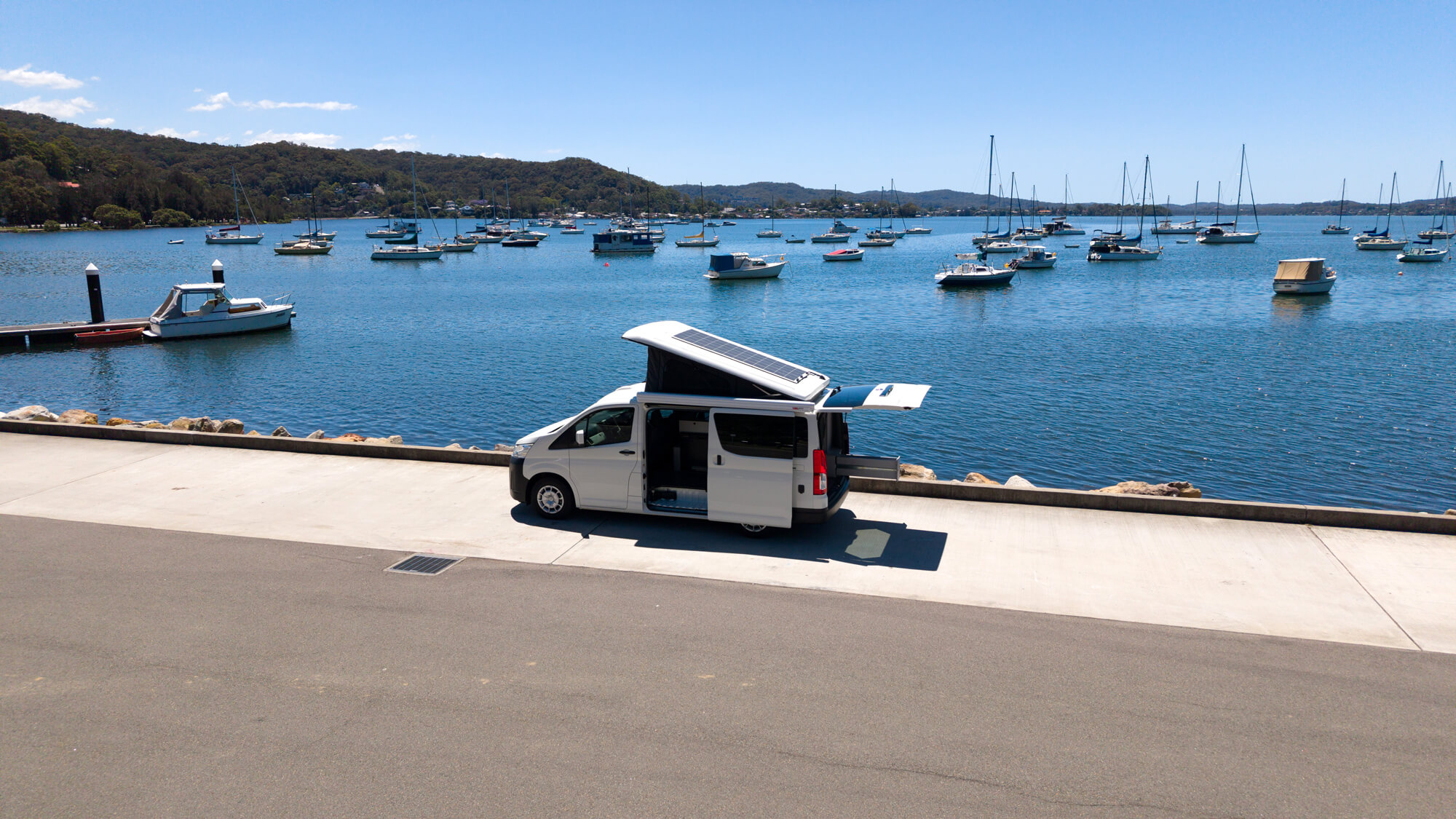
The Toyota service network in Australia is not comparable to any other manufacturer in this context. There are towns in outback Queensland, the Northern Territory, and regional Western Australia where the only mechanic for two hundred kilometres has spent twenty years working on HiAces. The parts are there. The knowledge is there. The infrastructure that surrounds this particular vehicle in this particular country is the result of decades of market penetration that no European van manufacturer has come close to replicating.
This matters when the campervan is also your home. A two-week wait for a Sprinter part in a remote town isn't a travel inconvenience. It's a trip-defining event. And not in a good way.
The current H300 generation — which is the bonneted model, engine out front, genuinely different from the old cab-over HiAce that older Australians might remember with mixed feelings — is also just a better vehicle than its reputation sometimes suggests. Five-star ANCAP safety rating. Seven airbags. Pre-collision braking. 450Nm from a 2.8-litre turbo diesel that pulls a fully loaded campervan without drama at highway speeds or on corrugated dirt tracks. At 100km/h it's quiet enough that you can have a conversation without raising your voice.
These aren't showroom features. They're features you stop thinking about because they just work, every day, for months.
The other thing that changed Graham's thinking — and mine, the more I looked into it — is the compliance question. Not the most exciting topic, but an important one.
A properly built campervan in Australia isn't just a van with furniture in it. At the serious end of the market, it's a second-stage manufactured vehicle — meaning it's gone through a formal engineering and certification process that produces a fully ADR certified, VSB14 compliant vehicle with a compliance plate. This means it can be registered in any Australian state or territory without needing individual engineering certificates. It means insurance works the way it's supposed to in an accident. It means resale isn't complicated by a buyer asking for paperwork that doesn't exist.
A lot of campervan conversions in Australia don't meet this standard. Not because the builders are dishonest, but because proper certification is expensive and time-consuming and not every buyer knows to ask for it. It's worth asking for it.
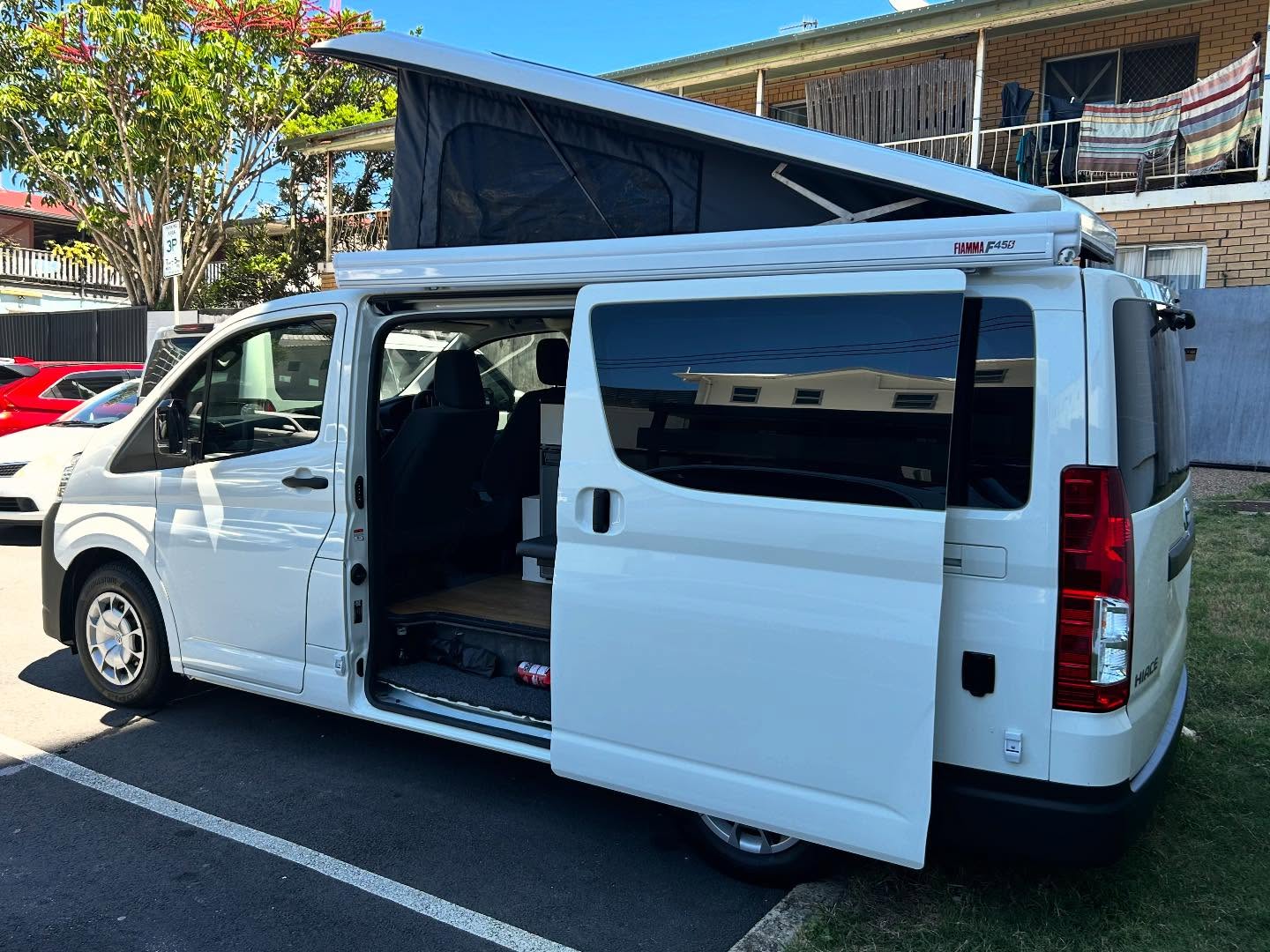
Builders like DUSK Campers on the Gold Coast start every build from a factory-fresh Toyota HiAce H300 — not a used van, not a customer-supplied vehicle — and put every one through full ADR and VSB14 certification before it leaves the facility. That's the standard worth looking for. The quality of the conversion itself — Victron Energy electrical systems, engineered pop-top roof, precision CNC cabinetry — reflects the same commitment. Insulation designed for north Queensland summers rather than European spring. Storage that actually makes sense when you're living out of it for three months rather than just looking at it in a showroom.
A travel van in Australia earns its value in the gaps between the famous destinations. The routes that don't have names, the campsites that empty out mid-week, the mornings where the only thing on the agenda is whether to stay another night.
Graham and Carol came back from their eight months with a flat tyre story from outside Cloncurry, a week of rain in the Kimberley they're still processing, and a list of places they're going back to. Carol said something that I keep thinking about.
"You spend your whole working life earning the right to do this. And then when you finally do it, you wonder what took you so long."
The best campervan in Australia isn't a specific model or a particular builder. It's the one that's sorted, reliable and comfortable enough that home is genuinely wherever you park it.
The road's been waiting long enough.
About the Creator
Kate Brownell
Independent Teacher, Freelance Writer, Conservationist, Eco Friendly Environment Crusader. A life hack writer by choice. Published articles on Ezines and Lifehacker.
Enjoyed the story? Support the Creator.
Subscribe for free to receive all their stories in your feed.
Comments
There are no comments for this story
Be the first to respond and start the conversation.