
The Morning I Finally Pulled Down the Shower Curtain
How swapping a clammy shower curtain for a pane of glass quietly changed my mornings — and everything I learned along the way.

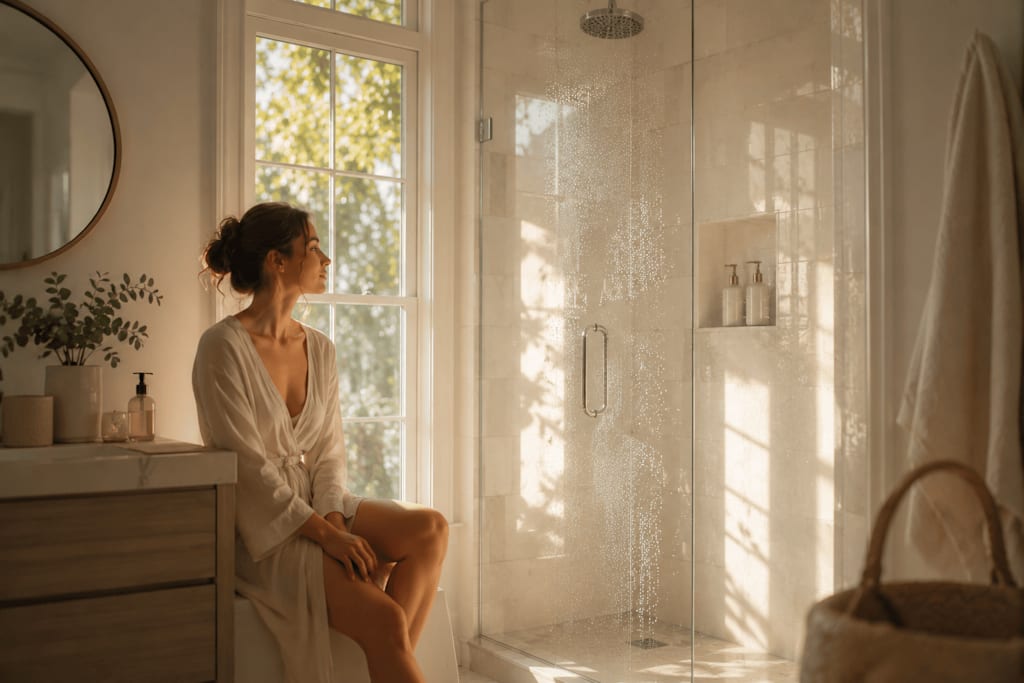
For three years, the first thing I touched every morning was a damp shower curtain. You know the one. It billowed inward the second the water ran, cold and clinging against my arm, and grew a faint line of mildew along the hem no matter how often I scrubbed it. My bathroom was small and dim, and that curtain made the whole room feel like a closet you happened to bathe in.
One morning I just took it down. Rings popping off the rod, one by one. I stood there looking at the bare tile and thought, there has to be a better way to close off a shower.
So I went looking. Here's what I wish someone had told me before I started.
The light comes back
The first thing you notice with glass instead of fabric is the light. A curtain stops it dead. Glass lets the morning pour straight through, and suddenly the room feels like it took a breath. Mine didn't get bigger — it just stopped feeling like a cupboard. And no more peeling wet plastic off my skin, no more mildew in the folds. The floor stays dry. The room smells like nothing at all, which in a bathroom is the highest compliment.
Pick the door your room can actually hold
I started thinking of the options like people.
The sliding door is the quiet one — glides on its track, needs no room to swing, perfect when space is tight. The swing door has presence, opens wide and generous, but it wants floor space my little room didn't have. The folding door is the clever one, panels tucking back on themselves to fit narrow openings. And corner doors slot into showers wedged into a corner.
None of them is the right answer for everyone. The right one is just the one that fits your walls and the path your feet trace each morning.
Don't forget the glass itself
I almost made this mistake: I got so caught up choosing a finish — brushed nickel, matte black, chrome — that I nearly forgot the glass was the thing I'd actually live with.
Insist on tempered safety glass. If it ever breaks, it crumbles into small blunt pieces instead of long shards. That's not a style choice, it's a safety one.
And if your tap water is hard like mine, ask about a protective coating. Plain glass drinks up water spots and soap film until it hazes over for good. A coating lets the water bead and rinse away. It turned out to be the difference between a five-second squeegee and a lifetime of scrubbing.
Measure like the walls are lying
Because they are. Old walls are rarely straight.
Measure the width at the top, the middle, and the bottom, and trust the smallest number. Do the same for the height. Write it all down. When mine came back stubbornly uneven, I learned custom-cut glass exists for exactly that — a door made to your real opening instead of a stock size forced into a space it never fit.
Hanging it
You can do this yourself if you're patient. Get everything plumb, shim where you have to, seal every edge, and let the silicone cure before you test it. Lift the glass like it's precious, because it is. But if your opening is badly crooked, or the panels are heavy, or the tile would break your heart to crack — call someone. The glass is the expensive part. Don't gamble it on a rushed afternoon.
The quiet reward
These days my mornings just start cleaner. Light through clear glass instead of a clammy curtain. A dry floor. Nothing clinging to me, nothing growing in the folds.
A shower door is a small thing. But the small things are the ones we touch every single day — and getting this one right turned a daily annoyance into something I don't even notice anymore, because it simply works.
About the Creator
ZeroGPT Plus
https://www.zerogpt.plus/
Free AI Content Plagiarism Checker
Enjoyed the story? Support the Creator.
Subscribe for free to receive all their stories in your feed.
Comments
There are no comments for this story
Be the first to respond and start the conversation.