
The Math and Warmth of a Second Marriage
My dad married a square dancer and I didn't stop him: With no pension and no children, who else can you count on?
When my dad called to tell me he was getting married, I was busy wrestling over the last bunch of crown daisy greens at the wet market.
I had the phone wedged between my ear and shoulder, clutching three yuan in loose change. He said, "Girl, I’ve got something to tell you. Your Auntie Liu and I are going to register for a marriage certificate."
I froze for a second, nearly letting the lady next to me snatch the greens away.
"Which Auntie Liu?"
"The one from the square dancing group. You’ve met her—lives downstairs, the one you saw last time you visited."
I remembered. Last time I went home, I did see my dad dancing a duet with a lady who had permed, curly hair. They moved with a practiced rhythm. I had stood by the apartment entrance watching for a moment, and my dad had given me a bashful smile, looking exactly like a kid caught stealing candy.
"Alright. When?"
My dad clearly hadn't expected me to agree so readily. There was a few seconds of silence on the other end before he asked tentatively, "You... don't object?"
"Why would I object? You’re sixty-three. What are they going to swindle you out of, your looks or your fortune? Do you even have a fortune?"
My dad chuckled, a sound heavy with relief.
In truth, I saw the situation clearly. My mother had been gone for five years. My dad kept that old apartment alone; the stovetop was always scrubbed bright and the fridge was perfectly organized, but every time I visited, I felt something was missing. It lacked the "scent of life." He ate alone, watched TV alone, and paced the living room alone with no one to even bicker with.
Once, I called him in the middle of the night. It rang seven or eight times before he answered, his voice thick with sleep. I asked why he was in bed so early. He said there wasn't much else to do, so he’d lain down around seven. After hanging up, I did the math: staying in that house, lying there from 7:00 PM until he woke at 5:00 AM the next day—ten whole hours with zero connection to the world.
That thought made me ache all night.
Later, when he started square dancing, I was actually quite happy. At least he was getting out and talking to people. Gradually, his complexion improved and he became more talkative on the phone, occasionally complaining: "That Uncle Zhang’s dance steps... honestly, it looks like he’s stepped on an electric wire." It always made me laugh.
So when he said he wanted to marry, my first reaction wasn't opposition. It was: Finally.
Still, I had to meet this Auntie Liu.
We met at a Hunan restaurant. My dad called specifically to remind me: "Your Auntie Liu can’t handle spicy food. Just order mild." I thought to myself: They aren't even officially wed yet, and he's already worrying about her.
Auntie Liu was four years younger than my father. She had a round, kind face and a loud voice, but everything she said was sensible. The moment we met, she pulled a jar of homemade pickled radishes from her pocket and handed it to me. "I didn't know if you’d like these, but I made them myself. They’re clean."
I took them; the jar was still warm.
Throughout dinner, I observed. She plated food for my dad quite naturally, until his bowl was piled high like a small mountain. My dad poured water for her, instinctively touching the side of the cup to check the temperature. That small gesture made my heart twinge—my mother used to do that very same thing.
Halfway through the meal, I put down my chopsticks and asked directly, "Auntie Liu, do you have children?"
She blinked, then smiled. "No. I never had any."
I asked again, "Do you have a pension?"
"I do. Not much, just over two thousand a month. Enough for my own expenses."
I nodded and stopped asking.
My dad sat beside her, chopsticks hovering in mid-air, watching me nervously. I smiled at him. "Eat up. It won't taste good once it's cold."
On the way home, my dad couldn't hold it in anymore. He asked cautiously, "What did you mean by those questions earlier?"
"Nothing special. Just getting to know the situation."
"So... do you approve?"
I sighed. "Dad, let me just ask you one thing: are you happy when you're with her?"
He thought for a moment and said seriously, "I am. When I'm dancing with her, I feel young again."
"Then that’s enough."
My dad went silent again. After a few steps, he suddenly said, "Girl, I know it hasn't been easy for you. Since your mom passed, you’ve worried a lot. I don't want to be a burden to you..."
I cut him off. "Dad, listen to me."
I stopped and looked at him. Under the streetlights, his hair was mostly white, and the wrinkles on his face were deeper than a few years ago, but his eyes were brighter. Before, when I visited, his gaze was always wooden, like a pool of stagnant water. Now, there was light in them.
"You don't have a pension, and she doesn't have children. Who are the two of you going to count on later? Me? Fine, I accept that. But if the two of you can keep each other company and look out for one another, that’s better than anything. Being so alone that you can't even get a glass of warm water when you're sick—that would be a burden to me."
My dad’s eyes reddened. He turned his head away, pretending to look at the trees by the road.
I didn't say anything more. Some things are best left understood rather than over-explained.
Everything went smoothly after that. On the day they registered their marriage, I took a half-day off to wait in line with them. The young clerk at the Civil Affairs Bureau glanced at them and asked my dad, "Are both parties informed and consenting?" My dad nodded. She asked Auntie Liu, who said she was. The girl slammed down the stamp. Nine yuan later, it was done.
As we walked out, I teased them, "Only nine yuan? My dad got off way too cheap."
Auntie Liu laughed at my joke. My dad shot me a fake glare, but he couldn't hide the upturn of his lips.
After the wedding, my dad cleared out the guest bedroom for Auntie Liu's things. I went over to help them move. Auntie Liu didn't have many possessions; the most valuable was an old Phoenix-brand sewing machine, a few years older than me. She stroked the machine and told me, "This thing has been with me for thirty years. Mending and fixing—it can do anything."
The sewing machine found a home on the balcony. When she was free, Auntie Liu would make insoles for the family or hem trousers. When my dad’s pajamas got a hole, she patched it with a tiny embroidered flower. My dad pranced around the house in them, looking incredibly smug.
Life settled in, even better than I had imagined.
Auntie Liu knew how to cook, and she was meticulous about it. When my dad was alone, he just boiled noodles or frozen dumplings to get by. Now, every meal had a proper dish and a soup, and she even mixed coarse grains into the rice, saying it was better for his health. My dad complained that she was overbearing, but he cleaned his plate every time.
What surprised me most was that Auntie Liu put my mother's memorial portrait back out.
I had never mentioned this to anyone. After my mom passed, my dad tucked her photo away in a cabinet. I knew it wasn't because he didn't care; it was because he didn't dare to look. Facing the photo of someone who is never coming back every day is an agonizing way to live. But I could also feel that after he hid the photo, there was a hole in his heart, like a missing piece of a puzzle.
One day when I visited, I found my mom’s portrait back out, placed right by the TV cabinet. It was wiped clean, and a small vase sat next to it with a few wild flowers she’d picked from somewhere.
I stood there staring for a long time. Auntie Liu poked her head out from the kitchen and said casually, "That’s your mother’s place; it should be there. I’ve settled it with your dad—on holidays and anniversaries, we’ll burn incense and talk to her as we should. I don't mind those things."
I didn't say a word. I just turned and went to the bathroom to wash my face.
When I came out, my dad was on the balcony watering Auntie Liu’s plants. They were standing very close. My dad said something I couldn't hear, and Auntie Liu gave him a playful swat. The sunlight hit them, looking warm and golden.
Standing in the living room watching this, I suddenly felt: This is what a life is supposed to look like.
Last month, my dad fell off his electric scooter and fractured his leg. I was in a meeting when I got the call; my legs went weak with fear. By the time I reached the hospital, Auntie Liu was already in the ward, feeding my dad a bowl of congee.
"How is he?" I asked.
"It’s nothing, just a crack. He’s in a cast; he just needs rest," my dad grinned, even making a show of moving his good leg.
Auntie Liu rolled her eyes at him. "Still laughing! I told you to ride slowly, but did you listen? Who were you racing? You’re in your sixties—have some sense!"
My dad looked sheepish and didn't dare utter a peep.
Watching them, I suddenly remembered when my mom was alive; she used to scold my dad exactly like that. The same expression, the same tone. And my dad was being the same way—getting chewed out while secretly smirking.
He was hospitalized for two weeks, and Auntie Liu took care of everything. I worked during the day and could only relieve her for a bit in the evenings. Every time I arrived, I saw Auntie Liu sitting by the bed, either peeling an orange, slicing an apple, or massaging my dad's good leg so his muscles wouldn't atrophy from lying down.
My dad’s lead doctor said to me, "Your father’s partner is truly wonderful. She looks after him more carefully than a professional caregiver."
I didn't correct him. I just smiled and said, "Yes, my Auntie is a good person."
On the day of his discharge, I went to settle the bill. Auntie Liu insisted on paying, pulling a cloth bundle from her pocket. She unwrapped it layer by layer to reveal a stack of neat hundred-yuan bills that she had clearly been saving for a long time.
"Auntie Liu, no need. I have medical insurance; it won't cost much after the reimbursement."
She got anxious. "I can't let you pay alone! Your father is my partner; I have to contribute."
I tucked the money back into her pocket. "How about this: the two of you living a good life together is the best way to save me money. If you really want to give me something, leave me a bigger inheritance when you're gone."
She laughed despite her frustration. "With my meager possessions, the only thing I can give you is that sewing machine."
"Deal. I’ve officially reserved the sewing machine."
My dad listened from the side, his eyes crinkling into slits as he smiled.
I know that I didn't stop them back then not because I was exceptionally open-minded, but because I had done the math—both the practical math and the emotional math.
The practical math was simple. My dad has no pension. For years, he relied on a retirement fund I saved for him plus my monthly allowance. Though Auntie Liu has a pension, two thousand yuan in this city is barely enough for food. If they lived separately, one lonely old man and one lonely old woman would both be scraping by and miserable. Together, they save on rent, utilities, and groceries. They share the expenses of one household, and their quality of life actually goes up.
More importantly, if someone gets a fever or a chill, there’s someone there. How much does a caregiver cost per day? How much is a nursing home per month? No matter how you calculate it, being together is the better deal.
But the emotional math? I couldn't calculate that if I tried.
Before my mom passed, she held my hand and said, "Take care of your father." I promised I would. But how could I? I have a job, a family, a child. All I could do was go back once a week, buy some groceries, cook a meal, and sit with him for a while. For the other twenty-three and a half hours, he was still alone.
That kind of loneliness is something I could never replace.
Auntie Liu could.
She can eat with him every day, walk with him, and go square dancing with him. She can get up in the middle of the night to bring him water when he coughs, remind him to add a layer when the seasons change, and impatiently poke holes in his tall tales while secretly smiling.
I couldn't do any of that.
The other day, I saw a question on Zhihu: "Should children stop their parents from remarrying?" The answers were all over the place. Some feared their inheritance being split; some feared scams; others thought it was embarrassing.
I thought about it and left a comment:
"My dad married a lady from his square dancing group, and I didn't stop him. She has no children, and my dad has no pension. They both know clearly that all they can count on is each other and me, the daughter. This isn't 'calculating'; it’s called living a life. Living is about needing each other and keeping each other warm. If you insist on calling it a transaction, then I’ll accept that—the best transaction in this world is when you are good to me, and I am good to you."
After I posted it, many people liked it, but some sent private messages scolding me, saying I was too cynical and made relationships sound too utilitarian.
I didn't care.
People who actually live life know that emotions aren't something floating in the sky; they are grounded. They land in the three meals a day, in the petty arguments over who takes out the trash or washes the dishes, and in the reality of someone handing you a pill when you're sick.
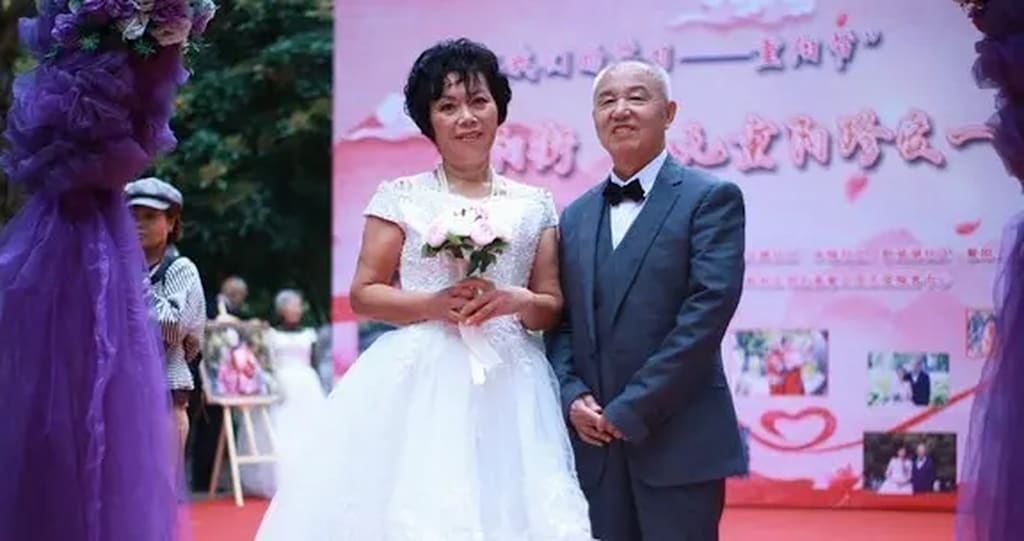
On the day my dad and Auntie Liu got married, they didn't hold a banquet. We just had a meal at home. I cooked a few dishes, Auntie Liu made a soup, and my dad opened a bottle of white liquor he’d been saving for years.
Halfway through the meal, my dad raised his glass. His face was flushed—whether from the alcohol or shyness, I couldn't tell. He stammered, "Um... girl, Dad wants to thank you."
I clinked my glass against his. "What’s there to thank? You living well with Auntie Liu is thanks enough for me."
Auntie Liu wiped her eyes and pretended it was the spice. "There’s too much chili in this soup; it’s making my eyes water."
I looked at the soup. It was a clear broth without so much as a flake of chili floating in it.
But I didn't call her out.
Some things don't need to be said plainly. Some people don't need to be "calculated" exactly. This life, when lived with a bit of "muddled" grace, is much better than understanding everything too clearly.
Outside the window, the music from the square dancing drifted in faintly. My dad’s fingers lightly tapped the rhythm on his knee.
I smiled.
This old man—his heart had already flown out to the square.
About the Creator
Water&Well&Page
I think to write, I write to think
Enjoyed the story? Support the Creator.
Subscribe for free to receive all their stories in your feed.
Comments
There are no comments for this story
Be the first to respond and start the conversation.