
The Hidden Architecture of Florida HOAs: What It Takes to Replace a Driveway
Navigating state architectural statutes, municipal right-of-way rules, and community design codes when upgrading your home exterior.

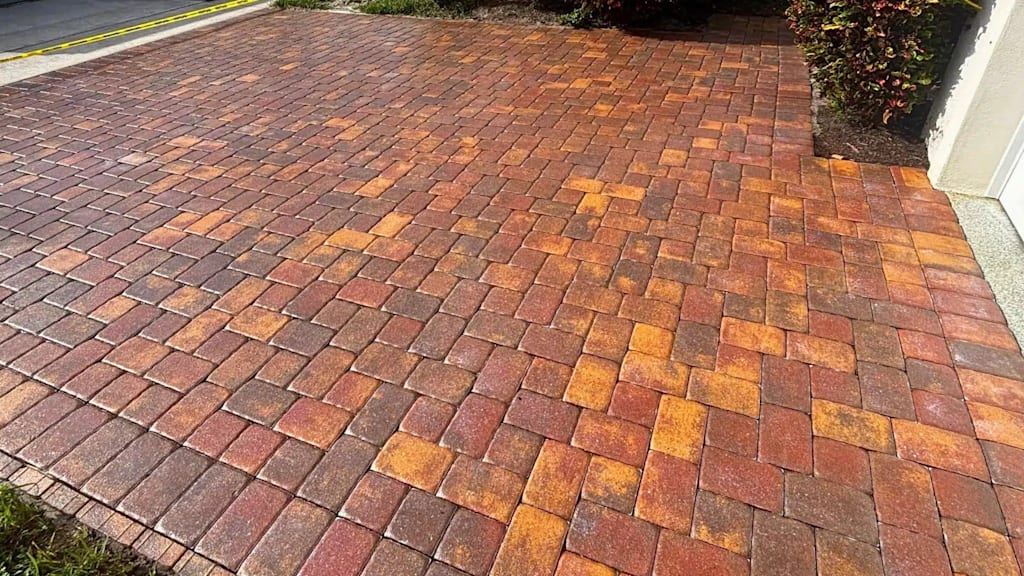
Replacing a cracked concrete or aged asphalt driveway with interlocking stone pavers looks like one of the simplest exterior upgrades you can tackle. It boosts your curb appeal, elevates property value, and gives your home a refreshed, modern look. With installation costs ranging from ten to thirty dollars per square foot, you want the investment done right the first time. You spend hours browsing samples, settle on a warm charcoal or neutral earth tone that matches your exterior trim, and book a reputable installation crew.
In Florida's deed-restricted communities, however, choosing your stone is actually the easiest part. Before a single paver is delivered to your front lawn, you have to navigate an administrative maze of community covenants, Architectural Review Boards, and local municipal permits.
When you buy into an association, your deed binds you to the community’s Declaration of Covenants, Conditions, and Restrictions. Because driveways sit directly within public view and often cross shared walkways, review boards scrutinize them heavily.
Yet contrary to common belief, an architectural committee does not hold unchecked authority. Under Florida Statute Section 720.3035, an association can only regulate the appearance, dimensions, and materials of exterior modifications if that authority is clearly stated or reasonably inferred in governing documents. State law requires these standards to be enforced equitably, reasonably, and objectively across all residents.
Florida statute provides two vital protections for homeowners: First, pre-approved lists are binding. If your association publishes an authorized schedule of acceptable paver materials, color palettes, or dimensions, the board cannot reject your project simply because a member dislikes your preference. Selecting an approved option gives you an enforceable right to proceed. Second, denials require written justification. A board cannot issue an arbitrary refusal. Rejection letters must cite the exact covenant or rule violated and specify precisely what part of the proposed design fails to comply.
Bypassing this review process carries severe penalties. Under Florida Statute Section 720.305, an association can levy statutory fines of up to one hundred dollars per day for continuing violations—capped at one thousand dollars unless governing documents specify higher amounts—and can seek court injunctions to force the removal of unapproved stone.
A common trap for homeowners is assuming that guidelines are identical across towns. In reality, expectations vary depending on whether a board prioritizes visual scale or civil engineering.
In Boca Raton, communities like Timbercreek focus heavily on aesthetic balance. Guidelines require board approval before site preparation, mandate brick pavers in gray or earth tones, and state driveways cannot be wider than the garage.
Further north in Palm Beach Gardens, communities like The Sanctuary treat hardscapes like civil engineering projects. Their manuals mandate pavers extend to the street line for select residences, require structural reinforcement across public sidewalks, and specify an eight-inch compacted base with concrete header curbs where pavers meet the roadway asphalt.
Securing approval from your architectural review board is a necessary milestone, but it does not replace a municipal building permit. Local building departments operate independently of private neighborhood covenants.
The biggest surprise often happens at the road apron. In Palm Beach County, installing decorative pavers within a county-maintained right-of-way requires a recorded removal agreement. This binding legal document obligates the homeowner, along with future buyers, to maintain that section and pay all restoration costs if utility crews ever dig up the roadway.
Tearing out finished masonry because you skipped a procedural step can quickly double your costly renovation expenses. Before scheduling demolition, obtain the most recent architectural guidelines directly from management, compile a complete submittal packet with a property survey and paver spec sheets, confirm in writing whether your contractor handles municipal permits, and never authorize material deliveries until you hold signed approvals from both the association and the local building department.
About the Creator
ORB Tree Service Marketing
ORB Tree Service Marketing provides SEO and local search strategies for the tree care and roofing industries. Follow us for insights on search optimization and lead generation for home services.
Enjoyed the story? Support the Creator.
Subscribe for free to receive all their stories in your feed.
Comments
There are no comments for this story
Be the first to respond and start the conversation.