
The Hidden Aftermath of a Hailstorm: Why Roof Leaks Take Months to Appear
Severe weather rarely destroys a home immediately. Here is why structural damage stays hidden and how to spot it early.

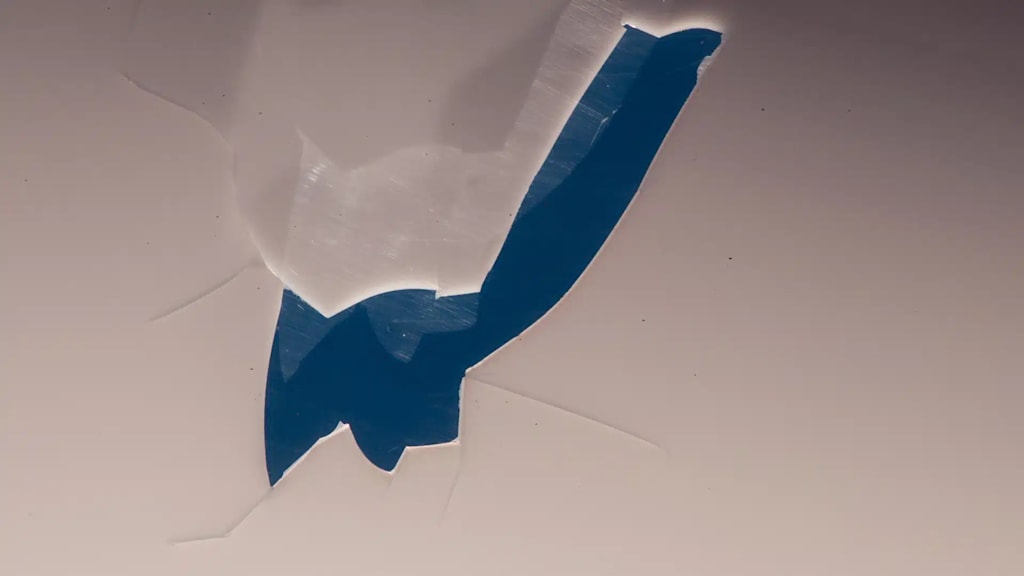
Late autumn always brings a specific frustration for property owners. The temperature drops, heavy rain sets in, and a faint yellow stain creeps across a second-story ceiling. When people spot that mark, their immediate reaction is confusion. They remember the violent hailstorm from six months prior. They recall walking outside the next morning, looking up at the roof, and seeing no missing shingles or obvious holes. They assumed their home escaped unharmed.
Unfortunately, roofing systems rarely fail in a single dramatic moment. Severe weather is far more subtle than that. Hail causes quiet, slow-burning structural damage that takes six to twelve months—often after a season of freezing and thawing cycles—to finally breach your living space.
The Science of "Bruised Shingles"
To understand why post-storm leaks take so long to show up, you must look at what happens when dense ice strikes an asphalt shingle. Roofing professionals call the result a bruised shingle.
When hail hits asphalt at high velocity, it crushes the internal fiberglass mat underneath without necessarily tearing the outer fabric. Think of dropping an apple on a hardwood floor. The skin might look completely unblemished, but the fruit inside has turned to mush.
From the driveway, a bruised shingle looks dark, flat, and secure. But as summer heat alternates with cool rain and winter freezing cycles, that compressed soft spot flexes continuously. The protective layer of mineral granules begins to loosen. With every passing rainstorm, those granules wash away into downspouts, leaving the raw backing directly exposed to sunlight and moisture. Months later, water finally penetrates the wooden deck beneath.
How Hail Impacts Different Materials
Hail does not leave uniform marks across every property. Damage presents differently depending on the exterior material protecting the building envelope:
Asphalt Shingles: Look for dark circular bare spots, heavy sediment settling in gutter downspouts, or clean splits across shingle lines.
Metal Roofs: Look for round dings across panels, minor distortions near fasteners, or chipped paint finishes that expose steel to rust over time.
Wood Shake and Slate: Wood displays fresh, light-colored splits along the grain. Brittle slate develops star-shaped puncture fractures that cause tiles to loosen and slide out of alignment.
Clay and Concrete: Concentrated chipping and fractures occur along raised ridges and outer corners, leaving underlying waterproof membranes exposed.
Secondary Hardware Indicators
You do not always need to get on top of a structure to evaluate storm intensity. Secondary building components act as clear ground-level signals:
Metal Flashing: Bent or dented metal strips around chimneys and sidewalls create microscopic gaps for wind-driven rain to enter.
Roof Vents: Plastic vent caps crack easily under direct hits, while metal vents exhibit deep dings that can block airflow.
Gutters and Downspouts: Rim dents, chipped paint, and crushed downspouts offer direct visual proof of hail size and density.
Skylights: Compromised edge seals, chipped framing, or subtle hairline fractures along glass edges.
Safe Post-Storm Best Practices
Handling the aftermath of severe weather comes down to avoiding a few frequent mistakes. Never climb onto a potentially damaged roof yourself; post-storm surfaces are slick, fragile, and dangerous. Use high-powered binoculars from the safety of your lawn instead.
Additionally, never assume that the absence of immediate ceiling drips means your building envelope is secure. Micro-cracks and crushed fiberglass require time and weathering to fail completely.
Taking a proactive approach involves three simple steps:
Record storm details: Write down the exact date, time, and estimated hail size.
Document ground-level proof: Photograph dented siding, outdoor furniture, and damaged downspouts.
Schedule an evaluation: Have a qualified professional perform a thorough close-up inspection.
Catching subtle granule loss or bent flashing early prevents minor maintenance issues from turning into major structural repairs down the road.
About the Creator
ORB Tree Service Marketing
ORB Tree Service Marketing provides SEO and local search strategies for the tree care and roofing industries. Follow us for insights on search optimization and lead generation for home services.
Enjoyed the story? Support the Creator.
Subscribe for free to receive all their stories in your feed.
Comments
There are no comments for this story
Be the first to respond and start the conversation.