
The Henna Exporter Who Almost Lost Everything to a Tariff — And What He Did About It
A real-world story about surviving U.S. tariff pressure, protecting profit margins, and why the answer was sitting in a dusty Indian warehouse all along.

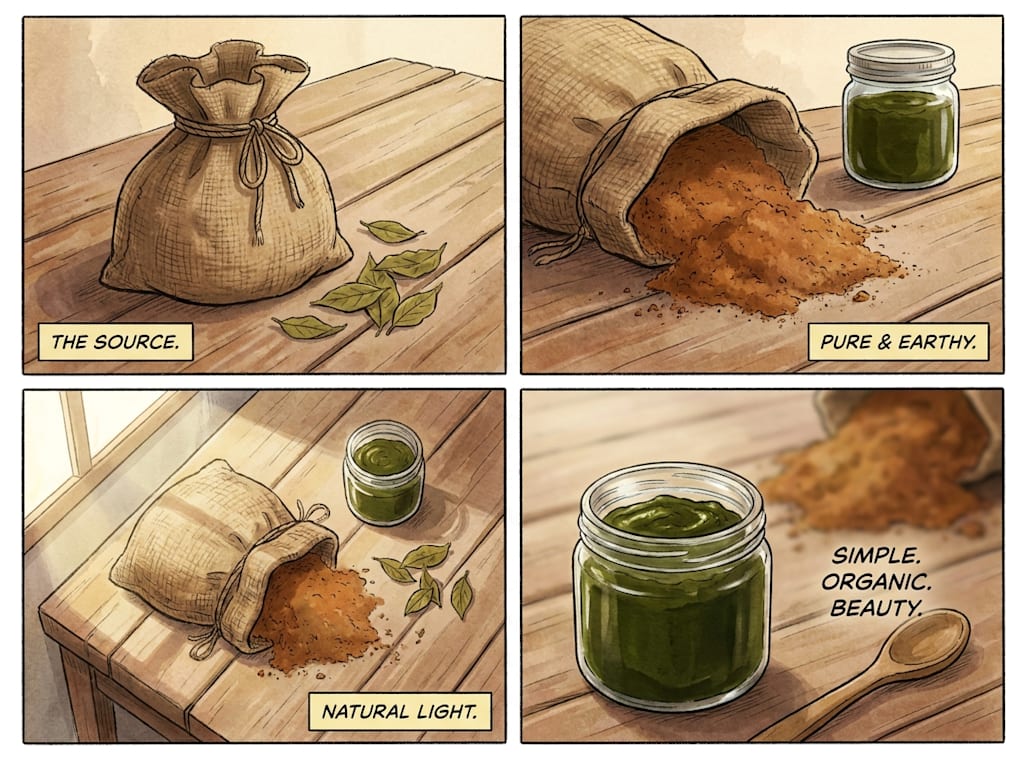
Nobody tells you this when you get into the export business. They show you the glossy part — the shipping containers, the international invoices, the dollar signs. They don't mention that one morning you'll wake up, check the news over your chai, and read that the United States has slapped a new round of tariffs on imported goods, and suddenly your entire pricing structure looks like it was built on a house of cards in a light breeze.
That's exactly what happened to Ramesh. Not a famous Ramesh. Just a regular one, from Rajasthan, who had spent the better part of a decade building a modest but steady export business around one of the most ancient beauty products in the world — henna. Pure organic henna powder, to be specific. The kind that women in New Jersey and New York and Texas were suddenly going crazy for because they were done putting mysterious chemicals on their scalps and wanted something that actually came from the earth.
Ramesh wasn't a philosopher. He was a businessman. But even he could appreciate the irony — the West had spent a hundred years telling India that traditional things were backward, and now they were paying premium prices to get those same traditional things shipped to their doorstep in sleek kraft paper packaging with QR codes on the back.
Business was good. And then the tariffs came.
The first conversation Ramesh had with his American buyer after the new tariff announcement was not a pleasant one. The buyer — a wellness brand in California — was very polite, very apologetic, and very clear: they could not absorb the new import costs. The price would have to come down. Ramesh did the math three times, hoping he'd made an error. He hadn't. If he dropped the price to keep the buyer happy, he'd be selling at a loss after accounting for shipping, certification, and packaging. If he held the price, he risked losing the account entirely to a competitor who might be willing to bleed a little.
This is the part of the story where most people either give up or do something desperate. Ramesh did neither. He called his cousin, who called a logistics consultant, who said something that seemed obvious in hindsight but felt like a revelation at the time: "The problem isn't your price. The problem is your cost structure."
Let that sink in for a moment. Because it changes everything.
The tariff was a fixed reality — Ramesh couldn't change American trade policy any more than he could change the weather. But what he could change was how much it cost him to produce, certify, package, and ship his product. And when he started pulling on that thread, he found there was a lot of loose fabric to work with.
The first thing he looked at was his sourcing. He had been buying dried henna leaves from three different middlemen, none of whom could tell him exactly where the leaves came from, how they were harvested, or whether any synthetic fillers had been added during grinding. This mattered more than he'd realized, because the American buyers who were willing to pay top dollar — the ones who could absorb some tariff cost and still move product — were the ones selling to health-conscious consumers. These buyers needed documentation. They needed to be able to tell their customers that this was ethically sourced henna with verified supply chain transparency. Without that story, you're just another bag of green powder competing purely on price. And competing purely on price against bulk commodity suppliers is a game you will lose.
So Ramesh cut the middlemen. He went directly to farmers in the Sojat region of Rajasthan, which happens to be where some of the world's finest henna is grown. He negotiated fair prices, got written agreements, and started building what the industry calls a traceable supply chain. His cost per kilo actually dropped slightly. More importantly, he could now tell his buyers exactly which farms the leaves came from, and that story had value.
The second thing he addressed was certification. This is the part that sounds boring but is genuinely the difference between getting into premium markets and being stuck at the commodity end of the shelf. His buyers in the U.S. were asking for MSDS certified henna — Material Safety Data Sheets that proved the product was safe for handling and use. They were asking for a phytosanitary certificate mehendi document, which is essentially a government-issued declaration that the plant material is free from pests and disease. And the serious ones, the salon chains and the professional distributors, wanted COA verified henna suppliers — a Certificate of Analysis showing the exact composition of the powder, confirming no heavy metals, no synthetic dyes, no adulterants.
Ramesh had been operating without half of these documents, not because he was cutting corners, but because his previous buyers hadn't asked. Now they were asking. And the suppliers who could provide them were suddenly in a completely different league, price-wise.
Getting certified cost money upfront. Ramesh was not thrilled about this. But the math worked out in a very straightforward way: certified product commanded a 20 to 35 percent higher price point in the American market. The one-time cost of certification was recovered within two shipments. After that, it was pure margin improvement.
The third thing he changed was his product line. This is where it gets genuinely interesting, because Ramesh had been thinking too narrowly. He had been selling raw bulk powder and nothing else. But the American market had evolved. The people buying vegan hair color alternatives weren't just buying henna as a loose powder and figuring out the rest themselves. They wanted solutions. They wanted convenience. They wanted the Instagram-worthy experience.
That's where DIY henna beauty kits came in. Ramesh partnered with a small packaging unit and started offering bundled kits — measured henna powder, mixing instructions, an applicator, and a small packet of conditioning oil. The raw material cost per kit was maybe fifteen percent higher than selling plain powder. The selling price was nearly double. And here's the beautiful part: kits are classified differently under trade codes than raw agricultural powder, which meant the tariff rate was different — and more favorable.
He also started supplying henna-infused salon products — pre-mixed conditioning treatments and glossing formulas developed in collaboration with a cosmetic chemist. These were sold to professional salon distributors at margins that raw powder could never achieve. The American salon market was hungry for natural alternatives that actually worked, and premium tattoo-grade henna for body art was a completely separate revenue stream with its own loyal customer base, particularly among the millennial henna art community that had been growing steadily on social media for years.
The fourth adjustment was operational. When the tariff pressure hit, Ramesh had been shipping on a somewhat irregular schedule, responding to orders as they came in. This was costing him money in two ways: unpredictable shipping rates and missed volume discounts. He shifted to a forecasting model, working with his buyers to plan orders four to six months in advance. This allowed him to consolidate shipments, negotiate better freight rates, and position himself as a supplier who offered fast-turnaround export orders on a reliable schedule. Buyers pay more — and stay loyal longer — when they can count on you.
He also started using henna price intelligence tools, which sounds very fancy but is essentially just a habit of tracking global commodity prices, competitor quotes, and currency fluctuation data on a weekly basis. Knowing where the market was heading allowed him to lock in favorable rates with buyers and hedged his exposure to sudden cost spikes.
The fifth thing — and this one is the one that really transformed the business — was positioning. Ramesh had been selling natural mehendi powder export as a commodity. He started selling it as a certified, ethically sourced, plant-based beauty ingredient with full documentation, transparent sourcing, and a supply chain story that his buyers could share with their customers. He made his website actually reflect this — with detailed product pages, downloadable certification documents, clear information about sourcing regions, and a contact page that made it easy for serious buyers to start conversations.
If you want to see what that kind of positioning looks like in practice, honestly just look at what the team at Kirpal Export Overseas (KEO) has built. They operate in exactly this space — bulk henna powder wholesale 2026 demand has been growing steadily, and the suppliers who are winning the business aren't the cheapest ones, they're the ones who can prove their quality, deliver on time, and speak the language of international compliance. Chemical-free hair dye alternatives are one of the fastest-growing segments in the global beauty market, and the buyers who matter are choosing suppliers based on documentation and trust, not just price.
By the end of that year, Ramesh's revenue had actually increased, despite the tariffs. His margins were healthier than they had been before the tariff announcement, because he had been forced to examine his cost structure in a way he never would have otherwise. He had better buyers, better documentation, better products, and a clear story to tell.
The tariff, it turned out, had done him a favor. Not because tariffs are good — they're not, and they make everyone's life harder. But because the pressure forced him to stop competing on the one dimension where he could never win, and start competing on the dimensions where good product and honest business practices actually get rewarded.
There's a version of this story that ends differently, where Ramesh just keeps squeezing his margins, cuts corners on quality to stay cheap, loses his best buyers anyway, and eventually closes up. That version exists too. It happens a lot. The difference between the two versions isn't luck, or connections, or capital. It's whether you're willing to look at the whole picture when the pressure comes, or whether you just stare at the part that hurts.
Henna has been traded across borders for thousands of years. It survived the spice route, colonialism, world wars, and the synthetic chemical revolution. It will survive a tariff schedule. The question is just whether your business survives it with you.
About the Creator
Kirpal Export Overseas
Kirpal Export Overseas (KEO) is a hair dye manufacturer in India. The company supplies bulk hair dye products — 100% herbal henna, indigo powders, and OEM private-label formulations for wholesalers and salons.
Enjoyed the story? Support the Creator.
Subscribe for free to receive all their stories in your feed.
Comments
There are no comments for this story
Be the first to respond and start the conversation.