
The Definitive Guide to Progressive Prescription Glasses
Prescription Glasses

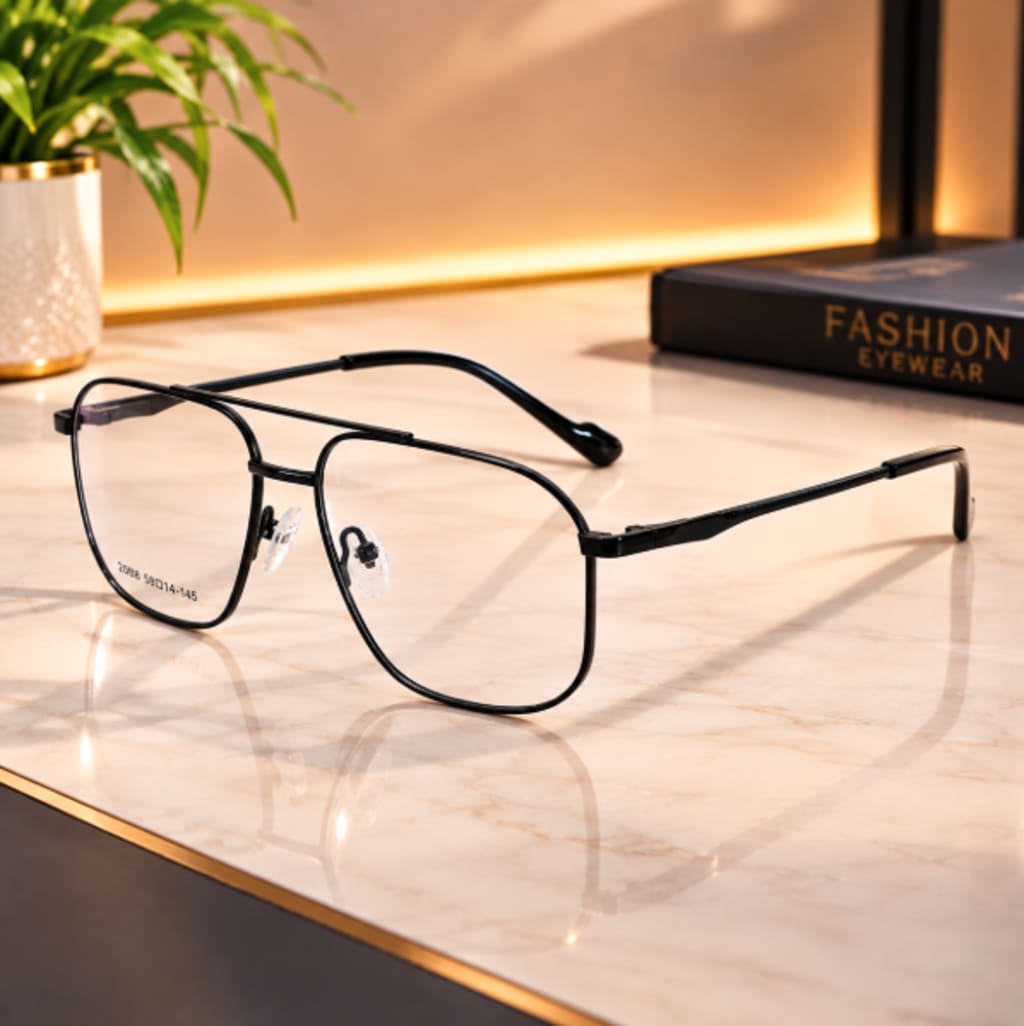
Progressive lenses used to be something you got reluctantly, in your forties, when reading a menu suddenly required holding it at arm's length. That's changing. As more of daily life happens across a phone, a laptop, and everything in between, progressive lenses have quietly become one of the more interesting categories in eyewear, not because they're new, but because the engineering behind them has gotten dramatically better.
This guide walks through how modern progressives actually work, what's changed in the last decade, and what to actually look for if you're buying a pair.
Why Progressives Have Taken Over
Bifocals used to be the default multifocal option, but they've largely fallen out of favor for one simple reason: the visible line. Progressives replace that hard edge with a gradual, blended surface, so your eyes move through focal points without a jarring jump. Optometrists often describe it as the closest lens technology gets to how natural vision actually behaves.
The shift isn't only about age anymore, either. Presbyopia still drives a lot of first-time progressive purchases, it typically starts showing up in your forties, but a newer group of wearers is showing up too: people in their twenties and thirties who spend all day bouncing between a phone six inches away and a monitor a few feet out. Lens makers now build designs specifically for that pattern, often marketed as "digital" or "computer" progressives, which lean harder into the middle and near zones instead of prioritizing distance.
What's Actually Happening Inside the Lens
A progressive lens has three working zones: distance at the top, an intermediate band in the middle, and a reading zone near the bottom. What makes it a progressive rather than a bifocal is the corridor connecting them, the power changes gradually across that stretch instead of jumping at a segment line.
Getting that transition to feel smooth, rather than swimmy or distorted at the edges, comes down to how precisely the lens surface is cut. Older lenses were molded in batches; modern ones are typically surfaced digitally, point by point, using measurements specific to the person wearing them, pupil distance, how the frame sits on their face, even the distance between the lens and the eye. That personalization is a big part of why free-form lenses feel noticeably clearer in the periphery than older generic designs. It's become common enough in the industry that most labs now treat it as a baseline rather than a premium add-on.
Where the Category Is Headed
A few shifts are worth knowing about if you're shopping now:
Task-specific designs. Instead of one general-purpose lens, you can now get progressives built around how you actually spend your day, wider intermediate zones for desk work, or distance-forward designs if you're driving a lot.
Built-in coatings, not afterthoughts. Blue light filtering, anti-reflective coatings, and photochromic tinting used to be things you added on. Now they're often bundled in from the start, partly because opticians have gotten more vocal about eye strain from long screen sessions. Hydrophobic and oleophobic coatings have also improved, lenses smudge less and stay cleaner through the day, which matters more than people expect for how sharp the optics feel.
Real personalization. Fitting measurements that once required a lab visit, precise fitting height, head posture, frame tilt, can now be captured directly by an optician and fed into the lens design. The result is closer to a custom instrument than an off-the-shelf product.
If you're comparing options, it's worth spending time browsing a full Progressive Prescription Glasses range to see how differently lens geometries and frame shapes are now being paired for specific use cases, rather than sold as one generic design.
Frames Matter More Than You'd Think
With single-vision lenses, frame choice is mostly aesthetic. With progressives, it's functional. Each zone needs physical room on the lens, so a shallow frame can compress the corridor and push the reading zone too close to the bottom edge, annoying at best, unusable at worst. Opticians generally steer people toward frames with enough vertical depth to keep all three zones comfortably in your line of sight.
Fit on the face matters just as much. If a frame sits too far from your eyes, tilts oddly, or slides down your nose over the course of a day, the alignment between your pupils and the lens zones drifts, and so does the clarity. Lighter materials like titanium and good acetate tend to hold their position better than heavier alternatives, which is part of why the fitting itself (not just the lens) affects how well progressives perform over time.
Adjusting to a New Pair
Almost everyone needs an adjustment period, usually a few days, sometimes up to two weeks. The advice that actually helps: wear the new pair consistently instead of switching back to your old glasses in between. Your brain is learning to pair specific eye movements with specific distances, and inconsistent wear slows that down. Turning your head toward what you're looking at, rather than just flicking your eyes, tends to speed things along too.
If something still feels off after two weeks, that's worth a follow-up visit rather than pushing through it. Small tweaks, frame tilt, nose pad position, fitting height, resolve most lingering issues.
What to Actually Check Before Buying
Three things are worth confirming before you commit to a pair:
The lenses use free-form/digital surfacing (this is what gives you wider, clearer zones)
The design category matches how you actually use your eyes day to day — general purpose, digital, or occupational
Your fitting includes accurate pupillary distance and fitting height measurements, since these determine how well the lens performs once it's on your face
Get those three right and progressives stop being a compromise you tolerate and start being an actual upgrade.
Where This Is Going
Progressives have moved from a niche fix for aging eyes to a mainstream default, and the trend line points toward even more personalization — better free-form manufacturing, more precise measurement tools, coatings tuned for screen-heavy lifestyles. If you're picking your first pair or replacing an old one, this is a genuinely good moment to do it, provided you go in with a clear sense of how you actually use your eyes and work with an optician who takes the fitting seriously.
About the Creator
Gulshan
SEO Services, Guest Post & Content Writter.
Enjoyed the story? Support the Creator.
Subscribe for free to receive all their stories in your feed.
Comments
There are no comments for this story
Be the first to respond and start the conversation.