
The Day My Meal Plan Broke, and I Learned What Cheap Really Means
The 40% price hike that forced me to rewrite my meal plan.
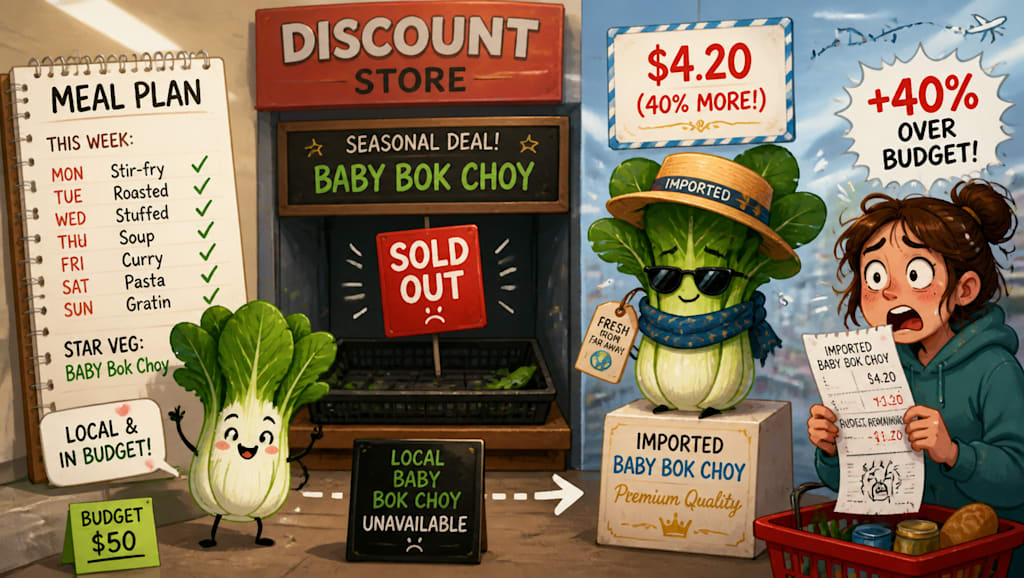
I messed up. I thought I had this budget thing under control until I stood in front of that empty shelf at the discount store. The seasonal squash I needed for my weekly plan was gone. The only option sitting there was an imported version from halfway across the world, and the price tag made me want to cry.
That night, I sat down and actually looked at my receipts. I realized I had been living in a fantasy where everything would always be available at the price I expected. The local discount store had sold out of the summer squash because the season had ended for our region. What remained was a shipment from somewhere warm, and it cost 40% more than my budget allowed.
I traced the failure back to three points where things went wrong. First, I never checked the seasonal availability calendar for my area. Second, I assumed the discount store would always have the items listed in my meal plan. Third, I didn't have a backup plan for when those assumptions failed.
The Moment the Budget Shattered
The discount store manager told me the seasonal squash had sold out two days earlier. They had ordered more, but it wouldn't arrive until next week. By then, the season would be completely over for our region. The imported version sat on the shelf at a premium price because it was the only option available.
I looked at my budget spreadsheet and saw the math. The imported squash cost $5.20 per pound. My budget allowed for $3.50 per pound. That was a $1.70 difference per pound. If I needed three pounds for my weekly plan, that was a $5.10 overrun. Over a month, that added up to more than I wanted to admit.
I started looking for alternatives that would actually work with my budget and my meal plan. I talked to the produce manager about what was available. She suggested three options that would work in the same recipes.
Zucchini: $2.80 per pound, in season now, best for most squash recipes
Yellow Crookneck: $3.10 per pound, available at local farmer markets, best for frying and roasting
Butternut Squash: $3.30 per pound, available year-round, best for soups and casseroles
The zucchini was the obvious choice. It was in season locally, so the price was actually lower than what I had budgeted for the squash. I could use it in almost the same recipes, and my family wouldn't even notice the swap.
Why The Local Price Skyrocketed
But I wanted to understand why this happened in the first place. I spent the evening researching how seasonal produce pricing actually works. The discount store buys seasonal items in bulk when they're abundant. Once the season ends, they have to import from other regions or countries, and those costs get passed on to customers.
The imported squash had a longer supply chain. It traveled thousands of miles to get to the store. That transportation cost alone added about $1.50 per pound to the price. The seasonal local squash never had to make that journey, so it stayed cheap.
I also learned that the discount store's pricing model relies on volume. They buy seasonal items in huge quantities and sell them at low prices to move inventory quickly. When they can't get that volume, they have to either stop carrying the item or raise prices significantly.
The meal plan app I use doesn't account for seasonal availability in my region. It just lists ingredients based on what's in the recipe, not what's available locally. I realized I was relying on a system that didn't have the data I needed.
How I Tested The Substitutes
I spent the rest of that week testing the alternatives. The zucchini worked perfectly in the summer squash recipes. The yellow crookneck from the farmer market had a different flavor profile, but my kids actually preferred it for frying. The butternut squash turned out great for the soup recipe, even though it wasn't what I had planned.
By the end of the week, I had saved money compared to buying the imported squash. I had also discovered new ingredients I might not have tried otherwise. The failure had actually improved my cooking and my budget.
I went back to my meal planning system and made some changes. I added seasonal availability checks for my region. I created backup ingredient lists for each recipe. I started checking local farmer markets before going to the discount store.
Fixing The System For Good
The system I had been using wasn't broken. It was just incomplete. It needed more data about local availability and seasonal timing. I had to fill in those gaps myself.
I also realized that my budget was too rigid. I had allocated a fixed amount for each ingredient category, but I hadn't accounted for price fluctuations. Some weeks, the prices would be lower. Some weeks, they would be higher. I needed a buffer.
The imported squash incident taught me that meal planning isn't just about recipes and calories. It's about understanding the local food system and being flexible when things change. The best meal plan is one that can adapt when reality doesn't match the plan.
I walked out of that discount store with zucchini instead of squash. I spent $4.20 less than I had planned. I cooked dinner that night with ingredients that were actually available locally. And I realized that sometimes the best solutions come from being forced to look for alternatives.
The next time I see an empty shelf, I won't panic. I'll check what's available, compare prices, and make the best choice I can. I'll remember that the imported version cost 40% more, and I won't let that happen again.
I also won't let my meal plan dictate my life. I'll let my budget and my local availability dictate what I cook. The plan serves me, not the other way around. That's the real lesson from that empty shelf.
Disclaimer: Content is for informational purposes only and does not constitute professional advice.
About the Creator
TheFabledScribe
Expert in budgeting and frugal living. Using proven strategies to build financial resilience. Trustworthy guidance for average people seeking results.
I will NEVER put my content behind a paywall..
Enjoyed the story? Support the Creator.
Subscribe for free to receive all their stories in your feed.
Comments
There are no comments for this story
Be the first to respond and start the conversation.