
The Bearing Wall of Our Marriage
My mother-in-law forced me to hand over our wedding house, and I feared my husband was a "Mama’s Boy"—until he pointed to the bearing wall and said, "Mom, this part is solid."

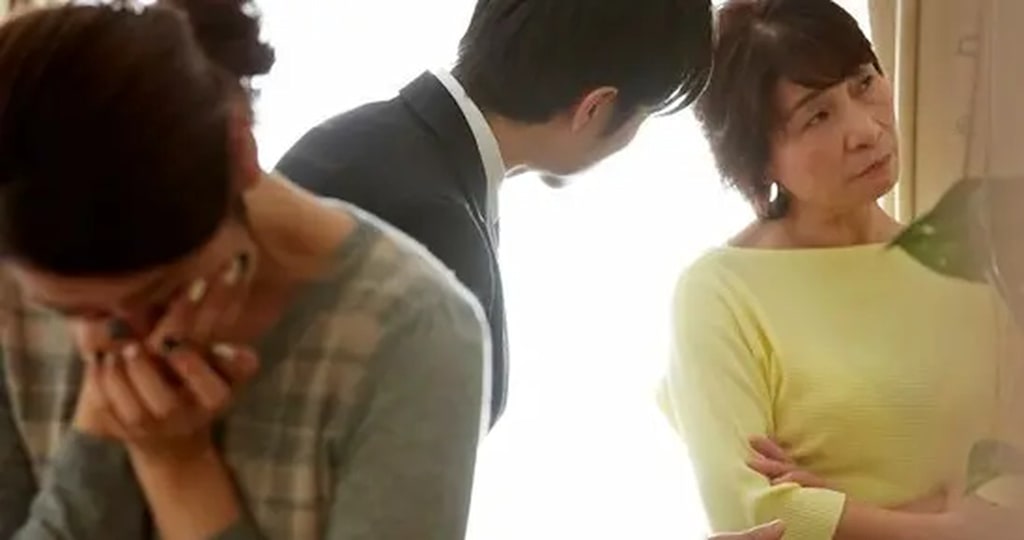
The day I married into the Li family, my mother-in-law held my hand, her face wrinkling into a smile as bright as a blooming flower. She said, "Xiaoya, from now on, this is your home." At the time, I truly believed her.
For the first three months of marriage, life was peaceful enough. My husband, Jianguo, and I lived in their old apartment—a three-bedroom, ninety-square-meter place. Though the decor was dated, it was kept tidy. My mother-in-law took the master bedroom, we took the guest room, and since my father-in-law had passed away early, it was just the three of us. It didn't feel crowded.
But once the three-month mark passed, the wind changed direction.
It started with small things. I bought a bouquet of lilies for the living room; she said the scent gave her a headache. I wanted to sleep in on weekends; she’d start blasting traditional opera on the TV at 7:00 AM. I added a little chili to a dish, and she dropped her chopsticks: "Jianguo hasn't eaten spicy food since he was a kid. As his wife, you didn’t even know that?"
I endured it all. I figured that’s just how mother-in-law/daughter-in-law relationships are—every family needs a period of "grinding and fitting" together.
What truly blocked my heart, however, started in the fourth month. At the dinner table, she began frequenting a certain topic: "You two are married now. I’ve been thinking, young people should have their own place. What’s the point of squeezing in with an old woman like me?"
The first time I heard this, I was actually moved. I thought she was being open-minded. I said, "Mom, we’re looking. Once we save enough for a down payment, we’ll buy a place."
She put down her chopsticks, looked at me, smiled, and said nothing.
Thinking back on that smile now makes my spine go cold. It wasn't a smile of relief; it was the kind that said, “You still don’t get what I mean.”
Sure enough, two days later, she laid it all out.
Jianguo was working overtime that day, so it was just her and me. She called me into her room, pulled a key out of her nightstand, and slapped it onto the table.
"Xiaoya, I’m not telling you to buy a house. I’m saying it’s time you moved out. Move into that house your parents gave you as your Dowry Suite. I’ve looked into it—the renovations have been finished for a long time. It’s a waste to let it sit empty. You two move there, and leave this old apartment to me. It’ll be more spacious."
I was stunned.
That house—my "wedding house"—was bought by my parents emptying out half a lifetime of savings. The down payment was 600,000 yuan; my family provided 400,000, and Jianguo provided 200,000. Both our names were on the deed. My parents supervised every inch of the renovation; my dad even spent days crouching on the floor to do the tile grouting himself. My mom had told me: "Daughter, we can’t give you great wealth, but this house is your backbone—the confidence you need to stand tall in your husband's family."
I never imagined that four months into the marriage, my mother-in-law would reach out her hand for it.
It wasn't a "loan" or a "temporary stay." She wanted us to move out and give her the old place to herself. To put it bluntly, she wanted to trade her ninety-square-meter "old, broken, and small" unit for my family’s 120-square-meter new apartment.
I suppressed my anger and tried to stay polite. "Mom, that house was a wedding gift from my parents. We haven't even lived in it yet. Besides, it wouldn't be convenient for you to live in this big old place all by yourself, so why don't we—"
"Inconvenient?" Her face dropped instantly. "How is it inconvenient? I’ve lived here for twenty years! What does it matter if your parents gave the house? You married into the Li family; your person belongs to the Lis now, let alone a house. I’m telling you, I’ve already spoken to Jianguo about this, and he agreed."
My heart skipped a beat.
When Jianguo came home that night, I asked him. He avoided my eyes and muttered vaguely, "My mom is getting older, she wants more space... we’re young, we can live anywhere..."
In that moment, I felt like a bucket of ice water had been poured over my head.
The man I married couldn't even say a firm word in front of his mother.
For the next month, the atmosphere at home became increasingly oppressive. My mother-in-law found every way to push us. One day she’d say the old pipes were failing; the next, she’d say the neighbors were too loud; the day after, she’d claim her blood pressure was high because she wasn't "comfortable" in her living situation. Every time she spoke, she’d glance at me, her words dripping with one message: Be sensible and hand over the keys.
Jianguo’s attitude broke my heart. He started "lobbying" me, saying things like "Family shouldn't keep score," or "My mom didn't have it easy raising me," or "A house is just a house, what matters is that we're together."
Listening to him, only one thought came to mind: I married a "Mama’s Boy."
During that time, I couldn't sleep. Lying on that five-foot bed, staring at the ceiling, I wondered if I had made a mistake. Should I really give away the house my parents scrimped and saved for before I’d even spent a day in it? But if I didn't, the atmosphere in this house would drive me insane. I even began to seriously consider divorce.
The turning point happened on a Saturday afternoon.
My mother-in-law must have had a lapse in judgment, or perhaps she thought "negotiating" was useless and decided to force my hand. She called a moving company, had the truck pull up right under the building, then knocked on our bedroom door and said: "Xiaoya, pack your things. Clear out the wedding house today. I’m moving in tomorrow."
I was folding clothes. My hands shook so hard I couldn't hold the fabric. I looked at Jianguo. He was sitting on the edge of the bed, head down, silent.
"Jianguo, say something." My voice was trembling.
He still said nothing. My mother-in-law stood by with her arms crossed, looking like she had already won.
I suddenly laughed. Not out of happiness, but that cold laugh that comes when your heart has turned to ash. Fine, I thought. A Mama’s Boy is a Mama’s Boy. I see it clearly now.
I slammed the clothes onto the bed, stood up, grabbed my bag, and headed for the door. I said, "Fine. If you two have decided, then go ahead. Do whatever you want with the houses. I’m going back to my mother's."
As I reached the door to change my shoes, I heard her behind me: "Look at her attitude! I talk to her nicely, and she gives me this face—"
Then, I heard Jianguo stand up.
The sound of him rising was heavy. The chair legs scraped against the floor with a sharp screech. I thought he was coming to stop me; I had already prepared my lines to scream at him.
But I didn't wait for him to stop me.
Instead, he walked into the middle of the living room and stood before the Bearing Wall—the main structural support of the apartment. He raised his hand and rapped his knuckles against it. Thump. Thump. Thump. The sound was dull and solid.
He said, "Mom, come look at this."
My mother-in-law froze. I froze too, hunched over at the door with one shoe halfway on.
Jianguo knocked twice more. The sound wasn't loud, but in that paralyzed living room, every syllable was crystal clear.
"Mom, look at this spot. Is it sturdy?"
She frowned and walked over, not understanding what her son was doing. Jianguo pointed to the wall. "This is a bearing wall. Reinforced concrete, twenty centimeters thick. This building was built in the nineties; they used plenty of steel back then. This wall is incredibly strong."
He turned his head, looked at his mother, then at me standing by the door. I can't describe his expression—it wasn't anger, wasn't grievance; it was a calm, steady certainty, like someone who had finally figured something out.
"Mom," he said, "this wall carries the weight of the entire building. Six families above us, six families below—everyone relies on this wall to hold. If it's torn down, the whole building collapses."
His mother was impatient. "What are you trying to say?"
Jianguo lowered his hand and turned fully to face her. His voice wasn't loud, but I heard something in it that had never been there before.
"I’m saying that a home also has a bearing wall. It’s not the house, and it’s not the savings. It’s the husband and wife. It’s Xiaoya and me. If the two of us collapse, this home falls down."
My mother-in-law’s expression shifted.
"Mom, when you asked me to demand the wedding house from Xiaoya, I didn't say a word. It wasn't because I thought you were right; it was because I was afraid to speak. I’ve been afraid of making you angry since I was a child. One frown from you and my legs go weak. It’s been the same since I got married—I didn't dare go against you. I thought that was called Filial Piety. Only now do I realize it’s just called 'failing to be weaned.'"
"What did you say?!" Her voice turned shrill.
"Let me finish." Jianguo didn't back down. This was the first time I had ever seen him speak to her like this. "In this past month, Xiaoya has lost twelve pounds. She can't sleep at night, tossing and turning; I knew it all. She thought I was faking sleep, but I wasn't—I just didn't know what to do. You on one side, her on the other. I was stuck in the middle like a piece of sandwich filling."
"But today, I’ve figured it out. Mom, that house is something Xiaoya’s parents saved for her, not for the Li family. You demanding that house—how is that different from robbery? If you’re truly uncomfortable here, we’ll sell this old place, I’ll add some money to buy you a smaller, nicer one—whatever works. But no one touches Xiaoya’s house."
His voice started to shake, but his words didn't falter.
"Mom, there are two important women in my life. You, and her. If you insist on making me choose between you, I choose her. Not because I’m not filial, but because—she is the person I chose. She is the person I’m going to spend my life with. If I can't even protect her, what kind of man am I?"
The living room grew so quiet you could hear the second hand of the wall clock ticking.
My mother-in-law stood before that bearing wall, her mouth opening and closing. Her face went from anger to shock, from shock to disbelief, and finally, her eyes welled with red.
She said nothing. She turned, went into her room, and shut the door.
The movers stood at the entrance, looking at each other awkwardly. Jianguo walked over, pressed a hundred-yuan bill into each of their hands, and said, "Sorry for the wasted trip. Thank you for your hard work, masters."
After the door closed, he walked over to me. My shoes weren't on properly—one foot in a slipper, one bare foot on the floor. He knelt down, picked up the other slipper, and put it on my foot.
His hands were shaking.
"I’m sorry," he said, his voice as raspy as sandpaper. "I’ve let you suffer for so long."
I stood there in the entryway, tears splashing down onto the top of his head.
That night, my mother-in-law didn't come out for dinner. Jianguo cooked three dishes and left a portion at her door, knocking and saying, "Mom, your food is at the door." There was no sound from inside. In the middle of the night, when I got up to use the bathroom, I saw the tray had been taken in. The plates were licked clean.
Nothing "dramatic" happened after that. My mother-in-law didn't turn into a saint overnight. She still nagged, still nitpicked, but she never mentioned the wedding house again. Sometimes when I was cooking, she’d walk in silently, blanch the ribs for me, and leave them on the counter. When I caught a cold, she grumbled that "young people have such weak bodies," then turned around and bought cold medicine from the pharmacy, leaving it on my nightstand.
Jianguo is still that man of few words. He brings me a roasted sweet potato when he comes home late from overtime, and he accompanies me to the wet market on weekends. But I know he’s different now. That "bearing wall"—he didn't just point it out to his mother; he showed it to me.
He made me realize one thing: whether a man is a "Mama’s Boy" isn't determined by whether he listens to his mother normally. It’s about whether, at the most critical moment, he has the courage to stand by your side and say "No."
As for the wedding house, we eventually moved in. Not because we were forced, but because we decided to. We let my mother-in-law stay in the old apartment and gave her a 2,000-yuan monthly allowance. On the day we moved, my dad came from our hometown. He touched the grout lines he had made himself, his eyes red, muttering, "It’s good you're living here now. It’s good."
My mom pulled me aside and whispered, "Did your mother-in-law give you a hard time after that?"
I said, "No."
She didn't believe me. "Really?"
I thought about it and said, "Mom, don't worry. I know now—the man I married can carry the weight."
That bearing wall is still there in the old living room, dusty and undecorated. But every time I go back to visit, as I pass that wall, I think of that Saturday afternoon. I think of that dull, heavy sound. Thump. Thump. Thump.
It is the most grounding, solid sound I have ever heard.
About the Creator
Water&Well&Page
I think to write, I write to think
Enjoyed the story? Support the Creator.
Subscribe for free to receive all their stories in your feed.
Comments
There are no comments for this story
Be the first to respond and start the conversation.