
The $7 Gap That Exposed My Broken Grocery System
One Missed Bill, One Stale Price List, and the Quiet Collapse of a "Simple" Money System.
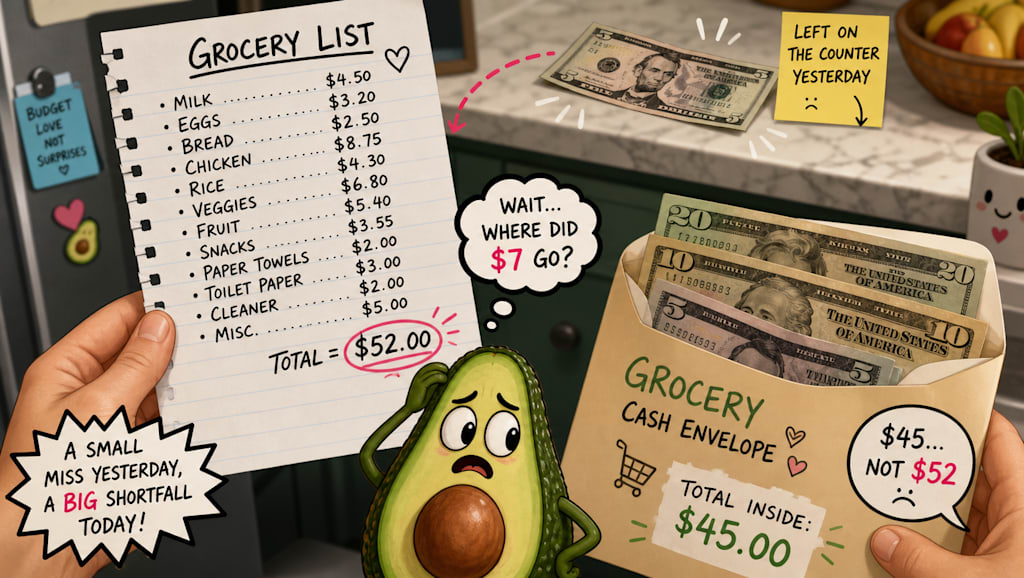
The handwritten list totaled $52, taped to the fridge door in my own looping scrawl, every item priced from memory and rounded up out of habit. The envelope held $45. Seven dollars short, and the missed electric bill sat on the kitchen counter where I'd left it yesterday morning, still in its windowed sleeve, unopened and unpaid.
Standing in the cereal aisle with a paper list and no card to fall back on, that gap felt like a verdict. Not on my character, but on my system. A cash envelope was supposed to be simple. Simple turned out to mean fragile.
The Math Didn't Add Up Until It Did
Counting the bills twice didn't change the number. Forty-five crisp dollars against fifty-two in planned spending, and the arithmetic sat there stubbornly, refusing to negotiate. The list had been written on Sunday, when the paycheck felt distant and generous, and every price came from recall rather than receipt.
Grocery inflation had quietly moved the goalposts. Eggs that cost me under four dollars last spring now hovered near six. The store's rotating weekly ad pulled three items off their usual shelf prices without any announcement, and my mental catalog, built over months of steady shopping, had gone stale without warning.
The real failure wasn't the missed bill itself. A seven-dollar oversight happens to everyone. What broke was the assumption that one envelope could absorb an unexpected charge and still cover a full week of food. Nothing in the household routine flagged the shortfall before checkout, because nothing checked the envelope against the list until the moment of payment.
Rebuilding the List From What Was Actually There
Back home, the kitchen table became a command center. Every item on the original list got sorted into tiers based on whether dinner would collapse without it. Rice, dried beans, frozen chicken thighs, and two bags of produce formed the base layer, the non-negotiables that kept meals edible for seven days.
Everything else went into a maybe column. Name-brand pasta gave way to the store brand. Fresh berries disappeared entirely, replaced by a can of peaches that cost less than half as much. The impulse bag of chips vanished without ceremony, and honestly, nobody mourned it later.
This triage method worked because it forced honest answers instead of vague intentions. Could we survive without the fancy coffee? Yes. Did the kids need the specific yogurt cups, or would a single large tub portioned into containers serve the same purpose? Also yes. Each substitution shaved another dollar or two, and the running total crept down toward forty-six, then forty-four.
Name-brand oats ($5.49) swapped for store-brand canister ($2.99) for $2.50 in savings
Fresh berries ($6.99) swapped for frozen mixed fruit ($3.49) for $3.50 in savings
Individual yogurt cups ($4.29) swapped for large family tub ($2.89) for $1.40 in savings
Pre-shredded cheese ($4.79) swapped for block cheese grated at home ($3.19) for $1.60 in savings
Boxed snack packs ($3.99) swapped for homemade trail mix from bulk bin ($1.80) for $2.19 in savings
The revised cart rang up at $43.17, leaving sixty-three cents for tax cushion. Tight, but survivable. More importantly, the meal plan behind those substitutions stayed intact, because swapping formats rarely changes the actual dish.
Tracing the Failure Back to Its Source
That evening, sitting with the paid electric bill and the trimmed grocery receipt side by side, the pattern revealed itself clearly. The envelope system had worked beautifully during stable months, when income arrived predictably and expenses followed their usual rhythm. It fell apart the instant something shifted, because no mechanism existed to catch the shift early.
Three separate failures stacked on top of each other. First, the bill landed on the counter instead of the envelope, meaning the money earmarked for it never actually entered the spending pool. Second, the grocery list drew from outdated prices rather than current signage. Third, zero buffer lived anywhere in the system, so even a minor surprise detonated the whole week's plan.
Most budget advice treats these as unrelated problems. Missed bill here, overspending there, tight margins somewhere else. In practice they compound. One small leak upstream becomes a flood downstream, and the person standing at the register with too little cash is just the last link in a chain nobody inspected.
Installing Guardrails That Actually Hold
The fix required almost no new tools, only slight adjustments to existing habits. A second envelope appeared, labeled Buffer, seeded with fifteen dollars from the next paycheck before anything else got allocated. Small enough to feel painless, large enough to swallow a forgotten charge without touching the grocery fund.
Price checking moved from memory to phone. Before writing any list, a quick scan of the store's app for the week's circular resets expectations to reality. This takes ninety seconds and eliminates the silent drift that creeps in when old numbers get reused month after month.
Bills now go straight into the envelope the day they arrive, not "later tonight" or "after dinner." The physical act of dropping paper into paper creates a moment of acknowledgment that digital autopay skips entirely. Something about weight and texture makes the obligation feel real in a way a notification never manages.
A Friday evening review takes five minutes. Envelope contents get counted against the coming week's rough needs, and any discrepancy surfaces while there's still time to adjust plans rather than scramble at the checkout lane.
What the Shortfall Taught About Cash Discipline
Money systems fail quietly long before they fail loudly. The $7 gap wasn't a crisis; it was a symptom pointing to three structural weaknesses hiding inside an otherwise functional routine. Ignoring symptoms doesn't make them disappear, it just guarantees a bigger diagnosis later.
Cash envelopes work precisely because they impose visible limits, but visibility requires maintenance. An envelope nobody audits becomes fiction, a comforting story told with folded bills instead of words. The moment comfort replaces inspection, the system stops protecting you and starts pretending to.
Next payday, the Buffer envelope gets its refill first, before groceries, before fun money, before anything optional touches the allocation sheet. That single ordering change turns reactive scrambling into proactive planning, and the difference shows up not in dramatic windfalls but in quiet Tuesday evenings when nothing goes wrong because everything got checked ahead of time.
Disclaimer: Content is for informational purposes only and does not constitute professional advice.
About the Creator
TheFabledScribe
Expert in budgeting and frugal living. Using proven strategies to build financial resilience. Trustworthy guidance for average people seeking results.
I will NEVER put my content behind a paywall..
Enjoyed the story? Support the Creator.
Subscribe for free to receive all their stories in your feed.
Comments
There are no comments for this story
Be the first to respond and start the conversation.