health
Health hacks for optimal performance; discover simple suggestions and habits to improve your life, body, mind and spirit.
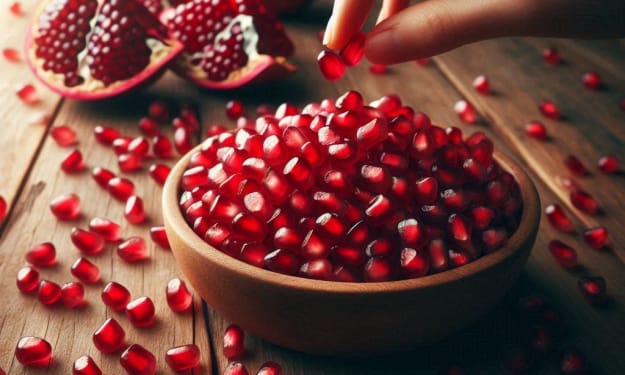
Can You Eat Pomegranate Seeds
Pomegranate is a fruit that is full of flavour, colour and nutrition. Its shiny red seeds are as beautiful to look at as they are delicious and refreshing to eat. Whenever a pomegranate is eaten, the first thing that comes to mind is the small seeds present inside it. Many people suck the juice of the pomegranate seed, but either swallow its seeds or spit them out. In such a situation, the question arises – is it right to eat pomegranate seeds? Are they digested? And do they have any effect on health?
By The Content Crafter2 years ago in Lifehack
Boost Daily Life with NDIS Assistive Products for Household Tasks
Living with a disability can present challenges, especially when it comes to managing daily tasks around the house. However, thanks to advancements in assistive products for household tasks, individuals with disabilities now have access to a variety of tools that can make life easier and more independent. Under the National Disability Insurance Scheme (NDIS), assistive products for household tasks play a key role in helping people with disabilities perform everyday chores and activities, providing both convenience and safety.
By John Jenner2 years ago in Lifehack
Varicocele: 10 Shocking Truths You Need to Know
Varicocele is a common yet often overlooked condition affecting millions of men worldwide. Despite being a leading cause of male infertility and chronic testicular pain, many men ignore or misunderstand it due to embarrassment or lack of awareness.
By Mujeeb Baloch2 years ago in Lifehack
7 Foods a Pediatric Dentist Recommends Limiting to Protect Your Child’s Teeth
Children’s teeth go through sensitive stages of growth, and their diets play a critical role in long-term oral health. Many snacks marketed as fun, healthy, or convenient often contain sugars, acids, or sticky ingredients that linger on teeth far longer than they should. Pediatric dentists often treat tooth decay caused by common foods that seem innocent. Recognizing the foods a pediatric dentist recommends limiting helps parents reduce preventable damage and build healthier habits.
By Piper Burch2 years ago in Lifehack
Pope Francis,passes away at 88, the first Latin American pontiff known for his humble and charismatic approach to ministry.. AI-Generated.
At the age of 88, Pope Francis, the first Latin American pontiff, dies. Pope Francis, the first Latin American pope and a model for the Catholic Church's reform, humility, and compassion, has passed away at the age of 88. His death marks the end of a highly influential papacy that broke with centuries-old customs and rethought the Church's place in contemporary society. Pope Francis was born Jorge Mario Bergoglio on December 17, 1936, in Buenos Aires, Argentina, to immigrants from Italy. Before joining the Catholic religious order known for its dedication to education, intellectualism, and social justice, the Society of Jesus (Jesuits), he underwent training as a chemist. Bergoglio was ordained a priest in 1969 and progressed through the Argentine Church's ranks to eventually become Archbishop of Buenos Aires in 1998. He was well-known for his hands-on ministry to the poor and marginalized as well as for his simple lifestyle, which included frequently taking the bus rather than a chauffeured vehicle. Bergoglio was elected as the 266th pope of the Roman Catholic Church in 2013, following the resignation of Pope Benedict XVI. This was a surprising choice because he was relatively unknown outside of Latin America. He gave the papacy a fresh start by adopting the name Francis in honor of Saint Francis of Assisi, patron saint of the poor and the environment. With his friendly demeanor, Pope Francis quickly attracted attention from around the world. Instead of living in the extravagant papal apartments, he decided to stay in a modest guesthouse inside the Vatican. Following his election, he carried his own suitcase on trips and paid his own hotel bill. Even though they were symbolic, these small acts had a profound impact on millions of people all over the world, including many disillusioned Catholics who had grown tired of scandals and institutional coldness. Throughout his time as pope, Francis emphasized compassion, inclusion, and outreach. He emphasized numerous times that the Church must serve as "a field hospital," or a place of healing rather than retribution. On global issues like poverty, inequality, the refugee crisis, and climate change, he spoke out strongly. His landmark encyclical, Laudato Si', published in 2015, urged everyone, not just Catholics, to protect "our common home" and combat environmental degradation. Additionally, he boldly addressed long-standing Church-wide issues. He worked to make the Roman Curia, the administrative structure of the Vatican, more open and accountable. Although critics contend that more could have been done, he publicly apologized to victims and established a commission to address the problem of child sexual abuse. But his willingness to face the problem head-on was a big change. Francis frequently walked a careful line between tradition and change in matters of doctrine. He upheld the Church's fundamental teachings but advised pastors to be more adaptable and compassionate. One of his most famous quotes and a symbol of his inclusive tone was his response to a question about gay priests, "Who am I to judge?" Even though he did not allow female priests, he advocated for a more welcoming Church, allowing for discussions about Catholics who had been divorced and remarried receiving Communion, and he supported the role of women in Church leadership. Francis worked tirelessly as a diplomat and peacemaker on a global scale. During his time as Pope, he traveled to more than fifty nations, including war-torn regions and locations.Bergoglio was elected as the 266th pope of the Roman Catholic Church in 2013, following the resignation of Pope Benedict XVI. This was a surprising choice because he was relatively unknown outside of Latin America. He gave the papacy a fresh start by adopting the name Francis in honor of Saint Francis of Assisi, patron saint of the poor and the environment.
By Hasan Matubbar 2 years ago in Lifehack
How Eating Organic Can Boost Your Immunity & Overall Health
In a world where processed foods and artificial additives are the norm, more people are turning to organic food for a healthier lifestyle. Organic foods are grown without synthetic pesticides, genetically modified organisms (GMOs), or artificial fertilizers. While the debate around organic versus conventional food continues, one thing is clear eating organic can significantly boost your immunity and improve overall health.
By iDigitize Infotech LLP2 years ago in Lifehack
Can Otoplasty Be Reversed? What You Need to Know
Skilled surgeons wield surgical precision under expert guidance, altering ear shape and size with finesse. Surgery is done for weird-looking ears or congenital disabilities that deeply affect people's self-esteem. Otoplasty surgery is irreversible, so people frequently ponder reversal possibilities.
By Dr. Saurabh Jain2 years ago in Lifehack
Diets Low in Vitamin K Might Impact Memory and Accelerate Cognitive Decline: What You Need to Know. Content Warning.
Recent research has uncovered a potential link between low levels of vitamin K and cognitive decline. This discovery could have significant implications for our understanding of memory and brain health. The study, which was conducted on mice, suggests that diets lacking in vitamin K may contribute to faster memory loss and accelerate cognitive decline. In this article, we explore the findings of this research and what they could mean for human health, particularly when it comes to aging and brain function. What Is Vitamin K? Vitamin K is a fat-soluble nutrient essential for blood clotting and bone health. While its role in preventing bleeding and promoting proper bone function is well-documented, recent studies have begun to reveal its importance in brain health. Vitamin K exists in two primary forms: Vitamin K1 (phylloquinone), found in leafy greens, and Vitamin K2 (menaquinones), which is found in fermented foods and animal products. Specifically, Menaquinone-4 (MK4) is the form of vitamin K that accumulates in the brain and has been shown to play a role in brain function. The Study: Low Vitamin K Diet Linked to Memory Loss In a groundbreaking study, researchers investigated the effects of a low vitamin K diet on cognitive function. They found that mice fed a vitamin K-deficient diet performed worse on cognitive tests, such as the novel object recognition test and the Morris water maze — both of which are used to assess memory and learning abilities. The results of this study suggest that insufficient levels of vitamin K could lead to cognitive impairments. Mice that were deprived of vitamin K showed noticeable declines in memory retention and learning capabilities. This discovery is particularly concerning, as it indicates that a deficiency in vitamin K could contribute to cognitive decline. How Vitamin K Affects the Brain The researchers discovered that mice with a low vitamin K diet had reduced levels of Menaquinone-4 (MK4) in the brain. MK4 is a vital form of vitamin K in the brain, and its reduction has been linked to decreased cognitive function. Additionally, the study found that the lack of vitamin K contributed to lower concentrations of vitamin K in the liver and kidneys. One of the most striking findings of this research was the impact of low vitamin K on the hippocampus, the part of the brain that is crucial for memory formation. In mice fed a low vitamin K diet, there was a noticeable decrease in neurogenesis — the formation of new neurons — in the hippocampus. This could explain the observed cognitive decline, as the hippocampus is directly involved in memory and learning processes. Furthermore, the study also revealed an increase in microglial activation. Microglial cells are the brain's immune cells, and their activation often signals inflammation. Chronic neuroinflammation is linked to a range of cognitive disorders, including Alzheimer's disease and other forms of dementia. Therefore, this increased inflammation could be another contributing factor to the cognitive decline observed in the mice with vitamin K deficiency.
By Tech Horizons2 years ago in Lifehack
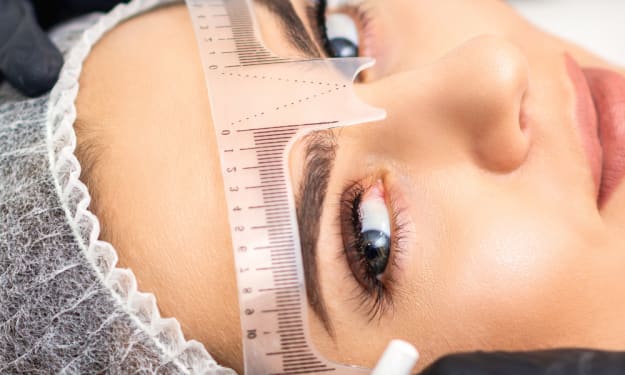
Eyelid Surgery Vs. Brow Lift: Which Procedure Is Right For You?
The eyes represent the most expressive facial features, although their surrounding skin becomes weaker as we age. It can make one look tired even when feeling lively. The two fashionable cosmetic procedures include eyelid surgery, known as blepharoplasty, and brow lift surgery. You need to determine which surgery suits you better among these two alternatives.
By Dr. Saurabh Jain2 years ago in Lifehack
How Smoking Affects Neck Lift Surgery Recovery
Neck lift surgery eliminates excess skin under the chin, creating a remarkably smoother appearance that looks wonderfully youthful. The recovery process unfolds smoothly, yet smoking severely hampers healing over a prolonged period.
By Dr. Saurabh Jain2 years ago in Lifehack