book reviews
Reviews of must-read books for self-helpers, home improvers and life hackers alike.
7 Books That Changed My Life
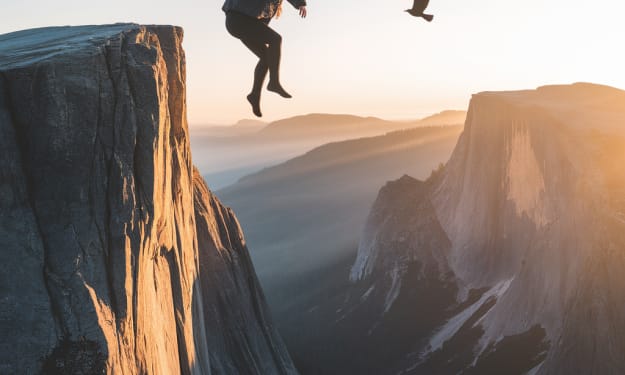
Books have a quiet way of reshaping us. They don’t shout or demand, but the right words, at the right moment, can shift your entire perspective. Over the years, I’ve come across many stories and lessons, but a few books have genuinely changed how I think, feel, and live. Here are the seven that left the deepest marks on me. 1. "Man’s Search for Meaning" by Viktor E. Frankl I read this during a particularly low point in my life. Frankl, a Holocaust survivor and psychiatrist, doesn’t just recount the horrors of the concentration camps—he shares how he found purpose in the middle of unimaginable suffering. His central message is simple but profound: life is not primarily a quest for pleasure or power, but for meaning. This book reminded me that even in pain, especially in pain, we have the power to choose our response. That truth changed everything for me. 2. "The Alchemist" by Paulo Coelho This novel came to me at a time when I was second-guessing every decision. It's a fable about following your personal legend—your destiny—and trusting the journey. The idea that “when you want something, all the universe conspires in helping you to achieve it” felt like both a promise and a challenge. It made me stop playing it safe and start taking real steps toward what I truly wanted. The simplicity of the story makes its wisdom all the more powerful. 3. "Atomic Habits" by James Clear Some books make you feel inspired; this one made me feel capable. Clear breaks down habit-building into something so manageable that change no longer feels intimidating. He teaches that success isn't about massive, overnight transformation—it’s about getting 1% better every day. That principle helped me build routines that genuinely improved my health, productivity, and peace of mind. It didn’t just change how I think about habits; it changed how I live. 4. "Quiet" by Susan Cain As an introvert, I often felt like I needed to be louder to be valued. Quiet validated my natural tendencies and reframed introversion as a strength, not a flaw. Cain’s research and storytelling helped me embrace my personality instead of fighting it. After reading it, I stopped apologizing for needing solitude or deep thought. I learned to own my quietness and even use it as a source of power. 5. "Meditations" by Marcus Aurelius This ancient text by a Roman emperor might seem an unlikely life-changer, but it offered me clarity in chaos. Aurelius writes with raw honesty about self-discipline, mortality, and the shortness of life. His stoic philosophy helped me develop emotional resilience. Instead of trying to control the world, I began focusing on how I respond to it. Whenever I feel overwhelmed, I return to his words and find calm. 6. "Daring Greatly" by Brené Brown This book cracked open the armor I didn’t even realize I was wearing. Brown’s exploration of vulnerability taught me that strength isn’t about perfection or control—it’s about being real. By daring to be open, I’ve formed deeper relationships and become more compassionate with myself. Vulnerability, once something I feared, became something I now strive to practice. 7. "Sapiens" by Yuval Noah Harari If there was ever a book that zoomed me out of my small daily worries, it was Sapiens. Harari’s sweeping narrative of human history gave me a new lens through which to view the world. It made me question long-held assumptions about culture, religion, and even identity. It didn’t give me all the answers—but it gave me better questions. And sometimes, that’s even more valuable. Final Thoughts These seven books didn’t just inform me—they transformed me. They challenged my beliefs, pushed me out of comfort zones, and helped me better understand myself and the world. Everyone’s list will be different, and that’s the beauty of reading. The right book at the right time can change your direction, your mindset, or even your life.
By Israr khanabout a year ago in Lifehack
💻 I Tried 5 Online Side Hustles — Here’s What Actually Paid Me
The internet is full of “get rich quick” promises. Scroll long enough on TikTok and you’ll believe everyone is making six figures from drop-shipping, selling digital stickers, or letting AI do all the work.
By Emma @ Vocalabout a year ago in Lifehack
The impact of excessive use of technology on our daily lives
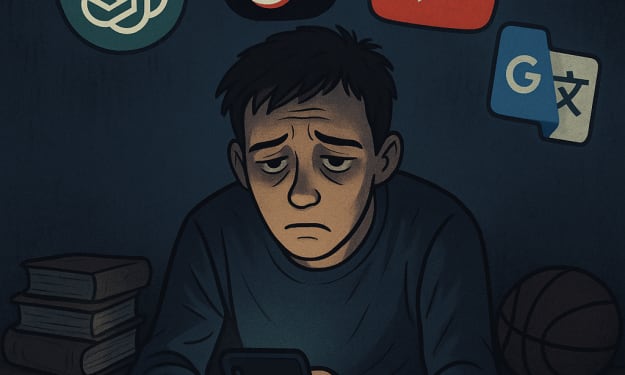
The Age of Technology: Has Our Lives Become Dependent on Smart Devices? In an age filled with science and progress, technology has become an integral part of our daily lives. We use smartphones, tablets, and programs like ChatGPT to make small and large decisions, from food choices to studying, work, and even time management. Our lives have become so connected to these devices that we sometimes forget to rely on personal thinking and creativity.
By PositivePulseabout a year ago in Lifehack
The Lifehack That Changed Her Life
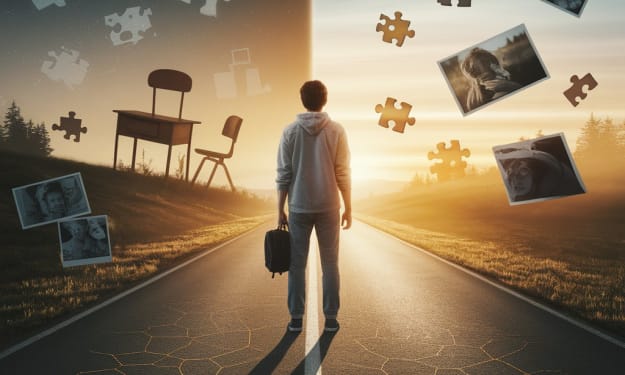
M Mehran Her phone was crammed with screenshots: “10 Ways to Save Time,” “The Morning Routine of Millionaires,” “5 Hacks for Happiness.” Her desk overflowed with sticky notes reminding her to drink lemon water, wake up at 5 a.m., and color-code her calendar. And yet—her life still felt like a mess. She was always late, always tired, always chasing after the version of herself those articles promised she could become. The irony wasn’t lost on her: the woman obsessed with lifehacks couldn’t hack her own life. Until one day, by accident, she discovered the only lifehack she would ever need. --- It started on a rainy Tuesday. Nina was running late for work again, juggling an umbrella, coffee, and her phone. She darted into the subway just as the doors were closing, spilling half her latte on her blouse. The train was crowded, her mood already sour. She pulled out her phone to distract herself, scrolling through another endless list of “genius hacks.” But the Wi-Fi cut out, leaving her with only the Notes app open. That’s when she saw it—an old note she had written months ago: “What if the best lifehack is simply paying attention?” She had typed it after watching an elderly man feed birds in the park, noticing how present he seemed. But she had forgotten all about it. Now, staring at those words on the subway, something shifted. Pay attention. Not to tips, not to trends—just to the moment. Nina looked up. For the first time, she noticed the woman across from her humming softly to calm her baby. The man beside her was sketching in a notebook, lines forming the shape of a bridge. The train wasn’t just a blur of strangers; it was a moving story. And suddenly, her stress eased. --- That night, instead of scrolling through hacks, Nina tried a small experiment. She cooked dinner without a podcast playing. She paid attention to the smell of garlic hitting the pan, the sound of the knife against the cutting board, the steam rising from the pot. It felt…different. Calmer. More alive. The next morning, instead of forcing herself to wake at 5 a.m. like some CEO’s routine demanded, she woke when her alarm rang at seven. But instead of rushing, she sat with her coffee by the window, watching the rain slide down the glass. For once, she wasn’t late. She was simply there. Pay attention. It was so simple it almost felt laughable. But the more she practiced it, the more it worked. --- At work, Nina began noticing details she used to ignore. Her colleague who always interrupted wasn’t rude; he was nervous, his fingers drumming on the table every time he spoke. Her boss’s endless reminders weren’t micromanagement; they were attempts to keep a chaotic team afloat. By paying attention, she responded differently—less defensive, more curious. Meetings grew easier. Projects smoother. She wasn’t working harder; she was just present. Even her evenings changed. Instead of collapsing in front of Netflix, she called her grandmother and actually listened. She walked home through side streets, noticing murals and gardens she had passed a hundred times without seeing. The city seemed to expand around her, richer and fuller than before. Nina laughed at herself one night. After years of obsessing over shortcuts, the greatest hack had been hidden in plain sight: attention wasn’t a trick. It was life itself. --- Weeks turned into months, and Nina’s friends began to notice. “You seem different,” one said over coffee. “Calmer. Happier. Did you finally find the secret hack?” Nina smiled. “I think it found me.” She explained her experiment, how paying attention had rewired the way she lived. Her friend frowned. “That’s it? Just paying attention? That doesn’t sound like a hack.” But Nina knew better. In a world addicted to multitasking and distraction, attention was the rarest trick of all. --- The real test came one evening when her train broke down underground. Passengers groaned, scrolling angrily on their phones. Nina felt her old frustration rising—late, tired, stuck. But then she remembered her note. Pay attention. She put her phone away and looked around. A boy was practicing card tricks, shuffling with surprising skill. An elderly woman hummed a tune, tapping her cane in rhythm. A man offered gum to the strangers beside him, sparking laughter. What could have been an hour of misery became something almost magical. When the train finally moved again, people left smiling, lighter than when they had entered. Nina stepped off knowing she would never see them again, but she carried the moment with her. --- One evening, she returned to that same park where she had first seen the man feeding birds. He was there again, scattering crumbs with patient hands. This time, she sat beside him. “Why do you do this every day?” she asked. The man chuckled. “Because it reminds me I’m alive. The birds don’t care about schedules or achievements. They just notice what’s in front of them.” Nina felt tears prick her eyes. She wanted to tell him how his quiet ritual had sparked the note in her phone, how that note had changed her life. Instead, she simply said, “Thank you.” He nodded, as if he already knew. --- That night, Nina opened her Notes app and added a new line under her old reminder: “Pay attention. It’s not just a lifehack. It’s life itself.” And for once, she didn’t need another screenshot, another article, or another tip. She had finally hacked the only thing that mattered: the present
By Muhammad Mehranabout a year ago in Lifehack
The Lifehack That Changed Everything
M Mehran Max had always thought he was organized. At least, he told himself he was. His desk was cluttered but not chaotic, his phone filled with reminders, and he had a calendar app that beeped at him for everything from meetings to when to water his plants. Yet somehow, he still felt like he was always behind. One Tuesday morning, as he spilled coffee on a pile of unpaid bills, he realized that being “organized” wasn’t enough. He needed more than routines and reminders. He needed a lifehack—a way to make life simpler, smarter, and less stressful. --- The Accidental Discovery It happened by accident. Max had been late to a meeting, juggling his phone, briefcase, and an overstuffed coffee cup. His notes for the presentation were scattered across three different apps, and he couldn’t find the right file. In frustration, he grabbed a sticky note, scribbled the three key points on it, and stuck it to his laptop. The meeting went smoothly. The notes were right in front of him, no scrolling, no searching, no fumbling. That tiny sticky note had made a massive difference. Max laughed at himself—why had he never tried this simple trick before? That day, he started thinking: what other small hacks could transform ordinary tasks into effortless wins? --- Hack #1: The Two-Minute Rule The first hack he embraced was simple: if a task takes two minutes or less, do it immediately. Washing dishes, replying to a short email, putting clothes in the laundry. It was tiny, almost unnoticeable—but powerful. Max noticed something strange. His apartment started to feel cleaner. His inbox didn’t feel like a war zone anymore. That small, almost insignificant habit had reduced stress more than any planner or app ever had. --- Hack #2: Batch Everything The next hack came from a podcast about productivity. Batch similar tasks together instead of scattering them throughout the day. Emails at 10 a.m., calls at 11, errands after lunch, meal prep on Sundays. At first, Max was skeptical. He liked doing things as they came up. But soon, he noticed that batching saved energy and time. No more mental switching costs. No more constant interruptions. His days suddenly had breathing room. --- Hack #3: Automate the Mundane Automation was the game-changer. Max set up automatic bill payments, email filters, and recurring reminders for essential tasks. He even experimented with apps that generated grocery lists based on recipes he saved. At first, it felt like cheating. But Max realized that automation wasn’t laziness—it was smart work. By letting machines handle repetitive tasks, he freed up mental space for creativity, problem-solving, and—most importantly—living. --- Hack #4: The Power of Visual Lists Max was a list-maker, but he hadn’t tried the visual approach until a friend suggested it. He started creating mind maps for projects instead of linear to-do lists. Tasks, deadlines, and dependencies were connected with arrows and colors. Suddenly, complicated projects felt manageable. He could see at a glance what needed attention, what depended on what, and which tasks could be delayed without consequence. Visual thinking didn’t just organize his work—it reshaped how he approached problems. --- Hack #5: Prep Your Day the Night Before Another tiny lifehack Max adopted was the simple act of preparing the night before. He laid out clothes, packed his bag, wrote a short to-do list, and prepped breakfast items. Mornings became smoother. No more panicked searching for keys or coffee mugs. No more rushing and forgetting half his tasks. That small ten-minute habit saved him hours of stress over the course of a month. --- Why Lifehacks Work Max realized that lifehacks aren’t about shortcuts or magic. They are about noticing friction in your life and removing it. They are about observing patterns, simplifying repetitive actions, and creating systems that work with your natural habits instead of against them. A lifehack doesn’t need to be revolutionary. The sticky note that saved his presentation, the two-minute rule, batching tasks, automation, visual lists, and night preparation—none of them were groundbreaking. But together, they added up to something transformative: a life that felt manageable, intentional, and surprisingly calm. --- Living Smarter, Not Harder Weeks later, Max reflected on the changes. His apartment was tidier. Work was less stressful. He even had time for hobbies he had abandoned: painting, jogging, and cooking new recipes. Friends noticed he seemed more relaxed, more present, more…in control. Lifehacks had not changed the world outside. Deadlines still existed, bills still had to be paid, emails still piled up. But the way he navigated the world had changed. Small tweaks multiplied into significant improvements. He realized that lifehacks are not just about productivity—they are about freedom. Freedom from stress, from chaos, from the constant feeling that you are falling behind. Freedom to focus on what really matters: experiences, relationships, and personal growth. --- The Lesson Max smiled as he wrote the final entry in his journal that night. Lifehacks are more than tricks—they are tools. They are the gentle, clever adjustments that make ordinary life extraordinary. He thought about the sticky note that started it all, still stuck to the corner of his laptop. Funny how a tiny piece of paper had taught him such a big lesson: sometimes, the simplest solutions make the greatest difference. And sometimes, it just takes noticing.
By Muhammad Mehranabout a year ago in Lifehack