
Smart Space Design: IoT and Responsive Residential Interiors
Designing Homes That Sense, Learn, and Adapt to People Living in Them
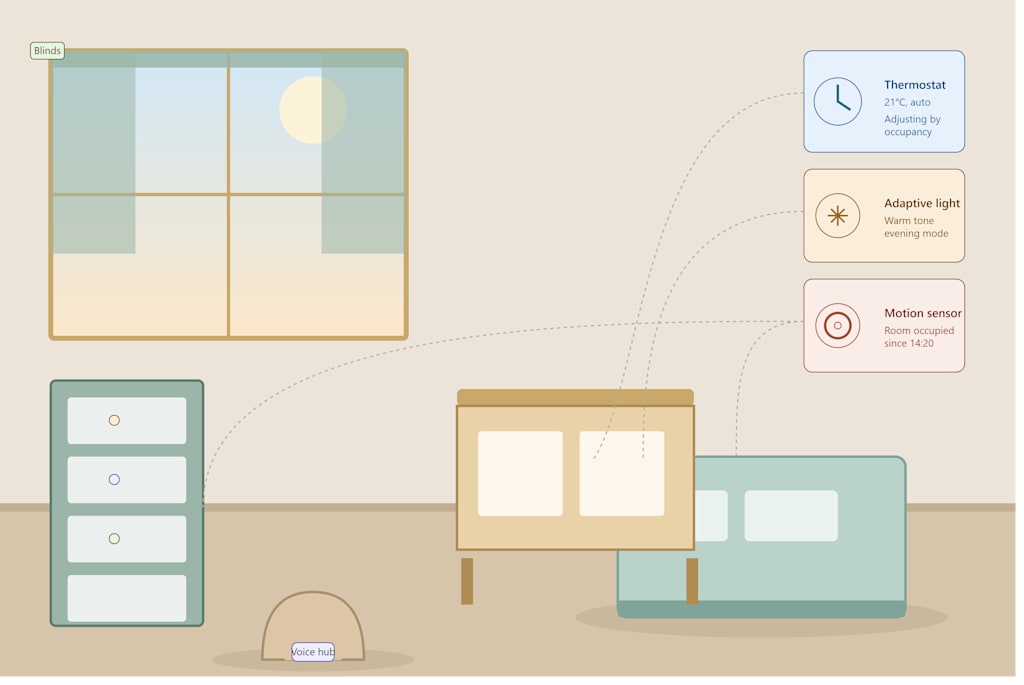
A few years ago, "smart home" technology mostly meant a voice assistant on the kitchen counter and a handful of app-controlled light bulbs. Today, that idea has expanded into something far more ambitious: homes that don't just respond to commands, but actively sense, learn from, and adjust to the people living in them.
This shift falls under what designers increasingly call smart space design — an approach that combines architecture, interior design, and the Internet of Things (IoT) to create residential environments that feel responsive rather than static. Lighting that shifts with the time of day. Rooms that adjust temperature based on occupancy. Layouts that subtly change function depending on who's home and what they're doing.
This article looks at how smart space design works in practice, the technology behind responsive interiors, real examples already in use, and an honest look at both the benefits and the challenges — including privacy concerns that come with living in a connected home. Much of this thinking is rooted in academic study, including programs like a Master of Space Design, where students explore how technology and architecture intersect to shape daily life.
What Is Smart Space Design?
Beyond Gadgets: Designing for Responsiveness
It's easy to confuse smart space design with simply filling a home with smart gadgets — a smart thermostat here, a smart speaker there. But true smart space design starts earlier, at the architectural and interior planning stage.
Instead of asking "what devices should we add to this room?", smart space designers ask "how should this room behave throughout the day, and what technology can make that happen seamlessly?"
This means thinking about sensors, wiring, and connectivity as part of the building's bones — not as an afterthought bolted on later. A responsive environment anticipates needs: it might dim lights and lower blinds automatically when someone settles in to watch a movie, or gently brighten a bedroom to mimic sunrise as part of a wake-up routine.
The Role of IoT in Residential Interiors
The Internet of Things refers to a network of physical devices — sensors, appliances, lighting systems, locks, thermostats — that connect to the internet and to each other, sharing data and responding to it. In a residential setting, IoT is the "nervous system" that allows a smart space to actually sense and react.
Common IoT components in residential interiors include:
- Motion and presence sensors that detect when a room is occupied
- Smart lighting systems that adjust brightness and color temperature automatically
- Connected climate control (smart thermostats, vents, and blinds working together)
- Smart locks and security systems integrated with entry routines
- Voice and app-based control hubs that tie everything together
According to industry research from firms like Statista and McKinsey, the global smart home market has grown substantially over the past decade, with millions of households worldwide now using at least one connected device — a figure expected to continue rising as costs decrease and integration becomes simpler.
How Responsive Environments Work in Practice
Sensing: The Foundation of Responsiveness
Before a space can respond to its occupants, it needs to "perceive" them. This is done through a combination of sensors:
- Occupancy sensors detect whether a room is in use
- Ambient light sensors measure natural daylight levels
- Temperature and humidity sensors monitor comfort conditions
- Sound sensors (in some systems) detect activity level or voice commands
These sensors continuously feed data to a central hub or smart home platform, which then triggers responses based on pre-set rules or learned patterns.
Responding: Automation and Adaptation
Once a space can sense its environment, it can begin to adapt. Responses generally fall into two categories:
Rule-based automation — straightforward "if this, then that" logic. For example: if no motion is detected in a room for 15 minutes, lights turn off automatically.
Adaptive or learning systems — more advanced platforms use machine learning to identify patterns over time. A smart thermostat, for instance, might learn that a household tends to lower the temperature around 10 p.m. and begin adjusting automatically without manual input.
Designing the Physical Space Around Technology
Smart space design isn't only about software — it's also about how a room is physically laid out to support these systems. This includes:
- Hidden wiring and charging infrastructure built into walls, furniture, and flooring
- Strategic sensor placement that avoids visual clutter while maintaining coverage
- Flexible lighting layouts with multiple zones that can be controlled independently
- Modular furniture with embedded technology, such as desks with built-in charging or shelving with integrated lighting
A well-designed smart space should feel calm and uncluttered — the technology should support the environment, not dominate it visually.
Real-World Examples of Smart Space Design
Adaptive Lighting Systems
One of the most widely adopted forms of responsive design is adaptive lighting — systems that automatically adjust color temperature throughout the day, mimicking natural daylight patterns. Cooler, brighter light in the morning supports alertness, while warmer, dimmer light in the evening supports winding down. Several major lighting manufacturers, including Philips with its Hue ecosystem, have built entire product lines around this concept.
Smart Climate Zoning
Rather than heating or cooling an entire home uniformly, smart climate systems divide a residence into zones, each with its own sensors and controls. A bedroom might be kept cooler at night while a living room stays warmer during evening use — all managed automatically based on occupancy and time of day.
Voice-Controlled and Context-Aware Hubs
Voice assistants such as Amazon Alexa, Google Assistant, and Apple's Siri (via HomeKit) have become common entry points for controlling smart spaces. More advanced setups go further, using context — time of day, who's speaking, which room a request comes from — to tailor responses appropriately.
Aging-in-Place Smart Homes
One particularly meaningful application of smart space design is supporting older adults who want to live independently for longer. Sensor-based systems can detect falls, monitor movement patterns for signs of distress, and automatically adjust lighting and temperature to suit changing needs — all while preserving a resident's privacy and dignity, according to research published by organizations such as AARP focused on aging-in-place technology.
Benefits and Challenges of Smart Space Design
Benefits
Improved comfort and convenience. Lighting, temperature, and even music can adjust automatically to match daily routines, reducing the need for manual control.
Energy efficiency. Responsive systems can reduce energy waste — for example, automatically turning off lights and adjusting heating in unoccupied rooms. Some studies on smart thermostats have found meaningful reductions in household energy use when systems are configured correctly.
Support for independent living. For older adults or people with mobility limitations, responsive environments can provide an added layer of safety without requiring constant manual adjustments.
Personalization at scale. Smart systems can adjust to multiple household members' preferences automatically — for example, recognizing which family member is in a room and adjusting lighting or temperature accordingly.
Challenges
Privacy concerns. Sensors that track occupancy, movement, and even voice data raise legitimate questions about data collection, storage, and who has access to it. Designers and homeowners need to carefully consider which systems collect data, where that data is stored, and how it's secured.
Cost and complexity. While individual smart devices are affordable, a fully integrated responsive environment — especially one designed into a home from the start — can involve significant upfront investment.
Reliability and dependency. When systems rely heavily on internet connectivity or cloud services, outages or technical issues can disrupt basic home functions like lighting or climate control.
Compatibility issues. Not all smart devices and platforms work seamlessly together. Homeowners often need to research compatibility carefully or rely on a single ecosystem (such as Apple HomeKit, Google Home, or Amazon Alexa) to avoid integration headaches.
Maintenance and updates. Connected devices require software updates and occasional replacement, adding an ongoing maintenance dimension that traditional fixtures don't have.
Conclusion
Smart space design represents a meaningful shift in how residential interiors are conceived — not as static backdrops, but as environments that actively support the people living in them. By combining thoughtful architecture with IoT technology, designers can create homes that are more comfortable, more efficient, and in some cases, safer for residents who need extra support.
At the same time, this approach comes with real trade-offs, particularly around privacy, cost, and reliability — issues that thoughtful design and informed choices can help manage. As IoT technology continues to mature, analysts and industry observers expect responsive design principles to become a standard part of residential planning rather than a premium add-on — though the pace and shape of that shift remains a matter of ongoing discussion among designers and technologists.
For those interested in this intersection of technology and living space, pursuing further study — such as a Master of Space Design — offers a structured way to explore how these systems can be designed thoughtfully, balancing innovation with comfort, privacy, and everyday practicality.
About the Creator
Uday Savaliya
Passionate lifestyle writer/blogger with 10 years of experience. MBA holder sharing knowledge and experiences on lifestyle. Published on @NewsWebZone,@MyHealthCareTips.EasyFinance Dedicated to providing valuable insights and tips to readers
Enjoyed the story? Support the Creator.
Subscribe for free to receive all their stories in your feed.
Comments
There are no comments for this story
Be the first to respond and start the conversation.