
Selling DTF-Decorated Shirts in Chicago: Check Before the First Sale
Turning a blank T-shirt into a finished product involves more than adding artwork. For Chicago apparel resellers, print shops, merchandise businesses, and independent clothing brands, the garment itself already carries information that may matter when the finished shirt is offered to customers.

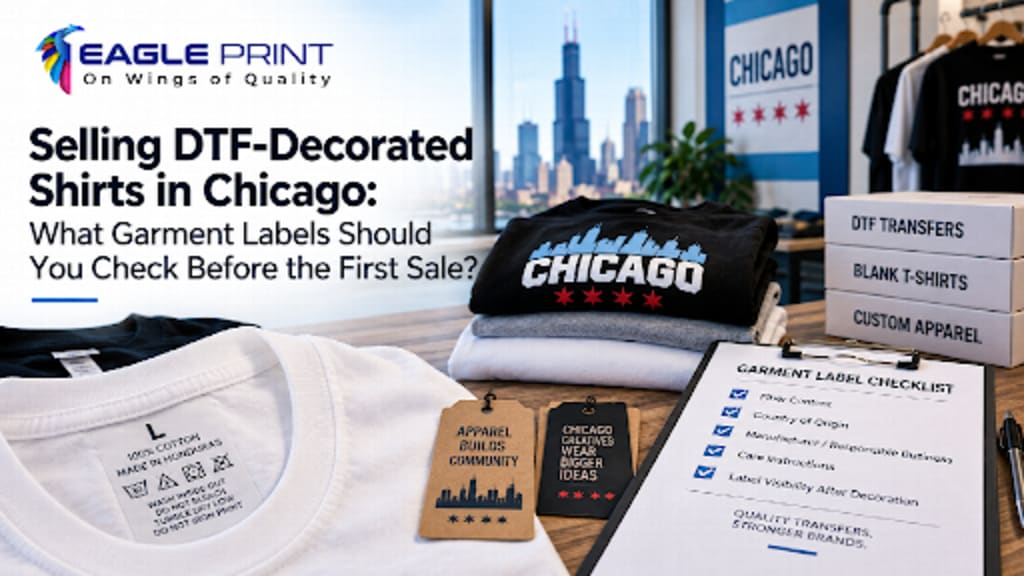
Turning a blank T-shirt into a finished product involves more than adding artwork. For Chicago apparel resellers, print shops, merchandise businesses, and independent clothing brands, the garment itself already carries information that may matter when the finished shirt is offered to customers. Before decorating inventory for resale, it is useful to understand what is already on the garment label, what information should remain available, and how added branding can affect the finished product.
Businesses sourcing DTF transfers in Chicago can make label review part of the production workflow. The goal is simple: inspect the blank garment before printing, understand which information belongs to the original product, and avoid creating a decoration or replacement label that introduces unnecessary confusion.
Start With the Blank Garment, Not the Artwork
It is easy to begin a custom apparel project with the graphic. The customer approves the logo, the transfer dimensions are selected, and the production team begins planning placement. For merchandise intended for resale, however, the blank garment deserves an earlier inspection.
Most textile apparel sold in the United States is subject to federal labeling requirements involving information such as fiber content, country of origin, and the identity of the manufacturer or another responsible business. Care instructions are also required for covered garments under the Federal Trade Commission's Care Labeling Rule.
That means a reseller should not treat the original neck label or care label as meaningless packaging. It can contain information that remains relevant when the blank becomes a decorated retail product.
Check Fiber Content Before Building Product Descriptions
Before listing a finished shirt online or placing it on a retail rack, check what the garment actually says about its fiber composition. A cotton shirt, cotton-polyester blend, or another fabric combination should not be described from memory or assumed from the appearance of the garment.
This review can also support production planning. Different blank garments can vary in construction and fabric composition, so knowing exactly which garment is being decorated gives the business a cleaner starting point for its own testing and production procedures.
For resellers choosing garments before decoration, Eagle DTF Print's blank T-shirt collection provides another point in the workflow where garment selection and transfer planning can be considered separately. Whatever blank is selected, the reseller should verify the information on the actual garment rather than creating unsupported product claims.
Do Not Lose Track of Country-of-Origin Information
Country of origin is another important element of textile labeling. Adding a Chicago-themed design, a neighborhood reference, a business logo, or locally created artwork does not automatically change where the underlying garment was manufactured.
This distinction becomes especially important when a seller wants to emphasize its Chicago identity. A design can be created by a Chicago business and a shirt can be decorated for a Chicago customer while the blank garment itself was manufactured elsewhere. Marketing language should not blur those facts.
A useful rule for the production team is to separate three questions: Where was the blank made? Where was the artwork created? Where was the decoration performed? Those answers may be different, and a local brand story should not accidentally become a false product-origin claim.
Identify the Responsible Business Information
Federal textile labeling rules also address the identification of the manufacturer or another business responsible for marketing or handling the product. Resellers should examine the labels supplied with their blanks before deciding whether to remove, replace, or supplement them.
Private-label apparel can involve additional decisions, but adding a custom neck print is not simply a graphic-design exercise. Before replacing an existing label, determine what information the original label contains and which disclosures still need to remain available on the finished product.
If the business is uncertain about its legal obligations, it should obtain appropriate professional guidance rather than assuming that a decorative brand mark can replace every element on the original label.
Keep Care Instructions Available to the Customer
Care information can be especially easy to overlook when garments are folded, repackaged, relabeled, or prepared for online fulfillment. The FTC's Care Labeling Rule requires covered manufacturers and importers to provide regular care instructions and establishes requirements concerning how those instructions are presented.
For a reseller, the practical lesson is not to hide or discard useful care information during customization. Before the finished garment goes into a shipping bag, vendor-event display, retail shelf, or customer order, confirm that the applicable care label remains accessible.
Businesses may also want to give customers separate instructions related to caring for decorated apparel, but additional advice should not contradict the garment's existing required information. When uncertain about washing, drying, or ironing recommendations for a particular blank-and-decoration combination, test the actual product rather than inventing instructions.
Be Careful With Custom Neck Prints
A custom neck print can make apparel feel more branded, but its purpose should be clearly defined. A logo, size indicator, collection name, or short brand message is different from legally required garment information.
Before applying a neck transfer, inspect where the existing labels sit and how the new decoration will interact with them. Avoid covering information simply because the new artwork fits physically in the same area. The question is not only whether the transfer can be pressed there; it is whether the completed garment remains clear and accurately represented to the customer.
Create a Before-Decoration Checkpoint
Chicago apparel sellers can make this process repeatable by adding a simple checkpoint before production. Confirm the blank style, size, fiber information, origin information, care label, and existing business identification. Then compare those details with the product listing and planned decoration.
After pressing, inspect the finished garment again. Make sure the transfer does not obscure a label unintentionally, verify that the correct blank was used, and confirm that the merchandise description matches the item actually being packed or displayed.
Build a Retail-Ready Shirt, Not Just a Printed Shirt
Chicago offers many ways for small apparel businesses to reach customers, from online stores and custom orders to local markets and event-based selling. City records show continuing production support for Maxwell Street Market into 2027, reinforcing the broader reality that physical market environments remain part of Chicago's commercial landscape.
For a DTF apparel reseller, however, getting a shirt ready for sale requires more than an attractive transfer. The blank garment, required information, decoration, product description, and customer-facing presentation all need to work together. Check the garment before printing, protect important label information during decoration, and review the finished piece again before it reaches the customer. That small production habit can turn a decorated blank into a more carefully prepared retail product.
About the Creator
Enjoyed the story? Support the Creator.
Subscribe for free to receive all their stories in your feed.
Comments
There are no comments for this story
Be the first to respond and start the conversation.