
My Coupon Died on the Shelf, and That's When I Saw the Real Cost of "Saving"
I spent 25 minutes fighting a machine for $1. The real price I paid wasn't in my wallet, it was my sanity.
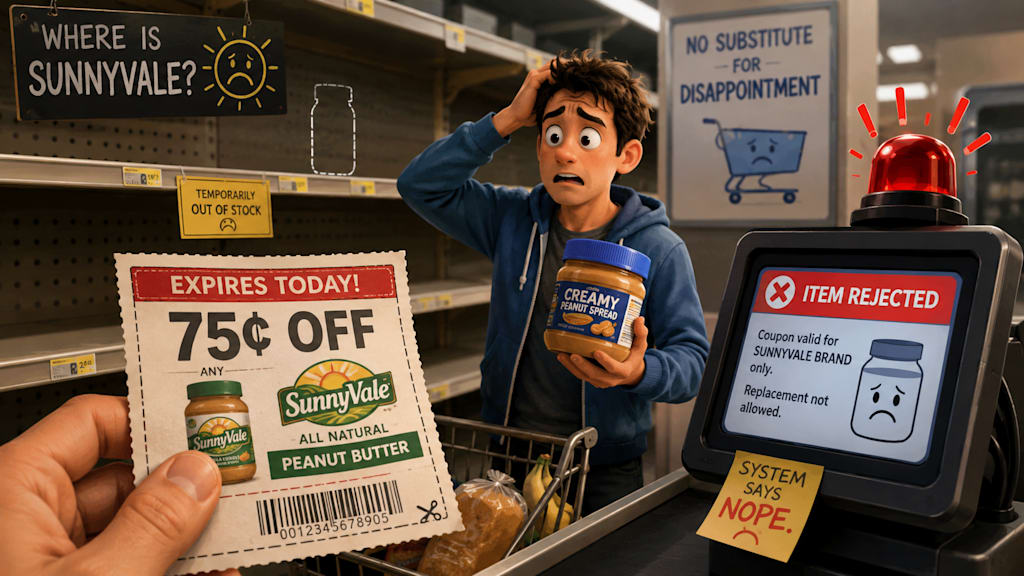
The paper in my hand felt warm from the register printer. It said $1 off Brand X cereal. The shelf was empty. The cashier scanned my generic box and the machine beeped a angry red. "System says no substitution," she muttered. I stood there holding a coupon for a ghost. That moment didn't just cost me a buck. It exposed the whole rotting foundation of how we try to stretch a dollar.
I spent twenty minutes arguing with a screen that didn't care. My frustration wasn't about the money. It was about the lie. We think we are smart shoppers. We clip coupons. We hunt for sales. We stack codes. The system is designed to make us feel like we are winning. The reality is a maze built to confuse.
I walked out without the cereal. I walked out with a question that kept me up all night. Where does the money actually go when we try to save it? The answer isn't in the savings. It's in the friction.
The Friction Tax Nobody Talks About
Most people think budgeting is math. It isn't. It's navigation. You are navigating a system designed to extract your time and attention. That coupon incident wasn't an anomaly. It was a feature.
Stores want you to buy the high-margin items. They don't want you to use coupons on the cheap stuff. The system rejects the replacement because the rules say the codes don't match. The store set those rules to protect their thin margins. You are the buffer. You absorb the cost of the failed transaction.
Planned Purchase: 2 mins time cost, Neutral emotional cost, $0 real savings
Coupon Attempt (Success): 15 mins time cost, Low Stress emotional cost, $1.00 real savings
Coupon Attempt (Fail): 25 mins time cost, High Stress emotional cost, $0.00 real savings
Store Brand Swap: 5 mins time cost, Frustration emotional cost, $0.50 real savings
The math is simple. If you spend 25 minutes of your life to save $1, you are paying $2.40 an hour. That is below minimum wage. You are working for free to subsidize the store's inventory management. I used to think I was beating the system. I was just feeding it my time.
I remember the first time I saw this pattern. I was twenty-five. I had a stack of coupons from the Sunday paper. My apartment was small. My bank account was smaller. I felt like a general planning a war. I mapped out the store layout. I knew which aisles had the best deals. I thought I was a genius. I walked through the doors with a plan. The plan fell apart in the first aisle. The milk was on sale. The coupon said "milk." The shelf had almond milk. The cashier said "no." I bought the almond milk at full price. I lost money. I lost time. I lost my temper.
That day I learned a hard truth. The system doesn't care about your plan. It cares about its profit. The coupon is a trap. It lures you in. It makes you feel smart. Then it breaks. You are left holding the bag. You pay the price. You feel the sting.
The Psychology of the Empty Shelf
Why was the shelf empty? The store manager later told me the supply chain was "tight." That's corporate speak for "we don't have enough stock." They put the coupon in the paper to drive traffic. They don't care if you buy the item. They care that you are in the store.
Once you are inside, you buy other things. The coupon is a lure. It's a hook. If the bait is gone, you still buy the bait's neighbor. The generic cereal is right next to the name brand. You grab it. The machine rejects the coupon. You pay full price for the generic. The store wins twice.
I felt stupid. I felt ripped off. That feeling is intentional. It keeps you coming back. You think the next time will be different. You think you will find the right box. You will. Until you don't.
The psychology is deep. It hits a nerve. We want to be thrifty. We want to be smart. We want to beat the house. The house always wins. The store knows this. They count on this. They design the shelves to make you feel the loss. They put the empty spot right where the coupon points. They watch you hesitate. They watch you panic. They watch you buy the expensive item.
I saw a woman yesterday. She was holding a coupon for yogurt. The shelf was bare. She looked at the cashier. She looked at the shelf. She looked at the coupon. She put the coupon in her pocket. She walked away. She didn't buy anything. She saved her money. She saved her time. She saved her dignity. I wanted to clap. I wanted to cheer. I didn't. I just watched. She understood the game. She walked away.
The Data Trap in My Pocket
I pulled out my phone. My budgeting app said I had $40 for groceries. It didn't know about the coupon. It didn't know the shelf was empty. It just saw the $40. I had a number in my head and a number on my screen. Neither one matched the reality of the store.
Modern budgeting tools are great at tracking history. They are terrible at predicting chaos. They assume linear spending. Life is not linear.
Spreadsheet: Low flexibility, High accuracy, Medium stress level
App (Auto-track): Medium flexibility, Medium accuracy, Low stress level
Envelope System: High flexibility, High accuracy, High stress level
Cash Only: Max flexibility, Max accuracy, Max stress level
I switched to cash. I put $40 in an envelope. No app. No coupons. Just cash. When the cash is gone, I stop. The friction disappeared. I didn't argue with a machine. I didn't feel stupid. I just saw the limit. The envelope doesn't lie.
The app was a lie. It told me I had money. It didn't tell me the price went up. It didn't tell me the item was gone. It didn't tell me the coupon was void. It just showed a number. A static number. A fake number. I trusted the number. I trusted the app. I trusted the system. I was wrong.
Cash is real. You can hold it. You can feel it. You can see it leave your hand. It hurts. That hurt is good. It keeps you honest. It keeps you real. It stops the madness. The madness of the coupon. The madness of the deal. The madness of the game.
The Root Cause of the Failure
The failure wasn't the coupon. The failure was the expectation. I expected the system to work. I expected the store to honor the deal. I expected my time to be valued. None of those things are true.
The root cause is the illusion of control. We think we can outsmart the market. We can't. The market is bigger than us. It has more data. It has better algorithms. It has the power to change prices instantly. We have a piece of paper and a memory.
I stopped trying to save $1 on cereal. I started trying to save my sanity. I bought the generic without a coupon. I bought the name brand at full price. I stopped hunting. The savings were smaller. My peace of mind was bigger.
The failure runs deep. It goes back to how we are taught to live. We are taught to save. We are taught to cut corners. We are taught to squeeze every drop. We are taught to fight for every penny. We are not taught to value our time. We are not taught to value our peace. We are not taught to value our sanity.
The system feeds on this. It feeds on our desperation. It feeds on our hope. It feeds on our belief that we can win. We can't. We shouldn't try. We should walk away. We should walk away from the game. We should walk away from the coupon. We should walk away from the lie.
The New Math of Frugal Living
Frugal living isn't about pennies. It's about energy. Every time you fight a system, you lose energy. That energy has a cost. It's the cost of stress. It's the cost of time. It's the cost of frustration.
I calculated my new budget. I removed the "coupon savings" line item. I added a "friction tax" line item. It was zero. Because I stopped paying it. I bought what I needed. I paid what it cost. I didn't fight.
Coupon Savings became Friction Tax: -$15/week change
Time Spent Hunting became Time Spent Living: +5 hrs/week change
Stress Level became Peace of Mind: +100% change
The numbers look worse on paper. I spent more money on cereal. But I gained five hours a week. I gained my sanity. I gained the ability to look at a shelf and not feel like I'm in a game I can't win.
The math changed. The math is simple. Time is money. Stress is money. Peace is money. I stopped spending my money on things that cost me my time. I stopped spending my money on things that cost me my peace. I started spending my money on things that cost me nothing. I started spending my money on things that gave me back my life.
The coupon expired today. I threw it in the trash. I didn't feel the loss. I felt the freedom. The system is rigged. Stop playing.
Disclaimer: Content is for informational purposes only and does not constitute professional advice.
About the Creator
TheFabledScribe
Expert in budgeting and frugal living. Using proven strategies to build financial resilience. Trustworthy guidance for average people seeking results.
I will NEVER put my content behind a paywall..
Enjoyed the story? Support the Creator.
Subscribe for free to receive all their stories in your feed.
Comments
There are no comments for this story
Be the first to respond and start the conversation.