
I Counted Every Visitor to My Home Last Year. The Number Changed How I See the Living Room.
Seven people came. Two were delivery couriers. One was the property manager. The sofa belongs to the cat. The coffee table is on the second-hand app. Here’s why the living room stopped being for guests and started being for us.
A designer said the Chinese living room has lost its meaning.
Ask another question: outside working hours, how many people come to your home in a year?
I counted. Last year, seven. Three relatives. Two delivery couriers. One property manager. One friend who needed the bathroom. I bought the sofa a year ago. The cat uses it most. The coffee table holds delivery boxes, remote controls, and unpacked masks. The TV wall has no TV. It has a projector screen. It comes down twice a year for ball games.
My home is not unusual.
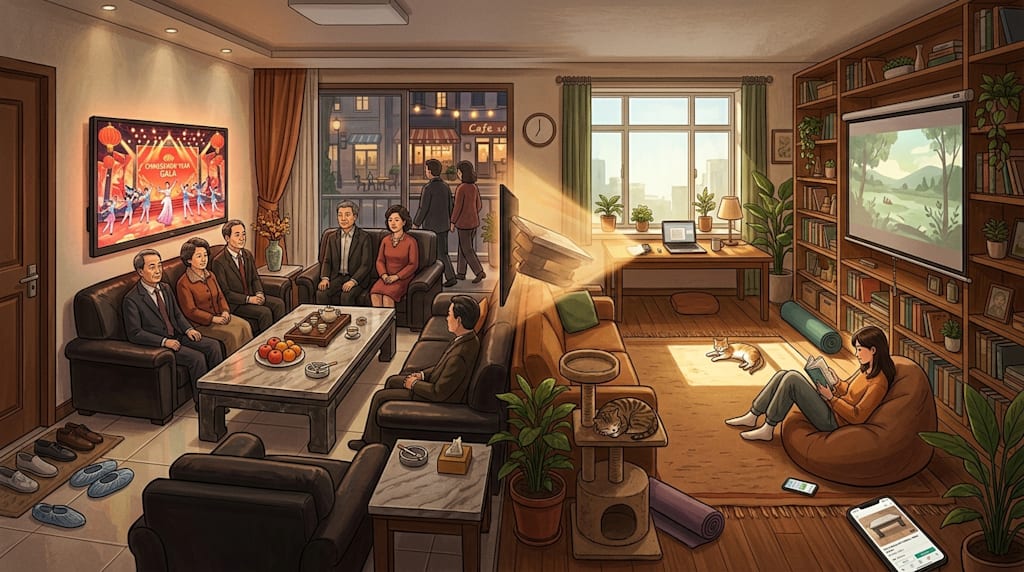
My parents treated the living room as a front desk. Leather sofa. Marble coffee table. TV at least 55 inches. Guests arrived. You offered a seat, made tea, brought fruit. Sunflower seed shells went into an ashtray, not the floor. Relatives visited. Neighbors borrowed vinegar. Colleagues dropped off wedding candy. The TV stayed on for background noise. The Spring Festival Gala played. The family sat around it and did their own things.
The living room was face. Bigger sofa, bigger TV, Zhonghua cigarettes on the coffee table. Guests saw it. The family did not. After they left, you reset the cushions and wiped the table for the next visit.
Dropping by is gone.
People meet at malls, restaurants, cafés, tea houses, campsites. Meals happen in restaurants. Business talks happen in cafés. Tea happens in tea houses. Singing happens in KTV. Cards happen in card rooms. Outside service is good. No cleaning, no shoe changes, no chatting until midnight. Home is backstage. Inviting people over costs too much: cleaning, hosting, privacy, parking, seeing them off. The whole process tires you three times more than eating out.
A friend says, come sit at my place.
I say, café downstairs.
I like the friend. The café is easier.
Families are smaller.
Living alone, couples, DINKs, single parents, empty nests. A family of four, each with a screen. Dad scrolls short videos. Mom binge-watches dramas. The child takes online classes. Grandparents watch news. TV usage falls. The TV works. Nobody watches together. The living room becomes a passage. Delivery boxes land there. Clothes pile on the sofa. Toys cover the floor. Its job: clutter buffer.
Space costs money.
One square meter costs tens of thousands. The living room takes twenty or thirty. Guest visits: fewer than ten a year. The math loses. Fold in housing prices, and every visit burns money. People assign space by use. High frequency stays. Low frequency leaves. How often does the TV go on? How often does the coffee table get used? How often does the sofa get sat on? How often do guests come? Under ten, the living room does not need to live for guests.
Here is a guest frequency model.
Fewer than 10 visits a year.
No hosting function needed. The room is yours. Bookshelves, projector, game console, beanbag, cat tree, fitness mirror, figure cabinet. Arrange it however you want. One person comes once in a while. You are close. Neat and tidy is enough. No perfect hospitality. Enjoy it yourself.
20 to 50 visits a year.
Three to five people a month. A small hosting need. Guests need somewhere to sit. A few chairs, a table, a small sofa, tea, snacks. Most visitors are relatives and close friends. No over-the-top treatment. Want comfort? Get a nice sofa and coffee table. Don’t care? A square table and plastic stools work. Clean is enough. Spend what you like.
50 to 100 visits a year.
Guests almost every week. Close relatives and neighbors, or a wide social circle. Hosting space becomes necessary. The living room is not the only answer. Rowdy kids? Gaming room. Important talk? Study. Lively gathering? Courtyard barbecue. Mixed guests? A chair in the entryway, and they stay by the door. Wealthy family? A display room before the living room. The living room is a buffer. Other rooms do more.
More than 100 visits a year.
Socializing and work blur. Many receptions move outside: tea rooms, clubs, restaurants, company meeting rooms, company account. A few important guests come home. It looks like twenty or thirty visits a year. Tidy the hosting space. Keep it decent.
So design the living room around need.
Frequent important guests make hosting a necessity. If you host little, skip the performance.
De-living-roomization does not mean removing the living room.
It means freeing the room from one template.
Bookshelf living room. Full wall of shelves. Long table in the middle. A few chairs. Work by day. Read at night. Children do homework. Adults drink tea. Guests sit around the table. More natural than a sofa.
Audiovisual living room. Projector, screen, speakers, blackout curtains, beanbags. No TV wall. No big coffee table. Movies on weekends.
Parent-child living room. Rug, low cabinets, toy storage, crawling mat, small tent. Sofa to the side. Coffee table gone. Kids roll around. Adults join. The room is a playground first.
Fitness living room. Yoga mat, dumbbells, rowing machine, fitness mirror, spin bike. TV wall becomes mirror wall. Coffee table becomes storage. Half an hour after work.
Pet living room. Cat tree, dog bed, scratch-resistant sofa, easy-clean floor. Humans and pets share it. Guests ask the cat first.
Empty living room. Nothing. An open space. Meditate, dance, lay out a mat, switch scenes. Blank space works.
These rooms share one habit: they serve daily life. No standard three-piece set. High usage. Less showroom, more home.
Parents see empty space.
Young people see freedom.
Parents imagine sofa, coffee table, TV wall, liquor cabinet. Guests can sit. Fruit can be placed. The home looks presentable. Young people build a bookshelf wall and a long table. Parents ask: how is this home? Where do guests sit?
Young people answer: the big sofa is waste. The big coffee table collects clutter. The TV wall is decoration. Guests? Eat out. Need to sit? The long table works. Need to talk? The study is quieter. Need to play? The rug is softer.
Both sides have reasons.
For parents, home was semi-public. Relationships lived on visits. For young people, home is private. Relationships live on boundaries. Parents want “like home.” Young people want “my home.”
Compromises exist.
Keep a light guest area. Do not sacrifice core functions. Folding table, spare chairs, modular sofa. Store them. Open them when guests come. The entryway buffers. Complicated guests stay near the door. Important gatherings eat out. At home, close friends sit for a while.
We still keep relationships. We host differently.
In English, the room is called the living room.
A room for living, not for guests.
The old Chinese living room was a guest room plus a TV room. The future living room returns to the living room.
Living means work, reading, exercise, games, cat petting, kids, movies, zoning out, tea, friends around a table.
These need comfort, flexibility, and switching. They do not need a big sofa and a big coffee table.
Floor plans change.
Living-dining-kitchen integration. Boundaries blur. Wide rooms, square rooms, X spaces, variable spaces. Developers build no-TV-wall units, multifunctional halls, family core areas. Smart home devices, modular furniture, projectors. One space works by day, becomes a cinema at night, serves kids on weekends, hosts guests once in a while.
Age-friendly homes keep the TV and sofa.
Child-friendly homes need crawling areas and storage.
Pet-friendly homes need scratch-resistant floors and cat runways.
Young solo dwellers need a big table, a bookshelf wall, a good chair.
The living room survives. It splits into types.
It becomes a family core area, not a standard guest area.
I have no living room.
If I did, I would remove the template.
No TV wall. Full wall of shelves.
No big coffee table. A long table by the window. Dining table, work desk, craft table.
No big sofa. Two armchairs, a rug, a beanbag.
Projector instead of TV. Storage cabinets for clutter.
Open space. Exercise, roll around, lay out a mat.
Cat tree against the wall. Plants in the corner. Warm light.
Guests come. We sit around the table and drink tea.
Usually, the room is mine.
Three hundred and sixty-five days a year, I live there.
Guests come fewer than ten times.
Why sacrifice the other three hundred-plus days?
The designer said the Chinese living room lost its meaning.
The one correct template lost its meaning.
The living room used to live for guests.
Now it lives for the people inside.
Stop asking how to decorate the living room.
Ask two things: how many guests come in a year, and how do you want to use the room? Read, exercise, play with kids, game, watch movies, or just have open space.
Different answers, different rooms.
Call it a living room, sitting room, multifunctional area, study, game room, kid zone, gym.
The name is yours.
The test is simple. You want to stay ten more minutes.
Home is for living your own life. Outsiders do not need a vote.
The living room survived. It moved from guest front desk to private backstage.
Others used to decide whether it looked like home.
Now I decide whether I can live in it.
Guest room became living room again.
The big coffee table is listed on the second-hand app.
The long table sits by the window.
The cat sunbathes.
Guests sit around the table and drink tea.
Usually, the room is mine.
About the Creator
Jin
Writer of reamstories
https://reamstories.com/jin
Enjoyed the story? Support the Creator.
Subscribe for free to receive all their stories in your feed. You could also become a paid subscriber, letting them know you appreciate their work.
Comments
There are no comments for this story
Be the first to respond and start the conversation.