
I Compared the Cost of Building With Wood, Concrete, and Steel in 2026
What most construction budgets don’t reveal when you compare these three building systems side by side
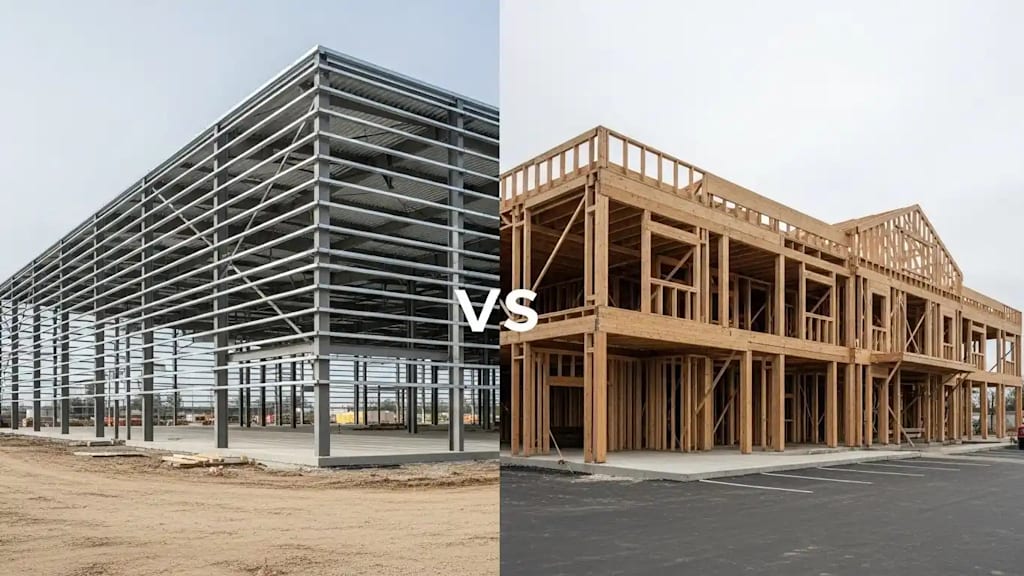
I didn’t expect the numbers to surprise me.
On paper, construction costs are always “known ranges.” You can find estimates for wood-frame homes, concrete structures, and steel buildings in almost any guide online.
But once I started comparing real-world projects side by side, actual quotes, completed builds, and recent 2026 pricing trends, the differences became more interesting than I expected.
And in some cases, the “cheapest” option on paper wasn’t the cheapest in reality.
The starting point: three materials, same goal
To keep things fair, I focused on a simple idea:
A mid-size building (residential or light commercial use), comparable in usable space, built in the current market conditions of 2026.
The three categories were:
- Wood-frame construction
- Concrete construction (reinforced / block-based structures)
- Steel (prefabricated and engineered metal buildings)
The goal wasn’t just to compare material prices.
It was to understand the total real-world cost - materials, labor, timeline, and hidden variables.
Wood construction: familiar, flexible… and increasingly expensive
Wood-frame buildings are still the most common choice in residential construction.
They’re familiar, widely available, and relatively easy to customize.
But in 2026, the cost structure has changed noticeably.
What I observed:
Lumber prices remain volatile compared to pre-2020 levels
Skilled labor costs continue to rise
Longer build timelines increase carrying costs (loans, rent, delays)
A typical mid-size wood-frame structure often starts in a “reasonable” range, but rarely stays there.
Where costs increase:
- Design changes during construction
- Weather delays
- Material substitutions
- Finishing upgrades (which almost always happen)
Wood is flexible but that flexibility often translates into change orders.
Concrete construction: strong, durable… and expensive upfront
Concrete buildings, whether poured-in-place or block-based, stand out for one thing immediately:
They are not cheap to build.
What stood out in 2026:
- High material and labor intensity
- Longer construction timelines
- Specialized workforce requirements
- Higher foundation and structural engineering costs
But unlike wood, concrete projects tend to be more predictable once they start.
There are fewer mid-project surprises, but the entry cost is significantly higher.
Where concrete often ends up:
- Commercial buildings
- Institutional structures
- High-durability residential builds
- Areas with extreme weather conditions
The trade-off is simple: higher upfront investment for long-term strength and low maintenance.
Steel construction: the efficiency model that’s changing the game
Steel buildings (especially prefabricated systems) are where the comparison becomes interesting.
At first glance, steel often looks like the middle ground.
But in real-world 2026 projects, steel often competes aggressively on both cost and speed.
What stood out:
- Faster construction timelines (weeks instead of months in many cases)
- Reduced labor dependency
- Predictable material pricing compared to lumber volatility
- Easier scalability for future expansion
Where steel becomes especially cost-effective is not just in the kit price, but in time savings.
Faster completion often means:
- Lower financing costs
- Earlier usage or revenue generation
- Fewer weather-related delays
However, steel still requires proper planning for:
- Insulation
- Foundation work
- Engineering compliance
Interior finishing (depending on use case)
The surprising truth: the cheapest material isn’t always the cheapest project
When you compare just material costs, the ranking can look like this:
- Wood: often the lowest initial entry
- Steel: mid-range, depending on customization
- Concrete: highest upfront cost
But once you factor in real-world conditions, the picture shifts.
Because the total cost is influenced by:
- Build time
- Labor availability
- Design changes
- Site conditions
- Energy efficiency
- Long-term maintenance
A “cheap” structure that takes longer or changes frequently can end up costing more than a faster, more predictable system.
Timeline matters more than most people realize
One of the biggest hidden cost drivers in 2026 construction is time.
Every extra month of construction can affect:
- Loan interest accumulation
- Rental or temporary housing costs
- Contractor scheduling changes
- Material price fluctuations
This is where steel buildings often gain an advantage, not because they are always cheaper, but because they are faster to complete.
Maintenance and long-term cost reality
Short-term construction cost is only part of the equation.
Over time, material behavior matters:
Wood:
- Requires ongoing maintenance
- Susceptible to moisture, pests, and warping
- Repairs are relatively easier but more frequent
Concrete:
- Very low maintenance
- Long lifespan
- Repairs can be expensive and specialized
Steel:
- Low structural maintenance
- Requires proper insulation and corrosion protection in certain environments
- Long lifespan when engineered correctly
Long-term, steel and concrete tend to outperform wood in durability costs, but each has trade-offs depending on use.
What the 2026 market really shows
After comparing all three, the conclusion wasn’t as simple as “this is cheaper.”
- Instead, the pattern looks like this:
- Wood wins on flexibility and upfront familiarity
- Concrete wins on durability and long-term strength
- Steel wins on speed, predictability, and scalability
But the real winner depends entirely on how the project is planned—not just what material is chosen.
Final takeaway
If there’s one thing the 2026 data makes clear, it’s this:
Construction cost is no longer just about materials.
It’s about time, labor, risk, and planning efficiency.
And in that broader equation, steel buildings are no longer just an “alternative option.”
They’ve become one of the most strategically balanced choices in modern construction - when designed correctly.
Because in the end, the cheapest building isn’t the one with the lowest quote.
It’s the one that finishes on time, performs as expected, and doesn’t keep surprising you after construction is done.
About the Creator
Steve Toth
I am a metal building expert with 12+ years of experience delivering high quality metal buildings in south and midwest.
Enjoyed the story? Support the Creator.
Subscribe for free to receive all their stories in your feed.
Comments
There are no comments for this story
Be the first to respond and start the conversation.