
How to Survive in Water If You Can’t Swim: The Simple Floating Technique That Could Save Your Life
Don’t know how to swim? Learning one basic floating technique and controlling your panic could make a crucial difference if you unexpectedly fall into deep water.

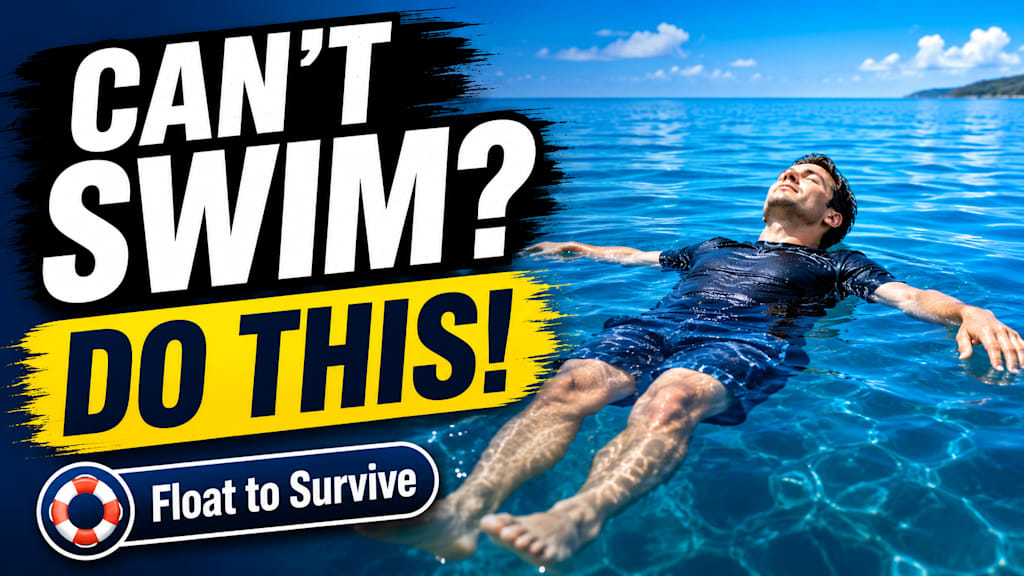
What Should You Do If You Can’t Swim?
For someone who cannot swim, deep water can be terrifying. The natural reaction is often to panic, kick aggressively, wave the arms and desperately try to keep the head above the surface.
Unfortunately, that reaction can quickly use up energy and make breathing harder.
One of the most important water-survival skills for beginners is surprisingly simple: learn how to float and regain control of your breathing.
The idea has been promoted by water-safety organizations including the Royal National Lifeboat Institution (RNLI) through its “Float to Live” guidance.
It does not turn a non-swimmer into a swimmer, and it should never be treated as permission to enter deep water without training. But knowing how your body behaves in water may give you valuable time if you ever fall in unexpectedly.
Why Panic Is So Dangerous in Deep Water
When people suddenly find themselves unable to touch the bottom, fear can take over almost immediately.
They may start throwing their arms around, kicking rapidly and trying to climb upward through the water.
The problem is that frantic movement consumes energy.
Instead of fighting the water continuously, the first objective should be to calm your breathing and get your body into a position that helps it remain near the surface.
This is why learning how to float in water for beginners is such an important part of swimming education.
How to Float If You Don’t Know How to Swim
If you unexpectedly get into difficulty in the water, the basic floating technique is:
Lean your head backward and allow your ears to enter the water.
Try to relax your body instead of fighting the water.
Breathe as normally as possible once the initial shock begins to settle.
Spread your arms and legs for stability and gently move them if necessary.
Once your breathing is controlled, call for help or move toward safety if you are capable of doing so.
Your body may not remain perfectly horizontal.
Some people's legs naturally sink lower than their upper body, and that does not automatically mean the technique is failing. Everyone floats differently.
The goal is not to create the perfect swimming position. The immediate goal is to keep breathing, conserve energy and buy time.
Don’t Try to Keep Your Entire Head Out of the Water
This is one mistake beginners often make.
A frightened person may desperately try to lift the whole head and shoulders above the surface. Doing so can make maintaining a stable floating position much more difficult.
Instead, leaning the head backward and allowing the ears to stay in the water can help position the face upward.
The mouth and nose are the parts that need access to air.
Learning this sensation in a supervised swimming pool with a qualified instructor or experienced adult present is much safer than trying it for the first time during an emergency.
Floating Is Not the Same as Knowing How to Swim
This distinction is extremely important.
Watching a video about floating does not mean you are suddenly safe in deep water.
Swimming requires proper breathing, body positioning, kicking, arm movements, endurance and experience. Open water adds additional dangers such as currents, waves, changing depth and cold water.
If you cannot swim, never deliberately enter deep water simply to test whether you can float.
Practise in a controlled, supervised environment.
What If You Fall Into Water Unexpectedly?
Your first instinct may be to immediately swim as hard as possible.
If you are already a strong swimmer and know exactly where safety is, the situation may be different. But someone who is shocked, frightened or unable to swim can quickly exhaust themselves.
Trying to float first can give you an opportunity to regain control.
Once your breathing settles, you can think more clearly, shout for assistance and assess whether reaching safety is realistically possible.
That few moments of calm can be extremely valuable.
Never Jump In to Rescue Someone Unless You Are Trained
Water emergencies can quickly create a second victim.
If you see another person struggling, entering the water yourself may put both of you at risk—particularly if you are not a strong swimmer or trained rescuer.
Get professional help as quickly as possible and, when available, throw the person something buoyant that can help them stay above water.
A life ring, rescue float or another suitable floating object may help until trained rescuers arrive.
The Best Time to Learn Is Before an Emergency
The biggest lesson from videos about water survival is not that there is a magical trick that makes drowning impossible.
There isn't.
The real lesson is preparation.
Learn basic swimming from a qualified instructor. Practise floating somewhere supervised. Learn how your own body floats. Wear appropriate life-saving equipment when boating or participating in water activities.
Most importantly, respect water even if it looks calm.
A few basic water-safety skills learned today could become extremely important when you least expect them.
About the Creator
parwinder singh
🎬 Movie & Entertainment Writer sharing reviews, ending explanations, story breakdowns, plot twists and hidden details from Bollywood, Hollywood, South Indian cinema, Korean dramas and OTT releases.
Enjoyed the story? Support the Creator.
Subscribe for free to receive all their stories in your feed.
Comments
There are no comments for this story
Be the first to respond and start the conversation.