
How to Stop the Inner Lining From Bunching Up
The fix is simpler than you think. You just need to know where to look.

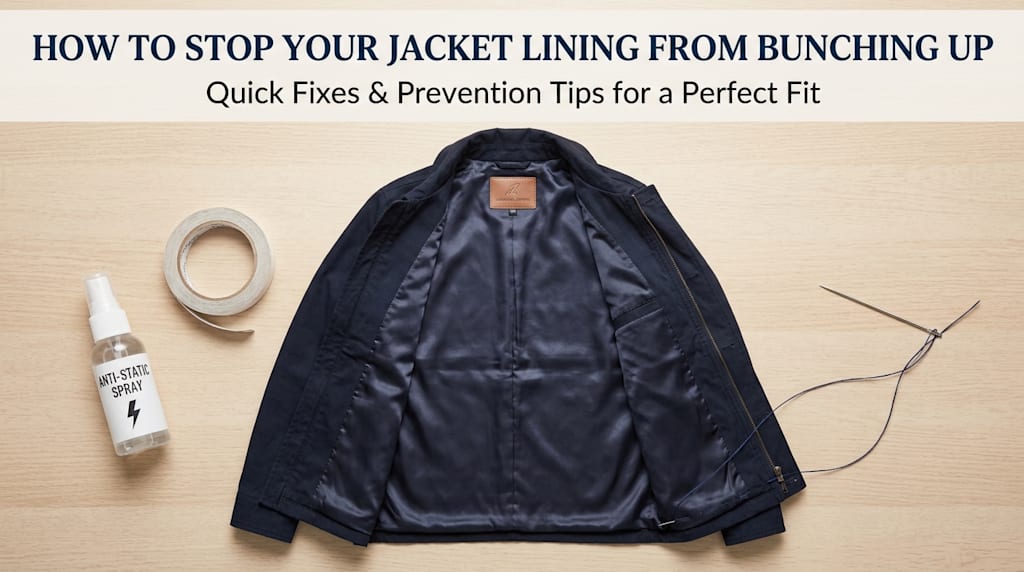
You pull on your favorite jacket and within minutes the inner lining has twisted, bunched up around your waist, or rolled under at the hem. It is one of those problems nobody really talks about but almost every jacket owner has dealt with it at some point.
The good news is, this is mostly a preventable issue. Whether your jacket is a basic polyester shell or a premium leather piece, the fix is usually simpler than you think. This guide covers why lining bunches up in the first place and what you can actually do about it.
Why Does the Inner Lining Bunch Up?
Before jumping to solutions, it helps to understand what is actually going wrong. Lining bunches up for a few core reasons:
- The lining fabric is too slippery or too stiff relative to the outer shell
- Poor attachment points at the hem, cuffs, or side seams
- The jacket was not cut with enough ease allowance for the lining
- Repeated washing or dry cleaning that causes the lining to shrink slightly
- Static electricity pulling the lining toward the outer shell or toward your clothing underneath
A quick stat that puts this in perspective: according to garment industry reports, lining detachment or displacement is cited in roughly 34% of jacket quality complaints among consumers who purchase mid-range outerwear. It is a structural issue more often than a care issue.
Quick Fixes You Can Do at Home
1. Use an Anti-Static Spray
Static is a huge reason linings shift and cling. A light spray of anti-static product on the inside of your jacket before you put it on makes a noticeable difference. It takes ten seconds and costs almost nothing.
2. Add a Few Tack Stitches at the Hem
If the lining is not attached at the bottom hem, it will bunch every single time. A tailor can add small tack stitches at the side seams and hem to anchor the lining in place. This usually costs under $15 and is a permanent fix.
3. Check the Fit of the Jacket Itself
A jacket that is too tight has no room for the lining to lay flat. If the lining is pulling and twisting constantly, the outer jacket may simply be too small through the shoulders or chest. Fit issues cannot be solved by anti-static alone.
4. Fabric Tape as a Temporary Fix
For a quick fix before a tailor visit, double-sided fabric tape applied along the hem on the inside of the jacket keeps the lining anchored. It washes out easily so it is truly just a stopgap, not a long-term solution.
Lining Problems in Leather Jackets: What Makes It Different
Leather jackets are in a different category when it comes to lining issues. The outer shell does not flex or breathe the same way fabric does, so the lining has to do more work. When the lining bunches in a leather jacket, it is usually one of these three things:
- The lining was attached with too little ease during manufacturing
- The lining material is incompatible with leather, causing friction and shifting
- Surface texture of the leather itself is gripping the lining fabric
This is actually one reason why the surface finish of leather matters so much. Brands that use deboss vs emboss leather techniques understand that certain surface treatments interact differently with lining materials. Embossed textures with raised patterns create more grip against the inner lining fabric, while smoother or debossed finishes allow the lining to slide naturally as you move. At Leather Jacket Black, the construction details behind each finish are chosen with this kind of wearability in mind.
The Lining Problem in Shearling and Heavy Outerwear
Heavy outerwear adds another layer of complexity. Thick jackets naturally create more resistance as you move, and the inner lining bears the brunt of that movement.
Mens shearling jackets are a great example of this. Because the shearling adds real weight and bulk on the inside of the garment, any lining added over it needs to be specifically constructed to handle that. A poorly attached lining in a shearling piece will bunch, roll, and eventually separate at the seams. Quality construction here means using a lining that is cut with extra allowance and secured at multiple anchor points across the body and sleeves.
Key things that separate a well-lined shearling from a poorly lined one:
- Lining anchored at the collar, side seams, and hem simultaneously
- Sleeve lining cut with 10-15% more ease than the outer sleeve
- Use of a satin or cupro lining material which slides rather than grips
- No raw edges left unfinished inside the lining seams
Lining Material Makes a Bigger Difference Than You Think
Not all linings are equal. Here is how common lining fabrics compare when it comes to bunching tendency:
- Polyester lining: most common, prone to static, bunches easily in fitted styles
- Acetate lining: smooth finish, good for leather jackets, moderate durability
- Cupro lining: considered the best for movement, breathable, low static, premium cost
- Viscose or rayon lining: soft, drapes well, can shrink after washing
- Quilted lining: warmer, adds bulk, works best in oversized or structured jackets
Industry data shows that cupro-lined garments see up to 60% fewer customer complaints related to lining displacement compared to standard polyester-lined equivalents. The cost difference in production is real but so is the performance gap.
When to Take It to a Tailor
Some lining problems cannot be solved at home. Take your jacket to a tailor when:
- The lining has fully separated from the hem or cuff
- The lining has torn at the seam and is hanging inside the jacket
- Anti-static and fabric tape have not worked after multiple tries
- The entire lining needs to be replaced with a better material
Re-lining a jacket usually costs between $60 and $200 depending on the material chosen and the complexity of the jacket. For a quality leather piece, that cost is almost always worth it.
How to Prevent It From Happening Again
- Buy jackets where the lining is fully anchored at hem, cuffs, and collar, not just tacked at a few points
- Choose the right size. A jacket that fits properly puts less stress on the lining
- Use anti-static spray routinely, especially in dry climates or during winter
- Follow care instructions strictly. Over-washing causes lining fabric to contract
- Store jackets hanging, not folded. Folding creates crease points where the lining eventually weakens
FAQs
Why does the lining in my jacket keep bunching at the bottom?
The lining is likely not anchored at the hem. A tailor can add tack stitches to hold it in place. Static can also pull the lining downward, so an anti-static spray helps in the short term.
Can I fix a bunching lining without a tailor?
Yes, for minor cases. Anti-static spray and double-sided fabric tape work as temporary fixes. But if the lining has separated from the seams, a tailor is the right call.
Does leather jacket lining bunch more than regular jackets?
It can, yes. The rigid outer shell of a leather jacket does not flex with movement the way fabric does. This puts more pressure on the lining to move independently, which is why lining material and construction quality matter even more in leather outerwear.
What is the best lining material to prevent bunching?
Cupro is widely considered the best option. It is smooth, breathable, and resistant to static. Acetate is a solid mid-range choice. Polyester is the most common but the most prone to bunching due to static buildup.
How do I stop the sleeve lining from twisting?
Sleeve lining twists when it does not have enough ease or when it is not anchored at the cuff. A tailor can secure the sleeve lining at the cuff edge. Wearing a thinner base layer underneath also reduces friction and twisting.
Final Thoughts
A bunching lining is annoying but it is almost always fixable. The key is understanding whether it is a care issue, a fit issue, or a construction issue and then treating it accordingly. For most people, a combination of anti-static spray and a quick tailor visit will solve it permanently.
If you are in the market for a new jacket and want to avoid this problem altogether, pay attention to how the lining is constructed before you buy. A well-made leather jacket with properly anchored, quality lining will serve you for years without any of these headaches.
About the Creator
Gwen Jorgensen
I’m Gwen Jorgensen, a fashion enthusiast and Marketing & PR Manager at Leather Jacket Black. I share insights on modern outerwear, style trends, and premium leather fashion, with a focus on what makes standout pieces truly timeless.
Enjoyed the story? Support the Creator.
Subscribe for free to receive all their stories in your feed.
Comments
There are no comments for this story
Be the first to respond and start the conversation.