
How to Make a Text Post on TikTok That Grabs Attention
Learn how to create eye-catching TikTok text posts that stop the scroll, spark engagement, and keep viewers interested.

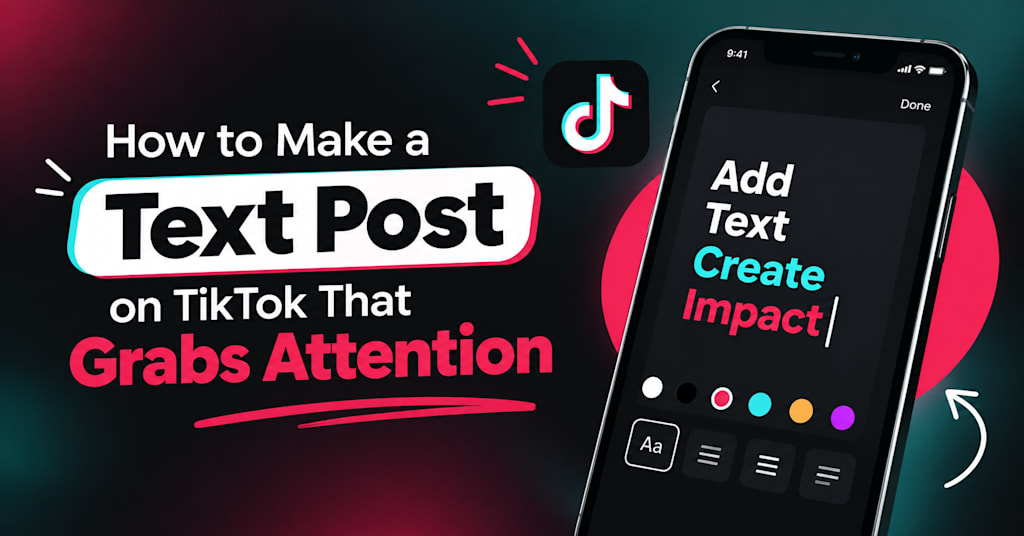
A text post gets judged faster than almost anything else on TikTok. There's no three-second video hook building anticipation, no visual pulling someone in before the words even register. Just a sentence, sitting there, competing against everything else in someone's feed for a fraction of a second of actual attention. Most text posts lose that fight instantly — not because the idea behind them was bad, but because nothing about how they were written or built was designed to survive that first glance.
Grabbing attention in that window isn't about being loud or dramatic. It's about understanding exactly what makes a thumb pause mid-scroll, and building toward that on purpose instead of hoping it happens by accident.
Why a Text Post Only Gets a Glance, Not a Read
A video earns a little patience. Someone might sit through an awkward first few seconds if the visuals or sound are interesting enough to justify sticking around a bit longer. A text post doesn't get that grace period. The entire judgment happens in the time it takes to read the first line — if that line doesn't immediately signal something worth finishing, the scroll continues before the second sentence even has a chance. That competition for attention is only getting steeper, too Pew Research Center's most recent survey on teens and social media found that roughly six in ten teens now use TikTok, all scrolling through the same crowded feed a text post has to compete in.
That changes how a text post has to be built. There's no slow build available. Whatever's going to grab attention has to be sitting right at the top, doing the work immediately, rather than being saved for a payoff further down.
The First Few Words Decide Everything
Most weak text posts share the same problem: they spend the opening on setup instead of substance. "So today something happened that I have to share" burns the entire attention window on a sentence that says nothing yet. A stronger version cuts straight to the actual content — what happened, stated directly, with the context filled in afterward if it's even needed at all.
This is where a lot of writing instinct actually works against a creator. Writing naturally tends to build context before the point. Attention-grabbing text posts do the opposite — point first, context after, if there's room for it.
Hook Types Worth Testing
A handful of opening structures tend to earn that first glance more reliably than others:
The confession — starting with something a little too honest, the kind of thing people don't usually admit out loud
The contradiction — stating something that seems to conflict with common sense or expectation
The direct address — speaking straight to a specific type of reader, so anyone who fits immediately feels called out
The blunt number — leading with a specific figure or detail instead of a vague description
The unfinished thought — opening with something that clearly needs an explanation, creating a small gap the reader wants closed
None of these work as a rigid formula to plug words into. They work as starting points — a way to shape an idea so the opening line does more than the rest of the post combined.
Using Interactive Stickers to Extend Attention
Text posts on TikTok aren't limited to static words sitting on a background. Poll stickers, Q&A stickers, that kind of thing — they turn a passive read into something a viewer actually does something with, and that tends to hold attention a little longer than a post with nothing to interact with at all.
Ask readers to pick a side on whatever opinion you just stated, and suddenly they've got somewhere to put the reaction they were already having instead of just scrolling past it. Works best when that interactive piece actually connects to the text — bolt one on that has nothing to do with what was said, and it just feels random.
Tone: Why Raw Beats Polished
A text post that sounds like it was written by a brand's marketing team tends to get skipped, even if the underlying point is reasonable. Polished, careful language reads as safe, and safe rarely earns a second look in a feed built on quick, instinctive reactions.
A rougher, more direct tone — closer to how someone would actually vent to a friend than how they'd write a press release — tends to hold attention better. That doesn't mean sloppy or careless. It means sounding like an actual person had an actual thought, rather than sounding like every word was run through an approval process first.
Visual Simplicity as an Attention Tool
The writing carries most of the weight, sure, but the visual side still decides whether attention actually sticks around past that first glance. A background that's too busy fights the text for attention instead of getting out of the way. Text that's too small, too stylized, or barely visible against whatever's behind it makes people work just to read it — and most people scrolling won't bother putting in that work.
For a fuller walkthrough of the format, this guide explains how to create TikTok text posts that are built to hold attention.
Simple, high-contrast formatting isn't just a readability preference. It's part of what lets the actual words do their job without a visual distraction pulling focus away from them.
Timing Your Post to Ride Existing Attention
A text post that touches on something already circulating — a shared frustration, a widely discussed topic, a moment a lot of people are already thinking about — tends to grab attention faster than the same idea posted in isolation. Existing context does some of the work before the post even loads, since the reader arrives already primed to care about the subject.
This isn't about chasing every trending topic regardless of fit. It's about noticing when a genuine thought actually intersects with something already on people's minds, and posting it while that overlap still exists rather than a week after the moment has passed.
Adding Audio and Visuals Without Losing the Text's Impact
Background audio and small visual touches — a sticker, a subtle animation, a well-chosen image behind the text — can add texture to a post without needing to say anything on top of the words themselves. A specific song underneath a confession-style post can set an emotional tone before the reader even finishes the first line, reinforcing the mood rather than distracting from it.
The risk is letting these elements compete with the text instead of supporting it. A busy image behind dense text, or audio that clashes with the tone of what's written, tends to work against the post rather than for it. Used sparingly and deliberately, though, audio and visual choices can make an already-strong line land even harder.
Optimizing the Caption and Comments Around the Post
The text itself does most of the work, but the caption sitting underneath it still matters. A caption that adds a small additional detail, asks a follow-up question, or gently nudges toward a reaction tends to pull more engagement than one left blank or filled with unrelated hashtags. It's a second, smaller chance to reinforce whatever the main post already said.
The comment section is worth treating as an extension of the post rather than something separate from it. Replying to early comments, especially ones that push back or ask a genuine question, keeps the conversation active — and an active comment section tends to keep a post visible to more people than one that goes quiet right after posting.
Attention-Killers to Avoid
A few habits reliably undercut a text post before it has a real chance:
Opening with unnecessary setup instead of the actual point
Writing in a tone that reads corporate, overly careful, or too polished
Trying to cram more than one idea into a single post
Picking a background or font that slows down how fast the text can be read
Posting something with no particular reader in mind, just hoping it lands broadly
Any single one of these can sink an idea that was otherwise perfectly decent, mostly because attention lost in that first second almost never comes back around.
Frequently Asked Questions
What's the single biggest factor in whether a text post grabs attention?
The opening line. Since a text post is judged almost instantly, whatever's going to earn attention needs to be at the very top, not built up to gradually.
Do interactive stickers actually help a text post get noticed?
They can extend engagement once someone's already reading, though the text itself still has to earn that initial glance — a sticker doesn't compensate for a weak opening line.
Should every text post try to be funny or controversial?
No. Confession, contradiction, direct address, and a few other approaches can all grab attention without needing humor or controversy specifically — the common thread is specificity, not a particular tone.
How much does formatting actually matter compared to the writing itself?
The writing matters more, but poor formatting can undercut even a strong line by making it harder to read quickly, which defeats the purpose in a format judged on speed.
Is there a reliable way to guarantee a text post gets noticed?
There isn't. No promise on TikTok comes with a guaranteed outcome, this format included. A strong opening, real specificity, and a tone that sounds like an actual person rather than a script — that's what consistently helps, even without any guarantee attached to it.
Attention Is Earned in the First Line, Not the Whole Post
A text post doesn't get graded on its overall quality the way a longer piece of writing might. It gets graded almost entirely on whether the first few words did their job. Everything else — the tone, the formatting, the interactive elements — either supports that opening or works against it. Get the first line right, built around something specific and genuinely worth reading, and the rest of the post finally gets the chance to matter.
About the Creator
Salman Ashraf
Social Media Strategist & Content Writer
Enjoyed the story? Support the Creator.
Subscribe for free to receive all their stories in your feed. You could also become a paid subscriber, letting them know you appreciate their work.
Comments
There are no comments for this story
Be the first to respond and start the conversation.