
How to Choose the Perfect Chandelier Size for Your Room?
Chandelier Size Guide

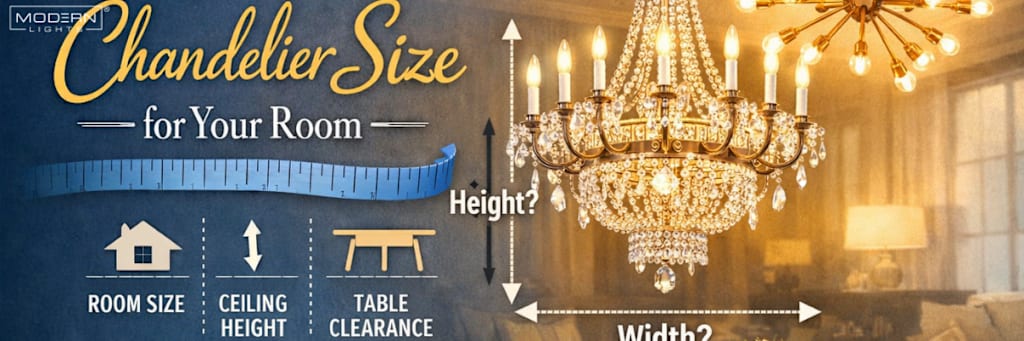
One of the most important decisions when designing a room is what size chandelier to select. An oversized chandelier, on the other hand, can dominate a room and disrupt the scale of an entire space — in fact, it’ll look ridiculous if out of bounds. You want to land not just on a fixture that works scale-wise, but one that feels proportionate, comfortable and visually grounded.
Many people look for a simple chandelier size guide or formula, but the truth is that considering chandelier size requires more than numbers. Room shape, ceiling height and furniture placement all matter as well. When these factors combine properly, the chandelier becomes a natural focal point rather than something that feels wrong.
This guide will show step-by-step how to determine chandelier size using both practical formulas and real-world design principles so you can confidently select the correct fit for your home.
Quick Answer
To select a bedazzling chandelier, add together the length and width of your room (in feet) and use that total in inches as the optimal diameter of the chandelier. Bernstein, for instance, generally recommends a 26-inch chandelier for a 12 × 14-foot space. You’ll want to consider ceiling height, furniture size and visual balance as well, so that the chandelier fits naturally within a space.
Chandelier Size Chart
Room Size (Feet) Chandelier Diameter (Inches)
10 × 10 20 inches
12 × 12 24 inches
12 × 14 26 inches
14 × 16 30 inches
16 × 18 34 inches
This chandelier size chart gives a reliable starting point, especially when you are unsure how big a chandelier should be for your room. It works best for living rooms, bedrooms, and general spaces where the chandelier is not centred over furniture.
How Chandelier Size Actually Works
Grasping how chandelier size functions allows moving past guesswork. The traditional formula that most chandelier size guides use relies on room dimensions — but what it really does is ensure visual proportion.
A modern chandelier that is sized appropriately feels balanced within its space. It neither overpowers the room nor fades away in it. Instead, it visually relates to the walls, ceiling, and furniture, giving it a coherent appearance.
Most important, however, is not the measurement itself but rather how that size plays with the room. A chandelier that still adheres to the formula but disregards the ceiling height or placement of furniture can still feel wrong. So the ideal method incorporates calculation and visual judgment.
Step 1: Measure Your Room Size
The most common chandelier size guide begins with your room dimensions. Particularly this is called a chandelier size calculator type of approach.
Enter your room’s length and width in feet, then convert that number to inches. This will give you a rough chandelier diameter.
For instance, if your room measures 12 feet by 14 feet, then you would add those numbers together for a total of 26. A chandelier that is about 26 inches in diameter will typically feel appropriately scaled.
This approach makes sense because it connects the size of the fixture to the room, allowing you to strike a visual balance while not complicating things.
Step 2: Adjust for Ceiling Height
Ceiling height is instrumental in how a chandelier feels in a room. The height is also important, and if a fixture's height is not taken into account, even with the correct diameter it can appear too short or too tall.
A general rule of thumb is to allow approximately 2.5 to 3 inches of chandelier height per foot of ceiling height. In a room with an 8-foot ceiling, for instance, a chandelier height of approximately 20 to 24 inches typically works best.
In rooms where the ceiling is higher, taller chandeliers or multi-tiered designs often feel more in place. A shorter fixture helps prevent a cluttered or crowded appearance in lower ceilings.
You want to preserve comfortable separation, but still have the chandelier feel like a part of the room visually.
Step 3: Consider Furniture Placement (Dining Table Rule)
The torch goes out slightly when sizing a chandelier over the dining table. Rather than scaling merely from room dimensions, a chandelier should correlate directly with the size of the table.
A good rule of thumb is to select a chandelier that’s half to three-quarters the width of the table. This holds the fixture centred and in proportion without extending too far past the table edges.
Height also matters here. A chandelier’s bottom edges should typically sit about 30 to 36 inches above the table surface. This gives enough light while allowing you to see comfortably across the table.
It grounds the chandelier and makes it feel connected to the furniture as opposed to simply floating within the space.”
Step 4: Think About Visual Balance
Many chandelier size guides are void of the quite important visual balance factor. Even if the specs are technically correct, “the chandelier has to feel right in the room,” he said.
A bigger chandelier can give a bold, statement effect, especially in open or minimal spaces. Smaller chandeliers can register as more subtle and understated, which is effective in rooms where there’s more furniture or visual detail.
But what you need to keep in mind is how the chandelier relates to everything around it. In a large-room space with big furniture and high ceilings, something larger would work better. In a tighter or more intellectual space, a smaller chandelier makes more sense.
Rather than obsessing over specific figures, it’s helpful to take a step back and consider what the chandelier adds to the overall ambience of the room.
Choosing Chandelier Size by Room Type
The rooms themselves call for slightly different approaches when it comes to size selection, even deploying the same general shape guidelines.
Chandeliers are common in living rooms as a central design element. The size should seem proportionate to the seating area and ceiling height, not overwhelming the room. Open layouts might call for a bigger fixture to visually anchor the room.
In dining rooms, the chandelier relates directly to the table — not to the room at large. In this instance, it is the proportion of the table that matters more than the overall room size.
In bedrooms, the chandelier size should be softer and part of the space. It should complement the bed and other pieces of furniture in the room instead of being more prominent than them.
Sometimes in entryways or foyers, chandeliers stand out as the star of the show. Taller ceilings can accommodate larger or multi-tier chandeliers, while more petite entryways can make use of streamlined designs that still provide a warming focal point.
Common Mistakes When Choosing Chandelier Size
One of the most common errors is selecting a chandelier that is too small. This is common when trying to keep safe, but it can make the fixture feel isolated from the room.
A second mistake: ignoring ceiling height. Even the right-sized chandelier can feel misplaced if it’s hung too low or is just too short for the room.
Another common mistake is overlooking furniture placement, especially in dining rooms. “If you have a chandelier that’s not aligned with your table, that disrupts the visual balance of your room,” she said.
But without design thought, it may produce results that while technically correct, can feel (or look) off.
What If Your Room Is Not Standard?
Not everything in a room will fall into an ideal layout, and this is where flexibility becomes important.
In open-concept rooms, chandelier size should be relative to the individual area being lit rather than the space as a whole. This helps delineate areas in the space without overbearing the fixture.
In low-ceilinged rooms, a more compact fixture or semi-flush mounts can provide comfort without compromising on style.
In rooms with vaulted or very high ceilings, larger or multi-tier chandeliers help fill the vertical expanse and prevent a fixture from feeling undersized.
Knowing how to modify chandelier size in these instances allows for a more intentional design.
How to Choose Between Two Chandelier Sizes
When you’re torn between two chandelier sizes, it often boils down to the feeling you want in the room.
A slightly larger chandelier can then have a more commanding visual presence and is great in open or clean spaces. A smaller chandelier is more understated, and often works better in rooms that have a lot of furniture or detail.
If you’re in doubt, think about the space’s scale and the chandelier’s place within that. If you plan for it to be a statement piece, larger always works (well, usually — about half a size up). If it is meant to disappear, a smaller size may seem appropriate.
FAQ
How big should a chandelier be for a room?
A chandelier should typically match the combined length and width of the room in feet, converted to inches. This provides a balanced and proportional size for most spaces.
What is the standard chandelier height from the ceiling?
Chandelier height depends on ceiling height, but a common guideline is 2.5 to 3 inches of fixture height per foot of ceiling height.
What size chandelier for a dining table?
A chandelier should be about half to three-quarters the width of the dining table and hang around 30 to 36 inches above it.
Can a chandelier be too big?
Yes, a chandelier that is too large can overwhelm the room and feel visually heavy. Balance and proportion are key.
Is it better to go bigger or smaller?
If you are unsure, slightly larger often works better than too small, especially in rooms with higher ceilings or open layouts.
Conclusion
Finding the right size chandelier is more than math. Though room dimensions are a good starting block, there are a few other factors to consider before deciding on your overall plan: the height of the ceilings, placement of furniture and an appropriate ambiance for the space.
An appropriately sized chandelier can add balance, intimacy and visual clarity to a room. It becomes ingrained in the design rather than a glommed-on feel. With a few basic measurements in mind and some consideration about proportion and layout, you can choose a chandelier that feels natural, functional and complete visually in your space.
About the Creator
SEO HUB
I’m a professional Content & SEO Specialist with 3+ years of experience. I provide placements on top-tier USA publications, sites like USAToday.com, ensuring real exposure and SEO value.
WhatsApp: +92 311 6772455
Enjoyed the story? Support the Creator.
Subscribe for free to receive all their stories in your feed.
Comments
There are no comments for this story
Be the first to respond and start the conversation.