
How to Choose an Ear Cleaning Kit for Home Use?
A practical guide to choosing a gentle, easy-to-use ear care kit for everyday home hygiene.

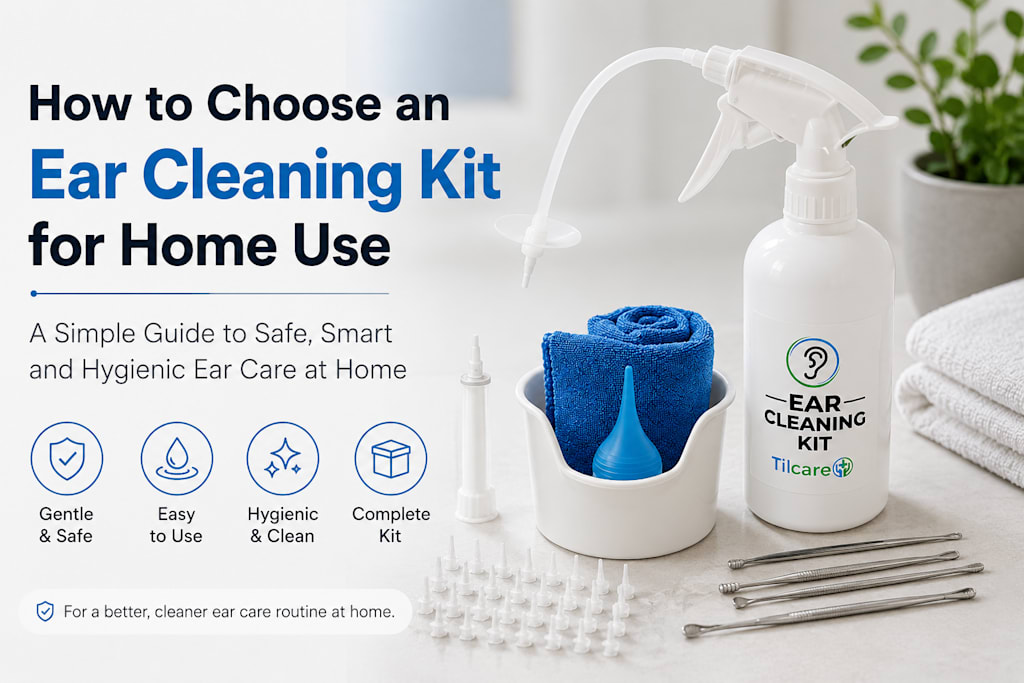
Ear care is one of those small personal-care habits people often ignore until their ears start feeling uncomfortable or blocked. Many people reach for cotton swabs first, but they are not always the best tool for regular ear cleaning. They can push wax inward, create irritation, or make the ear feel more clogged than before.
For people who want a simple routine for home ear care, an ear cleaning kit for home with a rinse bottle, basin, tips, and reusable cleaning tools can make the process more organized than using random bathroom items.
Choosing the right ear cleaning kit comes down to comfort, control, hygiene, and ease of use.
Start with a simple question: what do you need it for?
Before choosing a kit, think about how you plan to use it. Some people want a basic kit for occasional home ear care. Others want a more complete set with a rinse bottle, tips, basin, towel, and reusable tools. Some prefer a camera-based option because they want better visibility while cleaning.
There is no single best choice for everyone. The right kit depends on how comfortable you are using it, how clear the instructions are, and whether the design helps you clean gently without going too deep.
For most people, a simple and controlled kit is better than one that looks complicated or has too many sharp-looking accessories.
Avoid anything that encourages deep cleaning
The biggest mistake with ear cleaning is trying to clean too deeply. The ear is sensitive, and forcing tools inward can cause discomfort or push wax further inside. A good home-use kit should encourage gentle outer-ear cleaning or controlled rinsing, not digging or scraping.
When comparing products, avoid kits that make the process look aggressive. If the instructions or images suggest deep insertion, twisting hard, or scraping, that is not ideal for routine home care. A safer home-care routine should feel slow, simple, and controlled.
Understand the main types of ear cleaning kits
Most ear cleaning kits fall into a few common styles. Knowing the difference helps you choose the right one.
Rinse-based ear cleaning kits
A rinse-based kit usually includes a bottle or spray-style tool designed to help rinse the ear gently with water. Many also include a basin or towel to keep the process cleaner.
This type of kit is often chosen by people who want something more organized than cotton swabs. It can be useful for routine home cleaning when used carefully and according to the instructions.
For example, an ear cleaning kit for home with a rinse bottle, basin, tips, and reusable cleaning tools can make the process more structured than using random bathroom items.
Manual ear cleaning tools
Some kits include small reusable tools for visible outer-ear cleaning. These should be used carefully and should not be pushed deeply. Manual tools are best treated as accessories, not as something to use forcefully. If you cannot clearly see what you are doing, it is better to stop rather than guess.
Camera ear cleaning tools
Camera-based ear cleaning kit connect to a phone and allow you to view inside the ear while cleaning. This can be helpful for visibility, but it should still be used gently. A camera does not mean you should clean more aggressively. It simply gives a clearer view. The same rule applies: avoid deep pressure and stop if anything feels uncomfortable.
Check what comes in the kit
A good ear cleaning kit should include practical items that make cleaning easier and less messy. Useful accessories may include:
- A rinse bottle
- Disposable or washable tips
- A catch basin
- A small towel
- Reusable cleaning tools
- Clear instructions
- Storage or cleaning guidance
The instructions are especially important. A kit with many accessories is not helpful if you cannot understand how to use them properly. Before buying, look at whether the parts seem easy to clean, easy to store, and simple enough for regular use.
Choose gentle design over too many attachments
Some ear cleaning kits look impressive because they include many small tools. But more parts do not always mean a better product. For home use, simple design matters more. You want a kit that makes the process easy to understand. Too many attachments can create confusion and increase the chance of using the wrong tool in the wrong way.
A good kit should make the routine clear:
- Read the instructions.
- Prepare the kit.
- Use it gently.
- Avoid deep insertion.
- Stop if anything feels uncomfortable.
- Clean and dry the reusable parts.
- Store everything properly.
That is a better approach than rushing through the process.
Look for easy cleaning and storage
An ear cleaning kit should not only help clean your ears. It should also be easy to clean after use. Reusable parts should be washable and simple to dry. Moisture left inside bottles, tips, or storage areas can create odor or make the kit less pleasant to reuse.
Look for:
- Smooth surfaces
- Washable parts
- Tips that are easy to rinse or replace
- A storage method that keeps items clean and dry
- Instructions for cleaning the kit after use
If a kit looks difficult to clean, it may not be practical for regular home use.
Think about comfort and control
Comfort matters. If a kit feels awkward, messy, or hard to control, you are less likely to use it correctly. A good ear cleaning kit should feel steady in the hand. The bottle should not require too much pressure. Tips should feel secure. The basin or towel should help reduce mess. The overall routine should feel manageable. If the kit feels too complicated before you even start, choose something simpler.
Do not choose only by price
A cheap kit may look attractive, but price should not be the only deciding factor. Very low-cost kits may have poor instructions, uncomfortable tools, or parts that do not feel durable. At the same time, the most expensive kit is not always necessary. A camera, app, or long list of attachments may be useful for some people, but not everyone needs those features.
The better question is:
Does this kit make gentle home ear care easier?
If yes, it may be a good choice. If it encourages force, confusion, or deep cleaning, it is better to avoid it.
When a home ear cleaning kit makes sense?
A home ear cleaning kit may be useful if you want:
- A more organized option than cotton swabs
- A simple home-care routine
- A rinse-based cleaning method
- Reusable accessories
- Clear instructions
- Better hygiene and storage
It may not be the right choice if your ear feels painful, highly sensitive, or unusual. In that case, it is better to stop and seek proper guidance rather than trying to fix the issue at home. The key is to use an ear cleaning kit as a personal-care tool, not as a solution for every ear concern.
Final thoughts
Choosing an ear cleaning kit for home use is not about finding the strongest tool or the biggest set of accessories. It is about choosing something gentle, easy to understand, and practical for regular personal care. A good kit should help you avoid poor habits like pushing cotton swabs too deeply. It should make cleaning more organized, more controlled, and easier to manage.
For routine home ear care, look for a kit with clear instructions, simple parts, easy cleaning, and a design that encourages gentle use. The best choice is usually the one that helps you clean carefully without making the process complicated.
About the Creator
Sahil
I’m an SEO strategist working with ecommerce brands in health and personal care. I focus on content-driven growth, product positioning, and scaling visibility for brands like Tilcare under Tilco.
Enjoyed the story? Support the Creator.
Subscribe for free to receive all their stories in your feed.
Comments
There are no comments for this story
Be the first to respond and start the conversation.