
How Men Mannequins Shape Buying Decisions Long Before a Customer Touches the Rack
men mannequins
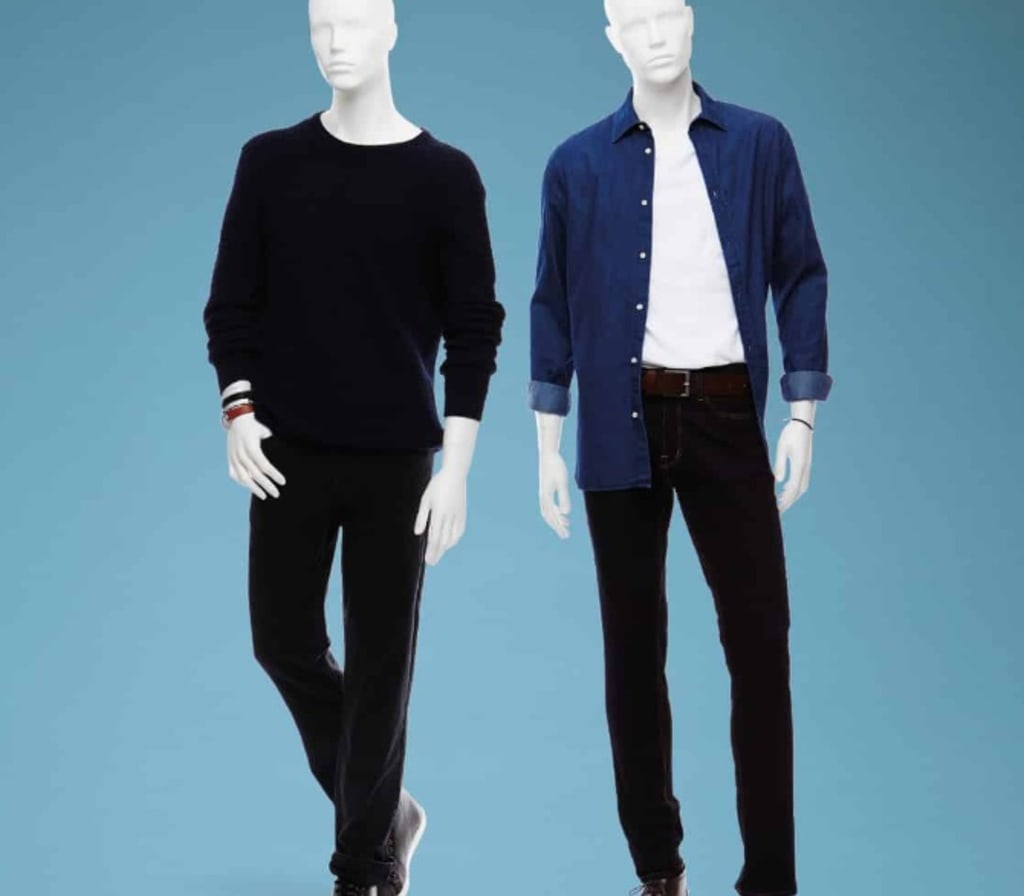
Walk into a menswear store that is genuinely performing well, and something feels right before you have examined a single product. The floor has an intention to it. The garments on display look like they belong to a coherent world. The customer who buys without quite knowing why they were drawn to a particular item is responding to a sequence of visual cues that started the moment they saw the window or crossed the threshold. Men mannequins sit at the centre of that sequence. They are not holders. They are the primary communicators of what a garment looks like inhabited, and most retailers are wasting them.
What Happens When the Wrong Body Wears the Clothes
A mannequin with the wrong proportions for a garment does something subtle and damaging. It makes the garment look like it is performing for someone who is not the customer. A relaxed-fit trouser on a narrow, elongated form reads as too long in the leg and too loose in the seat. A structured jacket on a form that is too narrow loses its shoulder geometry entirely. The customer who looks at that display and does not connect with what they see is not uninterested in the product. They are looking at a product misrepresented by its display context and making an accurate assessment — it does not look right on that body. The sale was lost before anyone spoke.
The Posture Decision Nobody Treats as Brand Strategy
Every menswear brand has a posture — not literally, but in terms of how it wants its customer to feel wearing the clothes. Confident and formal. Relaxed and effortless. Active and contemporary. The posture of a display mannequin either reinforces or contradicts that brand posture in a way that most retailers never consciously connect. A mid-stride mannequin wearing a structured blazer communicates something about the brand's relationship to convention that an upright, static one does not. Neither is wrong in the abstract. Both are wrong if they contradict the actual brand positioning. Most stores make this choice by default — whatever posture the mannequins arrived in — rather than by design.
Why a Realistic Face Is Often a Liability
This surprises most retailers when they hear it. A realistic facial treatment on a mannequin is an aesthetic commitment. The face has a look — an ethnicity, an age suggestion, a mood — that may resonate with some customers and alienate others. Abstract or featureless head treatments sidestep this entirely. They ask the customer to project themselves into the form rather than asking them to identify with a specific face that may or may not reflect them. Men mannequins with simplified or geometric head treatments consistently perform across a broader range of customer demographics and brand environments precisely because the face is not doing aesthetic work that the garment should be doing on its own.
What Most Window Displays Get Backwards
Stores put their best-selling garments in the window. This logic is understandable and almost always wrong. A best-selling garment is already moving. The window is the place for the garment that needs help — the piece that customers walk past on the floor, that photographs well, that carries margin, but that nobody reaches for because they cannot visualise it being worn. A mannequin in a window showing a garment styled with intention, in a composition that photographs well from the pavement, does selling work that no internal placement can replicate. Men mannequins in windows should be earning their position by converting unfamiliar products, not confirming the popularity of familiar ones.
How Dressing Height Affects the Garment's Read
The height at which a mannequin sits in relation to the customer's eyeline changes how a garment is experienced. Elevated mannequins — on plinths, in window bays, or on display platforms — create aspiration. The customer looks up slightly, which changes the perceived scale of the garment and the perceived stature of the form wearing it. Floor-level mannequins create familiarity and accessibility. Neither is universally better. But stores that place all their mannequins at the same height, regardless of the garment category or the intended customer emotion, are losing a dimension of display that costs nothing to use and consistently affects how customers engage with what they see.
Conclusion
Men mannequins do their best work when every decision about them — proportion, posture, face treatment, window selection, and display height — has been made with the customer's experience in mind rather than by default or convenience. The stores where browsers consistently become buyers are rarely the ones with the most attractive garments. They are the ones where the visual environment was constructed deliberately and where the display forms were understood as the first salesperson a customer encounters before anyone says a word.
About the Creator
Enjoyed the story? Support the Creator.
Subscribe for free to receive all their stories in your feed.
Comments
There are no comments for this story
Be the first to respond and start the conversation.