
How Louvre Screens Transform Your Space With Style and Function
Louvre Screens
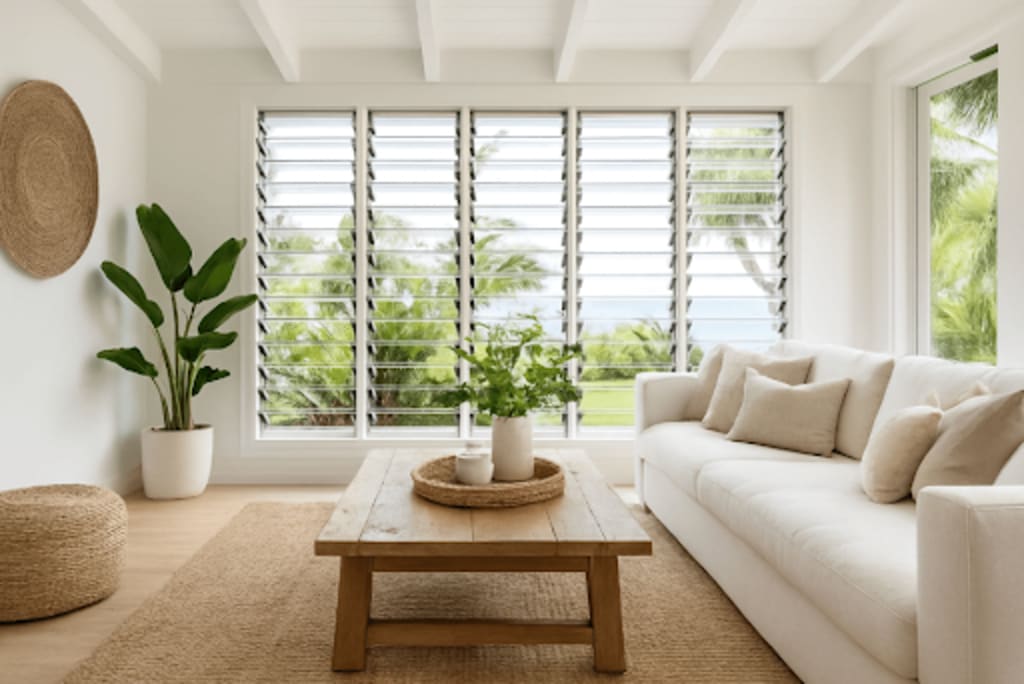
Outdoor design is full of compromises. You want privacy but not a fortress. Shade without losing the sky entirely. A boundary that does not make the garden feel like a holding cell. Most products on the market force a trade-off. Louvre screens are one of the rare exceptions, and yet somehow they still do not get the attention they deserve compared to the tired, overused alternatives most people default to without much thought.
More Than Just a Pretty Slat
People tend to assume screens are mainly decorative. That assumption does a disservice to what they actually accomplish. The angle of each slat is quietly doing a significant amount of work – managing light entry, steering airflow, and controlling exactly what can and cannot be seen from the outside. Nudge that blade angle even slightly, and the whole character of the space shifts. This is not a passive garden accessory. It is a deliberate design tool with real consequences for how a space feels at different times of day, across different seasons.
The Privacy Paradox
Solid fencing gives complete privacy. It also makes everything feel heavier and more confined. Spaces boxed in by solid panels tend to feel smaller and less enjoyable to actually spend time in — a fact that only becomes obvious once you are sitting inside one on a warm afternoon. Screens resolve what some designers refer to as the 'privacy paradox', which is the need to feel sheltered without feeling enclosed. Sightlines from outside are cut off, but the person inside still gets light, moving air, and a sense of connection to the broader environment. That distinction sounds subtle. In practice, it changes everything about how a space is experienced.
Ventilation Is Not a Bonus Feature
Ventilation tends to get treated as a secondary consideration in outdoor planning. It should not be. A pergola or covered terrace with solid side panels traps heat and turns a pleasant outdoor area into somewhere nobody wants to sit by midday in summer. The blade structure found in louvre screens does more than passively allow air through. When positioned well, it actively channels and directs a breeze rather than simply letting it scatter. A thoughtfully placed screen can improve airflow compared to having no barrier at all, because it concentrates movement rather than allowing it to dissipate in every direction at once.
Why Material Choice Changes Everything
Aluminium and timber are not just different looks. They behave in fundamentally different ways over time, and treating them as interchangeable is where many people come unstuck. Aluminium holds its finish through seasons without demanding much attention. It does not warp, does not rust, and tends to look much the same after several years as it did when first installed. Timber moves. It responds to moisture and temperature shifts, and without proper maintenance, it will show wear relatively quickly. That is not a reason to avoid it — the warmth and character of natural timber in a garden or coastal setting are genuinely hard to replicate with any other material. But it does require honest expectations going in, rather than discovering the maintenance reality after the fact.
Placement Is Where Most People Go Wrong
A screen put in the wrong place solves nothing. Plenty of screens end up being expensive decorations because the placement decision was driven by appearance rather than function. Sun orientation, the direction of prevailing winds, and the actual sightlines from neighbouring properties all need to be worked through before anything is ordered or installed. The most useful question to ask early on is straightforward: what specific problem is this screen solving? That answer drives every decision that follows, from blade angle to height to material. Without it, the result tends to look fine but perform poorly.
Conclusion
Louvre screens earn their value when the thinking behind them is as considered as the product itself. The gap between a screen that genuinely improves a space and one that simply occupies it comes down almost entirely to decisions made before installation. Right placement, appropriate material, and a blade angle chosen with purpose — these things together produce an outdoor element that works quietly and consistently across every season. For anyone serious about getting real performance from an outdoor space, screens deserve considerably more than a passing glance.
About the Creator
Enjoyed the story? Support the Creator.
Subscribe for free to receive all their stories in your feed.
Comments
There are no comments for this story
Be the first to respond and start the conversation.