
His Car Died in Silence—What Happened Next Saved Him
A quiet roadside breakdown turned into an unexpected lesson about survival, kindness, and knowing what to do when everything stops.

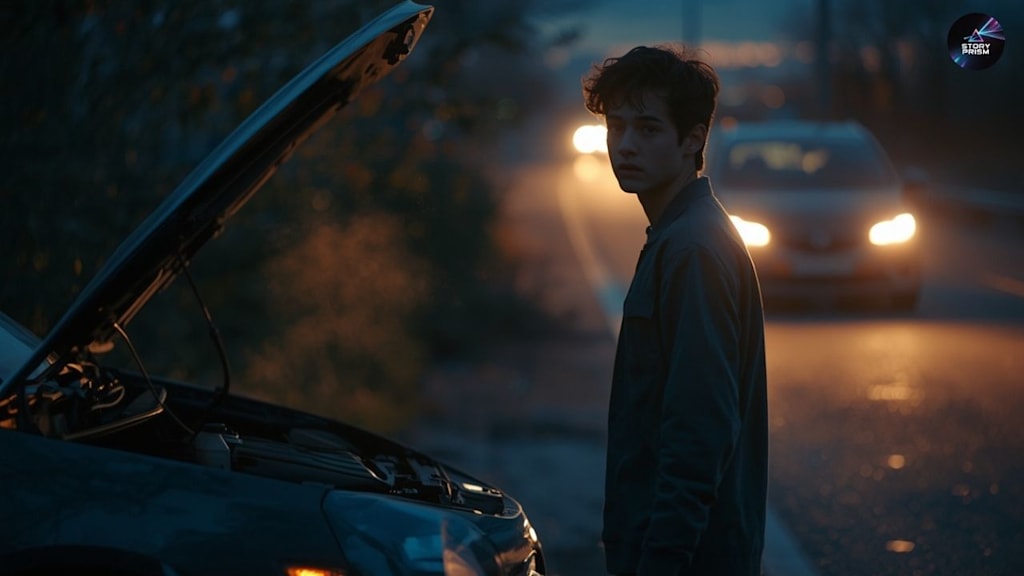
The Moment Everything Went Quiet
It always starts the same way.
You turn the key—or press the button—and instead of life, you hear… nothing. Maybe a weak clicking sound. Maybe silence so heavy it feels personal.
That’s what happened to me.
I was alone, parked under a fading evening sky, with a phone battery at 12% and absolutely no idea what to do next. The world didn’t stop—but mine did.
And in that moment, a dead car battery became something much bigger than a mechanical issue.
It became a test.
________________________________________
When a Machine Fails, Panic Takes Over
Cars are supposed to be reliable. They’re part of our routine—commutes, errands, late-night drives when your mind needs space.
So when they fail, it doesn’t just inconvenience you. It shakes your sense of control.
I remember stepping out, opening the hood like I’d seen people do in movies—hoping the act alone would fix something.
It didn’t.
What followed was a familiar spiral:
• Did I leave something on?
• Is this expensive?
• Am I stuck here for hours?
The truth is, most people don’t realize how simple the problem can be.
A dead battery isn’t the end. It’s just a pause.
________________________________________
The Skill Nobody Teaches You
Here’s the surprising part:
Jump-starting a car is one of the most useful—and most ignored—skills you can learn.
It’s not complicated. It doesn’t require mechanical expertise. But in the moment, when stress kicks in, even simple things feel impossible.
A stranger eventually pulled over that night. No dramatic music. No heroic entrance.
Just someone who had done this before.
“Got jumper cables?” he asked.
I didn’t.
Lesson one.
________________________________________
How It Actually Works (Without the Confusion)
Jump-starting a car is essentially borrowing energy.
A dead battery doesn’t mean your car is broken—it just means it doesn’t have enough power to start. Another car can temporarily share its battery power to get yours going again.
Here’s the basic process:
1. Position the cars
Park them close enough for the cables to reach—but not touching.
2. Connect the cables (in order)
• Red clamp to the dead battery’s positive terminal
• Red clamp to the working battery’s positive terminal
• Black clamp to the working battery’s negative terminal
• Black clamp to an unpainted metal surface on the dead car
3. Start the working car
Let it run for a few minutes. This builds charge.
4. Start the dead car
If it starts, you’re back in business.
5. Remove cables carefully
Reverse the order.
That’s it.
Simple—but only if you know it.
________________________________________
Why This Matters More Than You Think
That night, I wasn’t just learning how to start a car.
I was learning how unprepared I was.
We spend years mastering apps, trends, and digital tools. But something as basic as handling a dead battery? Most people freeze.
And it’s not just about cars.
It’s about how we respond when things stop working.
Do we panic? Or do we adapt?
________________________________________
The Human Side of Being Stranded
There’s something strangely vulnerable about being stuck on the side of the road.
You’re visible—but powerless.
Cars pass by. Life continues. And you’re left in this small, suspended moment, hoping for help or clarity.
That stranger didn’t just bring jumper cables.
He brought calm.
He explained each step, casually, like it was nothing. And maybe to him, it was.
But to me, it was everything.
________________________________________
The Hidden Truth About “Simple” Problems
We tend to underestimate “basic” skills until we need them.
Changing a tire. Jump-starting a car. Even reading a map without GPS.
They’re not glamorous. They don’t trend online.
But they matter.
Because when something goes wrong, these are the things that bring you back.
________________________________________
A Small Win That Feels Like a Big Victory
When my car finally started, the sound felt louder than usual.
Not just an engine—but relief.
It wasn’t just about getting home anymore.
It was about regaining control.
And weirdly, it felt empowering.
Because now I knew something I didn’t before.
________________________________________
What You Should Do Before It Happens to You
Here’s the part most people skip.
Preparation.
If you drive, you should have:
• Jumper cables
• A basic understanding of your car battery
• A charged phone (or backup power bank)
And more importantly, the confidence to act.
Because the difference between being stranded and being back on the road is often just knowledge.
________________________________________
The Real Lesson Isn’t About Cars
Looking back, that night wasn’t about a dead battery.
It was about realization.
How many things in life do we assume will always work—until they don’t?
And when they fail, do we know what to do?
Or do we wait for someone else to step in?
________________________________________
So, What Happens When Your Engine Goes Silent?
Maybe nothing dramatic.
Maybe you just call for help and move on.
Or maybe—just maybe—it becomes one of those quiet moments that teaches you something unexpected.
Something practical.
Something human.
Because sometimes, the smallest breakdowns reveal the biggest gaps in what we think we know.
And the next time your car doesn’t start…
Will you panic—
Or will you know exactly what to do?
About the Creator
Enjoyed the story? Support the Creator.
Subscribe for free to receive all their stories in your feed.
Comments
There are no comments for this story
Be the first to respond and start the conversation.