
Ego Is Not the Enemy; Losing Control of It Is
People fail to overcome their ego, and as a result, it holds them back from achieving their full potential

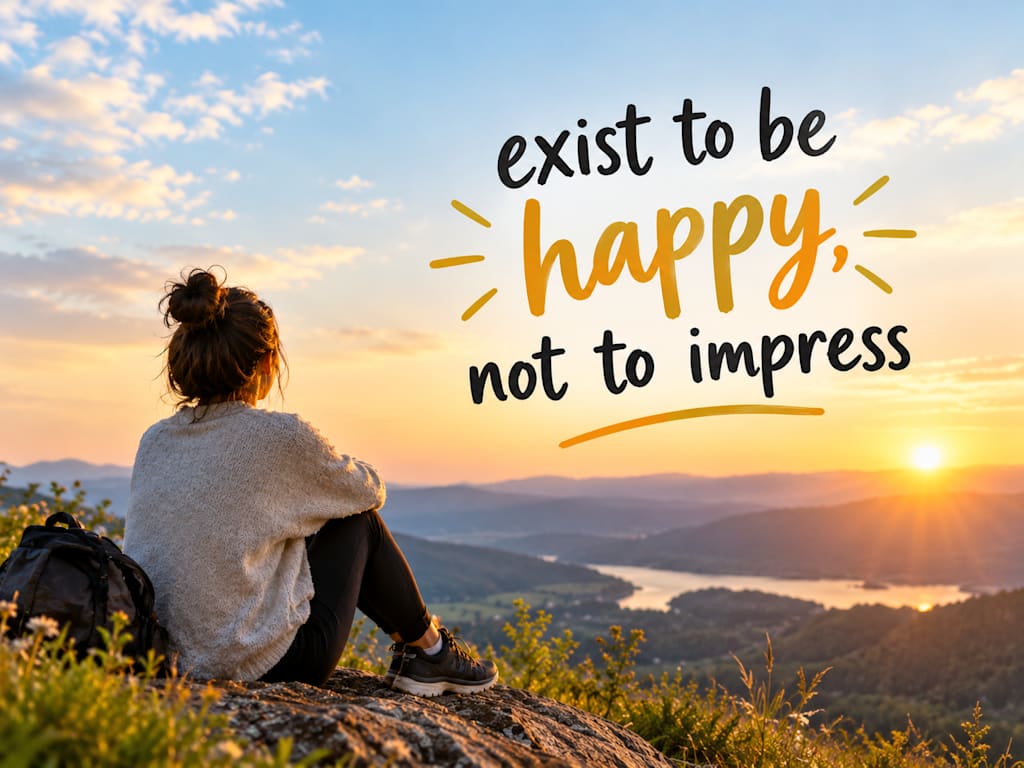
I am always cautious about being controlled by my ‘ego’ because I have seen relationships fall apart, political parties split, and companies collapse due to ego-driven conflicts.
In general, people fail to overcome their ego; rather, it holds them back from achieving their full potential.
However, it is widely believed that spiritual practices and self-awareness can help people keep their ego under control.
A Buddhist story I heard during my school years has always stayed with me.
According to the story, a man filled with anger once approached the Buddha and spat on him.
The Buddha remained calm and did not react with hostility.
The man was surprised, as he had expected at least a harsh response.
Instead, the Buddha asked,
‘If someone offers a gift and it is not accepted, to whom does it belong?’
The man replied, ‘To the one who offered it.’
The Buddha then said, ‘In the same way, I do not accept your anger and insults. They remain with you.’
According to the story, the man was deeply moved by the Buddha’s calm response. He returned the next day, apologized, and became his follower.
Was the Buddha able to keep his ego under control?
If the Buddha had been highly egotistical, he would likely have been trapped by thoughts such as:
‘How dare he treat me like that?’
‘I need to defend myself.’
‘I must prove I’m right.’
‘I cannot let this go.’
But the Buddha did not feel the need to defend his pride or reputation.
Instead of reacting immediately, he calmly observed the situation without taking the insult personally.
In doing so, he demonstrated that an insult has power only when we accept it as an attack on ourselves.
From a Buddhist perspective, this goes even deeper, reflecting the concept of ‘non-self’.
The term ego originates from the Latin word ‘ego’, which functioned as the first-person singular pronoun meaning ‘I’ or ‘self’ and referred to an ‘individual’s sense of identity’.
In modern usage, however, the term is often associated with an exaggerated sense of self-importance.
Human behaviour is often characterized by selfishness, self-defensiveness, and the instinct to protect oneself through the expression of emotionally driven ego-defence mechanisms.
According to evolution theory, these tendencies are rooted in processes such as natural selection and the drive for survival that have shaped human behaviour over millions of years.
When we are insulted or attacked, our immediate reactions often arise from the ego, which is closely tied to our sense of identity, status, and pride.
In this sense, the ego acts as a defender of our personality or self-respect.
This means the ego is a natural part which makes us human.
We cannot simply separate it from our daily lives. This suggests that it is as natural as being born with our essential body parts.
As humans, we experience many emotions such as anger, jealousy, greed, selfishness, happiness and sorrow.
We cry, we laugh, and we react to the circumstances around us. In the same way, the ego is also inherent.
However, when the ego becomes too dominant, or we become overly attached to it, it can turn into a source of suffering.
I am always curious about the science behind a topic.
Let us see how the concept of ego has been examined through scientific research.
I found one article describing ego as a person’s self, which encompasses the physical self, self-concept, and mental functions related to the environment, including perception and judgment.
From the perspective of neuroscience and psychology, the ego can be understood as the brain’s mechanism for creating and maintaining a sense of self-identity.
When the brain perceives a threat to one’s sense of self, ego-defense mechanisms may be activated, accompanied by reduced activity in certain regions of the prefrontal cortex (PFC).
The more threatened the ego feels, the more cognitive resources it demands for self-defense.
As a result, fewer executive resources remain available for effective problem-solving, making a person more likely to make poor decisions that further threaten their self-concept.
Cognitive resources refer to perception, learning, memory and judgment.
From Sigmund Freud’s perspective, the ego acts as a mediator, constantly negotiating between our primal desires and societal expectations.
According to Freud, the ego begins to develop within the first six to eight months of life and becomes well established by the age of two or three.
However, it continues to change and develop over time.
The emergence of a sense of self is a normal part of human development, although excessive attachment to the self can, in some cases, develop into narcissism.
Many spiritual traditions view the ego as an illusion or delusion that prevents people from living in accordance with their true nature.
To achieve greater awareness, practices such as meditation are often recommended, as they help individuals to let go of ego-driven desires and attachments.
As human beings, we cannot avoid life’s circumstances.
We must face all kinds of unwanted behaviours from society and from other individuals.
We may not be able to stop others from misbehaving, insulting, or misunderstanding us.
Therefore, the best policy in life may be to live with balance by keeping the ego under control.
This approach brings inner peace, which often begins when the ego no longer feels compelled to defend, justify, or prove itself.
What do you think?
Wouldn’t life be better if we could keep our ego under control?
Happy reading!
References:
Inna Davydenko, Alevtyna Kalyuzhna & Yaroslava Litovchenko (2025): “I” as PSYCHE, SELF and EGO. Сучасні дослідження з іноземної філології. 2. 65–81. 10.32782/2617–3921.2025.28.65–81.
Sanil Rege (2023): Unlocking the Neurobiology of Freud’s psychoanalytic theory — Neuropsychoanalysis | part 1 of 4
(This story was originally published in ‘Write A Catalyst’ on Medium)
About the Creator
Krishna Babu Shrestha
Rooted in ecology, guided by nature. I write of growth, happiness, and the earth we share, and I try to live as gently as the forest does.
Enjoyed the story? Support the Creator.
Subscribe for free to receive all their stories in your feed.
Comments
There are no comments for this story
Be the first to respond and start the conversation.