
Beyond the Roofline: How Tropical Storms Secretly Damage Hardscapes
Homeowners scan their shingles after a severe storm, but subterranean erosion quietly threatens driveways and pool decks.

When a major storm or tropical system rolls through a coastal region, the post-storm routine for most property owners is nearly identical. Once the winds die down, everyone steps outside and looks up. We scan rooflines for missing shingles, inspect barrel tiles, clean out gutters, and check interior ceilings for water spots. It is a logical reaction, as roof leaks cause immediate, visible, and expensive interior damage.
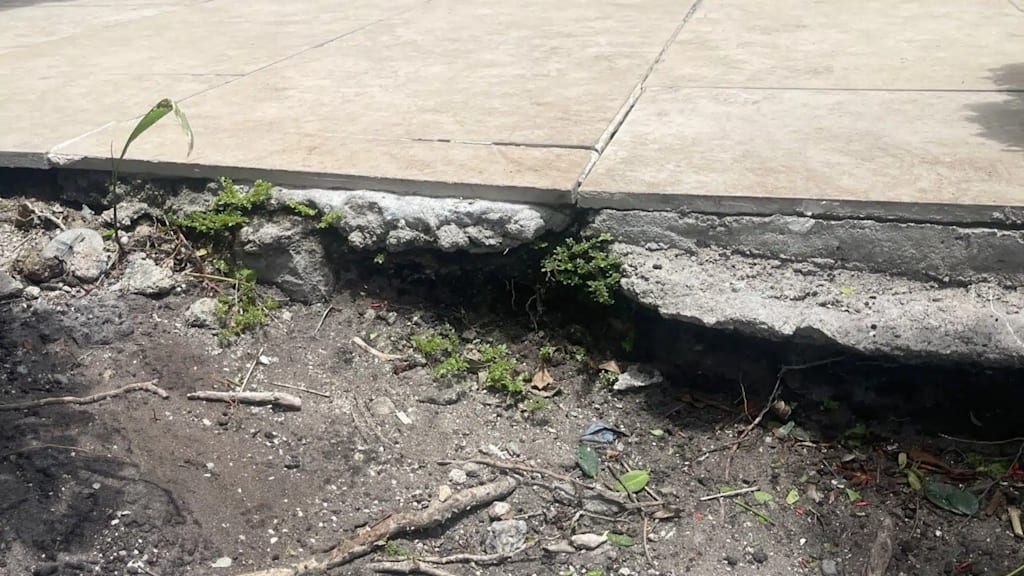
However, an equally vulnerable asset sits directly beneath our feet: paver driveways, walkways, and pool decks. While high-quality hardscapes withstand routine downpours, severe weather subjects them to a brutal structural test. Heavy rain and high winds do not just cause surface scratches; they expose hidden installation vulnerabilities, poor drainage, and subterranean soil erosion that may have been developing quietly for years.
The Invisible Threat Underground
During extreme weather, excess water is almost always a greater threat to hardscapes than high wind. Many coastal regions sit on predominantly sandy soil, which drains quickly during normal weather but erodes rapidly when saturated. When inches of rain fall over a short period, three distinct problems develop below the surface:
Base Saturation and Erosion: Rain thoroughly soaks the ground, softening the aggregate base beneath the pavers. If runoff cannot clear fast enough, sand and soil wash out from under the installation, leaving hollow pockets beneath the hardscape.
Settling and Shifted Borders: Lacking solid support, sections of pavers begin to sink, tilt, or rock underfoot. A minor quarter-inch dip can quickly escalate into a trip hazard or an edge where car tires catch.
Joint Sand Washout: Fast-moving surface water flushes away the specialized joint sand swept between individual pavers. This sand provides the interlocking tension holding the matrix together. Once stripped, pavers lose their structural stability and shift independently.
Windborne Debris and Impact Damage
While water works silently below ground, high winds create noticeable surface problems above. Tree branches, heavy patio furniture, flying roof tiles, and fence panels frequently slam onto driveways and pool decks during severe storms.
This impact can chip individual pavers, crack pool coping, or break border restraints. However, this is where interlocking pavers demonstrate a distinct engineering advantage over poured concrete slabs. When a massive oak branch falls onto a concrete driveway, the entire slab often suffers a deep, permanent structural crack requiring major demolition. With a paver system, physical damage remains localized strictly to the specific stones hit by debris.
The Modular Advantage of Pavers
The greatest benefit of an interlocking paver system is its modular design. If a storm causes a sunken spot near your garage or cracks a few pieces around your pool, you never need to replace the entire surface.
Property owners can perform targeted, localized repairs. Technicians simply remove the affected or sunken pavers, excavate the damaged section, rebuild and re-compact the underlying base, adjust the slope for proper drainage, and reinstall the original pavers. Fixing an isolated low spot or swapping out a handful of broken stones costs a fraction of a full surface replacement.
Pre-Storm Protection Steps
Taking preventative action before storm season significantly reduces the risk of hardscape failure:
Clear Primary Drains: Remove leaves, mulch, and organic debris from deck drains and runoff channels so water flows freely away from foundations.
Prune Overhanging Trees: Trim heavy or dead branches near driveways and pool cages to prevent limbs from snapping during tropical storms.
Secure Outdoor Gear: Move patio chairs, planters, and grills indoors so high winds cannot turn them into projectiles.
Maintain Joint Sand: Keep joints properly filled with sand to lock the system together and block rainwater from seeping directly into the base layer.
Conducting a ground-level walk-through immediately after a major storm is just as critical as scanning your roofline. Identifying minor settling, loose borders, or washed-out joint sand early allows you to address small issues before the next downpour causes severe underground erosion. Protecting your property requires watching the details both high above your head and right beneath your feet.
About the Creator
ORB Tree Service Marketing
ORB Tree Service Marketing provides SEO and local search strategies for the tree care and roofing industries. Follow us for insights on search optimization and lead generation for home services.
Enjoyed the story? Support the Creator.
Subscribe for free to receive all their stories in your feed.
Comments
There are no comments for this story
Be the first to respond and start the conversation.