
Aircraft strikes and why the cheapest flight is not always the least expensive journey.
Aircraft strikes—whether by pilots, cabin crew, ground staff, or most critically, air traffic controllers—have become one of the defining frustrations of modern travel.
Air travel has long symbolized freedom, efficiency, and the promise of moving across borders in hours rather than days. Yet in recent years, for many travelers across Europe, booking a commercial flight has also come to mean preparing for uncertainty: delays, cancellations, missed connections, and the all-too-familiar announcement that a strike has disrupted operations.
Aircraft strikes - whether by pilots, cabin crew, ground staff, or most critically, air traffic controllers—have become one of the defining frustrations of modern travel. They do not simply affect one airline or one airport; they ripple across entire countries and, in Europe especially, across the continent.
France offers perhaps the clearest example. Because French airspace sits at the center of so many European routes, a strike by French air traffic controllers can delay or cancel flights for passengers who are not even flying to France. A traveler heading from London to Athens or from Amsterdam to Barcelona may suddenly find their journey grounded because of industrial action hundreds of kilometers away.
The scale of disruption is remarkable. According to EUROCONTROL, during just two days of French air traffic controller strikes in July 2025, more than 1 million passengers were affected, around 200,000 could not fly as intended due to cancellations, and more than 1,400 flights per day were canceled. Even non-cancelled flights arrived with average delays of 24 minutes.
This is not an isolated event. International Air Transport Association reported that European air traffic control delays rose by 114% between 2015 and 2024, while flight numbers increased by only 6.7%. Industrial action and strikes accounted for nearly 9% of these delays, with 9.8 million minutes of delay caused by ATC strikes over the decade.
For the average passenger, statistics matter less than the lived reality: the missed wedding, the lost business deal, the hotel booking wasted, the family holiday cut short before it begins. Commercial aviation is built on tight schedules. One delay can trigger a chain reaction across airports, crews, and aircraft rotations.
And here lies the uncomfortable truth: the cheaper the ticket, the less flexibility the traveler often has when things go wrong.
Low-cost airlines have transformed travel by making flying accessible, but their business model depends on maximum efficiency and minimal slack. When disruption hits, there is often little room for recovery. Rebooking options are limited. Customer service lines collapse. Overnight hotel costs become the passenger’s problem—at least initially.
This is where the conversation around private aviation becomes more nuanced.
To be clear, private flying is not an everyday option for most people, nor should it be framed as a luxury fantasy detached from reality. But in specific circumstances, it is increasingly viewed as a practical alternative rather than a status symbol.
For executives heading to critical negotiations, artists traveling to time-sensitive performances, families managing urgent medical travel, or property investors needing to visit multiple cities in one day, reliability can outweigh ticket price. Missing the trip may cost far more than the flight itself.
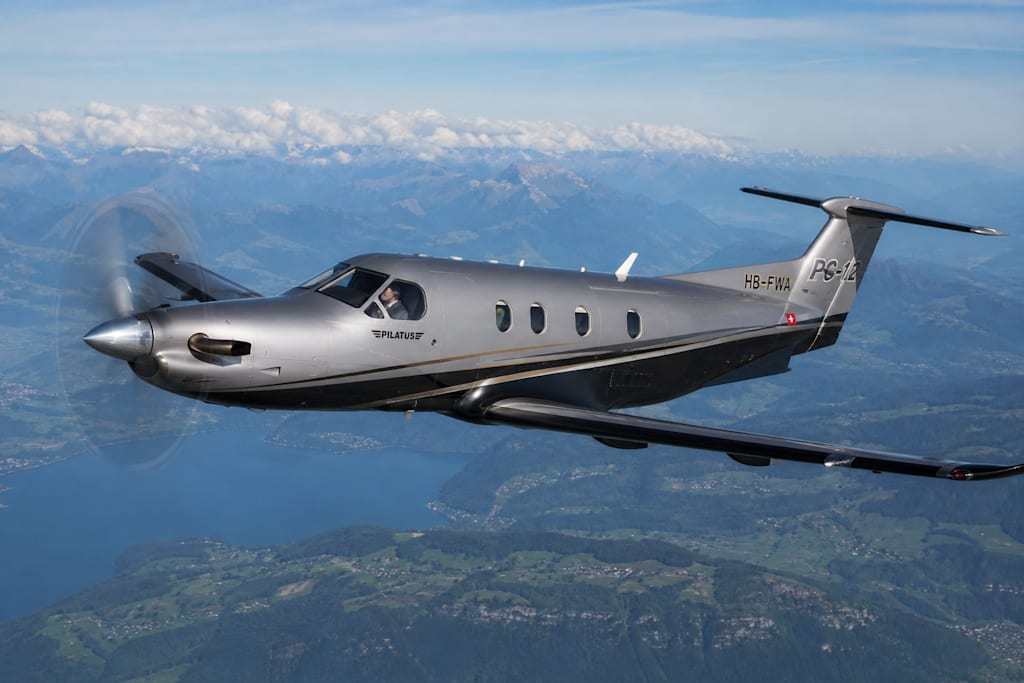
Private aviation offers control that commercial systems cannot. There are no long security queues, fewer dependency points, and significantly less exposure to mass operational disruption. Private terminals remain functional even when major hubs are in chaos. Routes can be adjusted quickly. Departure times can shift with the passenger, not the other way around.
Even more interesting is the rise of semi-private models: empty-leg flights, shared charters, and membership-based jet services. These options have lowered the barrier considerably. Flying private no longer always means owning a jet—it may simply mean paying strategically for certainty.
In Europe, where business travelers often move between hubs like Nice, Geneva, Milan, and London, the value proposition becomes clearer. A missed commercial flight during strike season can cost an entire working day. A private transfer can preserve it.
Critics will rightly point to environmental concerns, and they should. Aviation as a whole faces pressure to become cleaner, and private aviation must be part of that conversation. But the broader issue is not luxury—it is resilience. Travelers are increasingly paying for predictability in an era where transport systems feel fragile.
Commercial airlines remain the backbone of global mobility, and for most journeys they are still the obvious and sensible choice. But pretending that the current strike culture and systemic delays are minor inconveniences would be dishonest.
They are not.
They shape business decisions, tourism patterns, and increasingly, how people evaluate the true cost of travel.
The lesson is simple: the cheapest flight is not always the least expensive journey.
Sometimes, especially when time matters more than the seat number, flying private is not indulgence. It is insurance.
About the Creator
Enjoyed the story? Support the Creator.
Subscribe for free to receive all their stories in your feed.
Comments
There are no comments for this story
Be the first to respond and start the conversation.