
Will Trump 2.0 Ignite a New Cold War with China—or Broker an Unexpected Peace?
"A New Cold War or the Ultimate Deal? Trump, Xi, and the Future of Global Power"
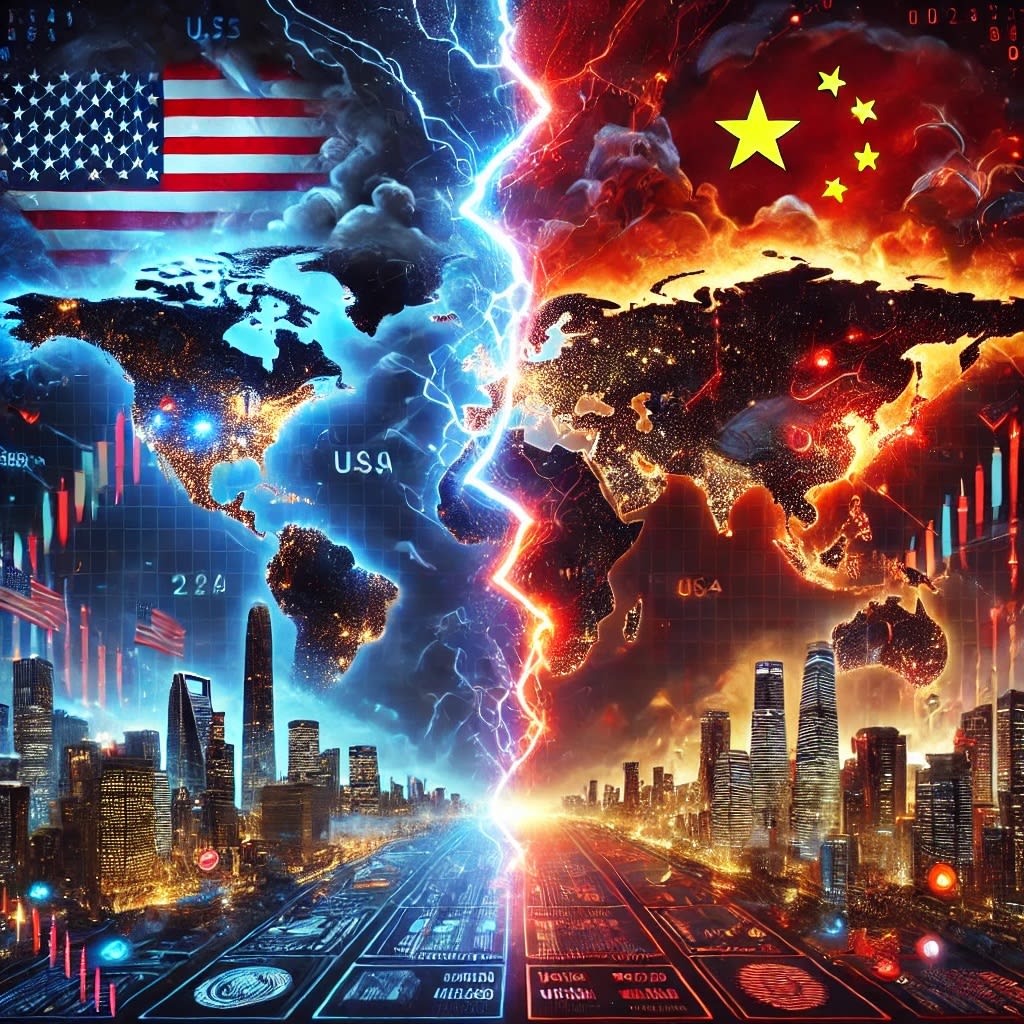
Picture this: It’s March 2025, and the world is bracing for impact. Donald Trump, back in the White House for a second term, is making waves in U.S.-China relations. His campaign threats of 60% tariffs on Chinese goods still loom large, but instead of immediate escalation, he’s playing a mixed hand—pausing TikTok bans, keeping communication lines open with Xi Jinping, and even hinting at a visit to Beijing.
So, what’s really happening here? Is this the beginning of a Cold War 2.0, or could Trump, the self-proclaimed dealmaker, pull off an unexpected truce with the world’s other superpower? Let’s break it down.
The Stakes Are Sky-High
The U.S. and China aren’t just competitors; they’re the twin pillars of the global economy, accounting for over 40% of world GDP. But they’re also strategic rivals—embroiled in trade wars, tech disputes, and military standoffs. Trump’s first term lit the fuse with billions in tariffs, and Biden followed up with semiconductor bans. Now, with Trump 2.0 at the helm, the big question is: Will he escalate or negotiate?
So far, his signals have been mixed. In January, he floated a 10% tariff on Chinese goods linked to fentanyl production. But the full 60% hike? Still on hold. Meanwhile, instead of banning TikTok outright, he’s eyeing a U.S. ownership stake—a strategic move that buys time while keeping control.
And China? Xi Jinping is playing the long game—keeping the door open for talks while quietly bolstering Beijing’s leverage with export controls on critical minerals.
Flashpoints to Watch
This isn’t just about tariffs or TikTok. Several high-stakes flashpoints could determine whether we see conflict or compromise:
Trade War 2.0: A 60% tariff hike would slam everything from iPhones to sneakers, fueling inflation and rattling global markets. China could hit back by squeezing U.S. companies like Apple and Tesla operating on its soil. The first trade war cost both nations billions—round two could be worse.
Tech Showdown: The AI and semiconductor battle is intensifying. Trump’s administration, stacked with China hawks like Secretary of State Marco Rubio, might impose harsher restrictions on tech exports. If China accelerates self-reliance efforts, we could see two parallel tech worlds—one led by the U.S., the other by China.
Taiwan Tensions: The ultimate wildcard. China’s military drills near Taiwan remain a constant provocation. If Trump reaffirms U.S. support for the island, things could spiral fast—turning economic conflict into military confrontation.
Two Roads Ahead
Where is this all headed? Two likely scenarios are emerging:
Scenario 1: Cold War Redux
Trump ramps up tariffs, tightens tech bans, and military tensions escalate in the South China Sea. The U.S. strengthens alliances with Japan, India, and Australia to counter China’s Belt and Road ambitions. Xi, in turn, doubles down on economic partnerships with Russia and expands military influence. The global economy fractures, and we enter a new era of economic and geopolitical rivalry.
Scenario 2: The Art of the Deal
Here’s the wildcard—Trump loves a high-stakes negotiation. Instead of an all-out trade war, he could use tariffs as leverage to extract concessions. Imagine a deal where China cracks down on fentanyl exports, opens its markets wider to U.S. firms, and stabilizes Taiwan tensions in exchange for fewer trade restrictions and a controlled TikTok arrangement under U.S. oversight. Xi gets economic stability amid China’s slowing growth, while Trump secures a “win” without a prolonged economic war.
Sound far-fetched? Maybe not. Their January call was reportedly “upbeat,” and Trump is no stranger to surprise diplomatic moves (remember his meeting with Kim Jong Un?). If he sees a chance for a legacy-defining deal, he just might take it.
What’s Really at Play?
Despite his unpredictable nature, Trump isn’t as erratic as before—he’s balancing his usual bravado with business pragmatism. China, too, has reasons to tread carefully—youth unemployment is at 16%, and its property market is shaky. Both sides have incentives to negotiate.
But there’s a catch: Trump’s inner circle—Rubio, billionaire donors, and a hardline faction in the GOP—leans hawkish on China. Meanwhile, Xi has his own nationalist hardliners pressuring him to take a firm stance. One miscalculation, and this fragile “pause” could collapse into a full-blown conflict.
The World’s Watching—And So Is Your Wallet
This isn’t just a U.S.-China affair. Europe is scrambling to avoid economic fallout. Southeast Asian nations are navigating rising South China Sea tensions. And for everyday people? Tariffs mean higher prices on everything from smartphones to cars.
So, what’s your bet? Will Trump and Xi trade blows or shake hands? Drop your take below—let’s debate. One thing’s for sure: the next few months will be a geopolitical thriller, and we’re all strapped in for the ride.
About the Creator
Enjoyed the story? Support the Creator.
Subscribe for free to receive all their stories in your feed.
Comments
There are no comments for this story
Be the first to respond and start the conversation.