
Why Your Retail Fit Out Company Is Your Most Underperforming Sales Asset?
How the Right Fit-Out Partner Can Transform Commercial Performance

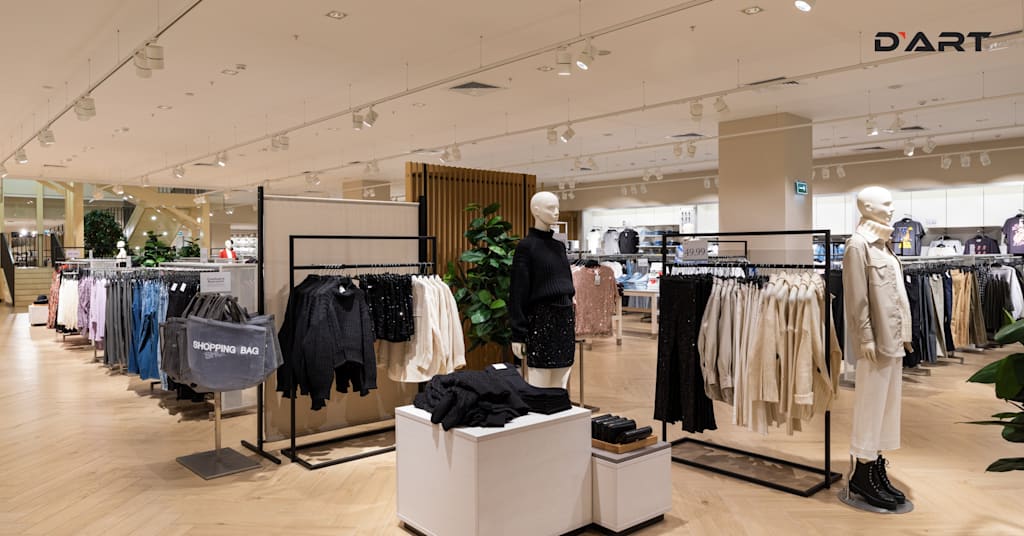
A 4% cost rise may not sound catastrophic on its own. It may sound like a line item that a finance director circles with a sigh before moving on to bigger fires. Cushman & Wakefield recently reported that fit-out costs increased exactly that much year-on-year to $155/sq ft on average, and most retail operators that I speak to took that number in with a silent nod. The issue isn't the percentage; it's what that cost hike does in forcing a fundamental truth into the light: once every square foot of retail space costs more to fit out, you can no longer afford to treat that fit-out as an overhead expense lumped under the project umbrella. Instead you need to start approaching it as a capital investment with a measurable return, either to earn its keep within the P&L or be a silent drain upon it. The point at which most brands discover their retail fit-out contractor isn't just doing fit-out but failing at it is at the moment where they can no longer hide their underutilized sales potential.
The New Commercial Realities of Physical Retail
In retail right now the commercial reality only strengthens that discovery. The nature of the recovery in the sector hasn't been a tidal wave lifting all boats, but rather a K-shape where value-oriented and luxury spaces have accelerated their business ahead of their mid-tier counterparts who have stagnated, if not fallen, in terms of footfall. A stale store is not a neutral proposition in this split marketplace; it is actively contributing to pushing customers to retailers who understand that when price point and product assortment cannot sustain attention an exceptional physical environment is an additional differentiator. As one operations director I was working withput it, the best fit-outs are commercial instruments, designed to attract customers, drive conversions and reward repeated business; this phrasing may seem self-evident until you audit a number of retail fit-out contracts and see the scope of work does not extend past installation.
Unpacking the Return on Investment of Design
In reality the return on investment that comes with fit-out design, a conversation that extends far beyond the selection of material palettes, should start with strategic layout and customer flow, as the path through space correlates with dwell time (the single greatest predictor of purchasing). Unimpeded sight lines, well-placed zones designed to lead shoppers ever deeper into a store, and a floorplan designed to minimize the amount a customer needs to actively think about where they should be going all combine to create quiet commercial momentum that requires little intervention from retail staff. If the fit-out contractor understands flow as a selling tool and not merely as an architectural exercise, then the layout goes from being a floor plan and begins to work like another member of the sales team that has been trained to drive engagement and transactions.
Lighting and ambience work similarly on an intuitive level long before the customer consciously identifies either element. There is far more that a well-thought-out light scheme does than simply keep a store from looking dim. It imbues brand identity at a sensual level, clearly indicates the placement of higher-margin items in the sales space and provides the kind of atmosphere that encourages browsing at a relaxed pace. I have seen mid-tier merchandise that was given premium attributes solely by a store's lighting and the same goods completely overlooked under flat and uninspired illumination. This gap is not caused by the wattage, but by the fit-out contractor who uses lighting as a conversion driver and recalibrates it according to customer behavior on the shop floor.
The fixtures are perhaps most overlooked element of fit-out design for the commercial advantages they may provide. If they truly are the "silent salesperson" they often appear to be marketing fluff until you consider the inverse, static, heavy joinery that anchors the store to a singular aesthetic that may become outdated as customer tastes shift and require an expensive renovation or redesign. Modular, well-designed fixtures make frequent visual updates simpler, which keeps the store current on an ongoing basis and drives repeat customer behavior by providing constant stimulus, turning a capital investment in joinery into ongoing revenue generation over its lifetime. The retail fit-out company still working with static, heavy fabrication design principles will quietly forgo future selling opportunity by sealing off future options from day one.
Technology integration often functions as something of a tech-focused afterthought once the space has been settled and it is lost in the sequencing of what a store deployment should now accomplish. Endless-aisle kiosks, user-friendly, inconspicuous, designated pick-up locations for click-and-collect purchases and NFC tags incorporated into display structures serve as omnipresent and seamlessly integrated elements of an experience that can expand a retail footprint without increasing the stock room burden and prevent silent losses in a transaction when something is desired but not found on a shelf.
Sustainability is a dimension in which fit-out decisions more directly overlap with sales and customer loyalty, though not in terms of certificates that are buried within a corporate annual report. I mean visible, tactile material decisions-FSC-certified lumber that the brand can display and market, upcycled joinery that adds an additional narrative to the space, or efficient, power-saving lighting that significantly decreases operational overhead. Certain segments of the consumer population increasingly associate sustainability with trust in a brand and by ignoring its importance to them, a retailer forfeits a low-friction loyalty opportunity. The fit-out contractor who does not introduce sustainability into a fit-out discussion is not missing a small optional feature but a lever that costs nothing to pull.
The Cascade of a Poorly Executed Fit-Out
Poor fit-out execution naturally breeds a cascade of expensive delays that may not appear on a variation order. I have witnessed a single building code inspection failure cause delays in IT commissioning, which in turn halted POS configuration, then lead to postponed employee training, ultimately forcing a two-week delay on the opening. At two thousand dollars a day the missed revenue, that is quite concrete and quantifiable, for a closed store is staggering and simply calling this a fit-out issue is underselling the damage of a failure in store deployment that had long-reaching implications.
Choosing a Partner, Not a Vendor
Choosing a partner rather than appointing a vendor is the only way to get beyond this. And it's not a matter of semantics. A commercial minded partner will enquire about the value of your average transaction value, about when your peak flows occur and about seasonal sales fluctuations, well before asking about preferred flooring finish. These are questions to determine if they believe fit-out to be construction activity, or revenue-generating space that requires construction. It is important they enter at the start because many of the key strategic input decisions need to be made at the site selection phase and information about feasibility, dimensions etc. May spare layout mistakes, which may later be sold as wasted space. Centralized project management and the single point of contact, are not a luxury but the mechanism through which to avoid the sort of fragmented communication that turns a six-week fit-out into a disaster that is constantly unfolding.
The Store is the Strategy
The store has always been the most physical representation of a brand. But increased cost and consumer conflict make it a precarious one. It isn't just a retail location for well-dressed products. It is a critical commercial battleground where everything else either helps a sale, or silently undermines it. When anything else about the store's design and operations is treated as something less than fundamental to a company's strategy, it is a missed opportunity. It is the most expensive mistake a retailer can make. More often than not, the bill for that error comes long before anyone else enters.
About the Creator
D'Art Design
D’Art Design is a leading global retail design agency. We integrate tactic to provide outstanding experiences, through brand communication and activation, brand design, promotion, and interior design.
Enjoyed the story? Support the Creator.
Subscribe for free to receive all their stories in your feed.
Comments
There are no comments for this story
Be the first to respond and start the conversation.