
Why Your Beard Looks Uneven: 7 Common Causes and Practical Solutions
An uneven beard is usually a normal result of differences in growth rate, density, hair direction, genetics, facial structure, and grooming habits.

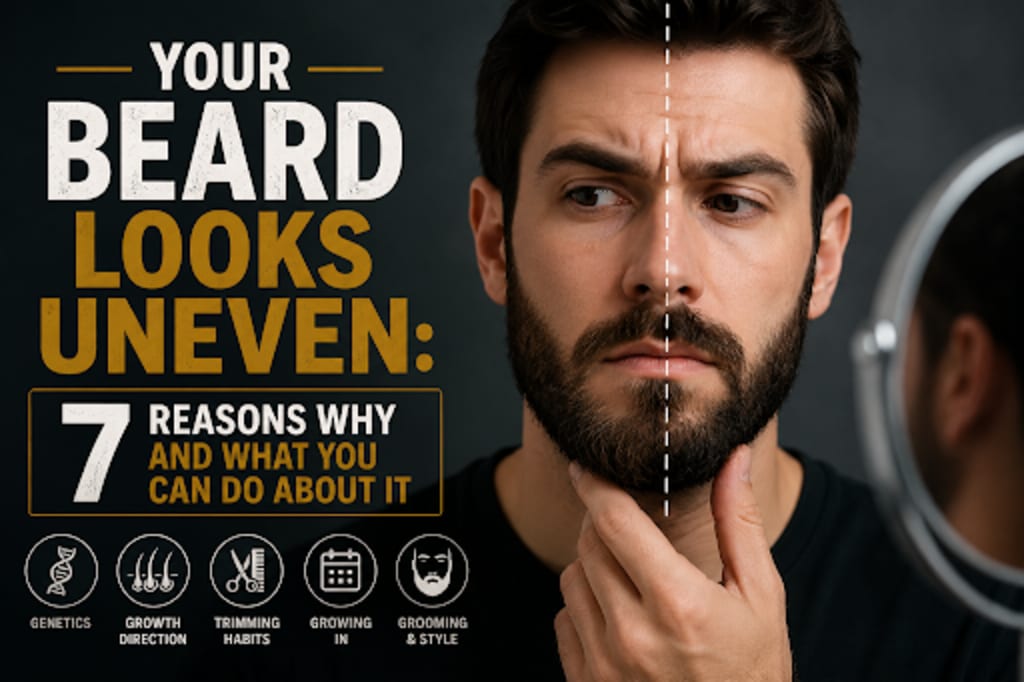
An uneven beard is a common experience. One side may appear fuller than the other, certain areas may grow more slowly, or individual hairs may point in different directions. These differences do not necessarily mean that anything is wrong with your facial hair.
Beard growth is influenced by genetics, hair density, growth direction, grooming habits, and the natural shape of the face. Understanding these factors can make it easier to manage an uneven appearance without repeatedly cutting the beard shorter.
Here are seven common reasons a beard may look uneven and practical ways to manage each one.
1. Different Areas Grow at Different Rates
Facial hair does not always grow at the same speed across the face. The chin and mustache may develop more quickly than the cheeks, while one side of the face may appear fuller than the other.
Genetics play an important role in determining hair density and growth patterns. Because of this, allowing the beard to grow for a longer period can sometimes make differences in length less noticeable.
Frequent trimming may make slower-growing areas appear even thinner. Instead, allow enough time for the overall growth pattern to become visible before deciding how much length to remove.
2. Beard Hair Can Grow in Different Directions
Hair follicles are not arranged in exactly the same direction across the face. Some hairs grow downward, while others may point sideways or slightly upward.
Different growth directions can change the way light reaches the hair and can make certain sections appear fuller or thinner. This is particularly noticeable along the cheeks, jawline, and neck.
As the beard becomes longer, brushing or combing can help organize the hairs. A consistent grooming routine can make the overall shape appear more uniform without changing the natural growth pattern.
3. Uneven Trimming Can Change the Overall Shape
Small differences in trimming can become noticeable when working on both sides of the face. It is easy to remove slightly more hair from one side and then attempt to correct the difference by cutting the other side.
This can result in progressively shorter hair without actually creating better symmetry.
When trimming, it is useful to step back regularly and look at the beard as a whole rather than focusing on individual hairs. Minor differences are normal, and trying to make every section identical can sometimes create a less balanced result.
4. Your Beard May Still Be Developing
A beard can change considerably during its growth period. Areas that initially appear sparse may become less noticeable as surrounding hairs become longer.
This does not mean that every patch will eventually disappear. However, giving the beard sufficient time to grow can provide a better understanding of its natural density and shape.
Before making significant changes, consider observing the beard over several weeks. This can help distinguish between temporary differences in length and areas where hair naturally grows less densely.
5. Some Beard Styles Work Better With Certain Growth Patterns
Different beard styles place different demands on facial hair density. A longer full beard may make differences in cheek density more visible, while a shorter style may create a more consistent appearance.
The shape of the face also influences how a beard looks. Instead of trying to reproduce a particular style exactly, consider how the length and shape interact with your own growth pattern.
A style that works well with the existing distribution of hair can often look more balanced than one that requires extensive trimming to create an artificial shape.
6. Grooming Can Affect How Even the Beard Appears
A beard may look uneven because individual hairs are dry, tangled, or pointing in different directions. This can make one section appear fuller even when the underlying hair density is relatively similar.
Basic grooming can help improve the appearance. Gently cleaning the beard, drying it carefully, and brushing or combing it regularly can keep the hairs organized.
For longer facial hair, appropriate moisturizing products can also help reduce dryness and make the hair easier to manage. The goal is not to change the natural growth pattern but to keep the existing hair neat and controlled.
7. Natural Facial Asymmetry Is Normal
Human faces are rarely perfectly symmetrical, and facial hair follows the natural structure of the face. One cheek may have more visible growth, one side of the jaw may have a slightly different shape, or the mustache may grow more strongly on one side.
Because of this, achieving perfect symmetry is often unrealistic.
Rather than trying to make every individual hair identical, focus on the overall outline of the beard. A balanced appearance usually matters more than exact symmetry.
How to Make an Uneven Beard Look More Balanced
If certain areas appear thinner, allowing additional length can sometimes help surrounding hairs provide more coverage. Avoid repeatedly cutting the beard simply because one small section looks different.
Regular brushing or combing can also help longer hairs sit in a consistent direction. Keeping the beard clean and properly moisturized may make individual hairs easier to control.
Another useful approach is choosing a beard length that works with your natural density. A shorter, uniform length may reduce the visual difference between thicker and thinner areas, while additional length may provide more coverage in some cases.
The best approach depends on the individual's growth pattern, hair texture, and preferred appearance.
When Should You Consider Professional Grooming?

If you have difficulty creating an even shape yourself, speaking with a barber vaughan can be useful when you want guidance based on your beard's natural growth pattern. Someone experienced with beard shaping can evaluate the direction and density of the hair and help establish an outline that works with those characteristics.
When looking for a barber near me, it can be helpful to consider someone who understands how different beard lengths and shapes interact with facial structure. Professional advice can help you avoid removing unnecessary length while trying to correct small differences.
A barbershop in vaughan may also provide beard-shaping services that focus on creating a balanced outline rather than forcing both sides to look exactly identical. Professional shaping does not make naturally different hair follicles grow at the same rate, but it can help organize the existing growth into a more consistent shape.
Once a suitable shape has been established, maintaining it at home may become easier because there is a clear outline to follow.
Final Thoughts
An uneven beard is usually a normal result of differences in growth rate, density, hair direction, genetics, facial structure, and grooming habits.
The solution is not necessarily to keep trimming until both sides look identical. Giving the beard enough time to grow, understanding its natural pattern, maintaining a consistent grooming routine, and selecting an appropriate length can all improve its overall appearance.
Perfect symmetry is not required for a well-maintained beard. In many cases, working with the natural growth pattern rather than constantly trying to change it produces a cleaner and more balanced result.
About the Creator
Enjoyed the story? Support the Creator.
Subscribe for free to receive all their stories in your feed.
Comments
There are no comments for this story
Be the first to respond and start the conversation.