
Why Walmart’s Falling Stock Prices Reveal a Bigger Economic Storm
Walmart’s Warning to America

When Walmart speaks, Wall Street listens.
Not because Walmart is merely a retailer.
But because Walmart is America’s economic thermometer.
It sees:
- what families buy,
- what they stop buying,
- what they fear,
- and what they can no longer afford.
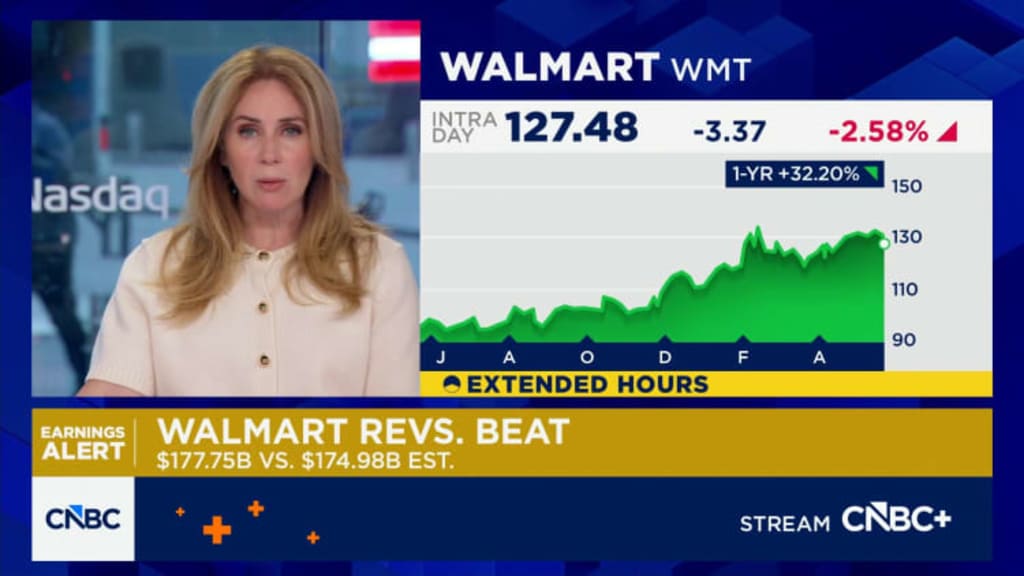
So when Walmart stock suddenly plunged 7% despite reporting strong sales growth, investors understood something deeper:
The numbers looked healthy.
But the consumer is getting weaker.
And behind that contradiction lies a much larger economic warning for the United States.
Why Walmart Stock Fell Despite Strong Earnings
On paper, the earnings looked solid.
Walmart reported:
- 7.3% revenue growth
- $177.8 billion in quarterly revenue
- 4.1% same-store sales growth in the U.S.
- 26% growth in e-commerce
Those are not weak numbers.
In fact, they beat Wall Street expectations in several categories.
Yet investors still punished the stock.
Why?
Because markets do not only react to the present.
They react to fear about the future.
And Walmart’s cautious outlook exposed something investors did not want to hear:
American consumers are under pressure.
Gas Prices Are Quietly Crushing Household Budgets
According to Walmart executives, rising fuel costs are becoming a major burden on consumers.
That matters more than many people realize.
Gas prices affect far more than transportation.
They influence:
- grocery spending,
- discretionary purchases,
- household savings,
- and consumer confidence.
Every extra dollar spent at the pump is a dollar removed from:
- clothing,
- electronics,
- dining,
- entertainment,
- and general retail spending.
This creates a dangerous chain reaction across the economy.
Walmart CFO John David Rainey openly admitted:
“Higher fuel prices are putting pressure on household budgets.”
That statement alone explains why investors became nervous.
Because Walmart serves millions of middle- and lower-income Americans.
And when those consumers begin tightening spending habits, the broader economy usually feels it next.
The Hidden Divide Inside the American Economy
One of the most revealing details from the earnings report exposed a growing economic divide.
Walmart said:
- high-income shoppers are spending confidently,
- while low-income consumers are showing financial distress.
That single contrast tells an uncomfortable truth about modern America:
The economy is not being experienced equally.
Wealthier households continue consuming.
Lower-income families are increasingly surviving.
This creates what economists call a “split economy”:
- one America spending,
- another America struggling.
And Walmart sits directly in the center of both realities.
Walmart’s Strategy: Price Wars and Survival Economics
Since late 2025, Walmart has slashed prices on more than 7,200 products.
That is not generosity.
That is strategy.
The retail giant understands something critical:
In periods of economic pressure, price becomes psychological.
Consumers stop shopping emotionally and start shopping defensively.
Every purchase becomes a calculation.
Every grocery trip becomes budgeting warfare.
And Walmart knows that whoever wins the “value perception battle” wins the consumer.
This explains why competitors like:
- Target
- Kroger
have also begun aggressive pricing strategies.
Retailers are preparing for economic caution.
Not economic confidence.
The Contradiction Wall Street Cannot Ignore
Here is the controversial reality investors are wrestling with:
Walmart is performing well because the economy is struggling.
That sounds paradoxical—but it makes logical sense.
As inflation and fuel prices rise:
- consumers abandon expensive retailers,
- prioritize discounts,
- and move toward low-cost giants like Walmart.
In other words:
Walmart grows stronger when consumers grow weaker.
This creates a strange contradiction:
strong Walmart sales may actually signal economic stress rather than economic prosperity.
And Wall Street understands that.
E-Commerce Is Becoming Walmart’s Secret Weapon
One of the biggest overlooked developments in the report was Walmart’s explosive digital growth.
Global e-commerce sales surged 26%.
Its advertising business, Walmart Connect, grew 44%.
And subscription service Walmart+ added record members.
Why does this matter?
Because Walmart is quietly transforming from:
a traditional retailer
into:
a digital commerce ecosystem.
That shift is enormously important.
Subscription revenue and advertising income are:
- more predictable,
- higher-margin,
- and less vulnerable to fuel price volatility.
Walmart is no longer simply selling groceries.
It is building recurring digital revenue streams similar to tech companies.
The Conservative Forecast That Spooked Investors
Despite strong performance, Walmart refused to issue aggressive guidance for fiscal 2027.
That restraint frightened investors.
The company forecast:
revenue growth of 3.5%-4.5%
while Wall Street expected closer to 5%.
It also projected earnings below analyst expectations.
This cautious outlook signals something important:
Walmart believes consumer weakness may worsen.
And if Walmart—the largest retailer in America—is nervous about consumer spending, investors assume broader economic cracks may already be forming beneath the surface.
The Fuel Crisis Nobody Is Talking About
One of the most interesting details in the report came from Sam's Club.
Gasoline sales jumped dramatically.
Customers purchasing fuel spent significantly more inside stores.
This reveals something powerful:
Fuel is becoming a retail traffic driver.
In difficult economies, companies increasingly use necessities—not luxuries—to capture consumer spending.
Gas stations, groceries, pharmacies, and discount retailers become economic safe zones while discretionary sectors weaken.
Final Analysis: Walmart May Be Warning America About What Comes Next
Walmart’s earnings report was not just a corporate update.
It was an economic mirror.
And the reflection it revealed is complicated.
Yes:
- sales are growing,
- digital expansion is accelerating,
- and consumers are still spending.
But underneath the surface:
- fuel prices are hurting families,
- lower-income households are struggling,
- and corporate forecasts are becoming more defensive.
This is why the stock fell.
Not because Walmart performed poorly.
But because Walmart may have quietly confirmed what many investors fear:
The American consumer is reaching a pressure point.
And when consumer confidence weakens in a consumption-driven economy like the United States, the consequences rarely stay inside one store.
They spread everywhere.
About the Creator
Omasanjuwa Ogharandukun
I'm a passionate writer & blogger crafting inspiring stories from everyday life. Through vivid words and thoughtful insights, I spark conversations and ignite change—one post at a time.
Enjoyed the story? Support the Creator.
Subscribe for free to receive all their stories in your feed.
Comments
There are no comments for this story
Be the first to respond and start the conversation.