
Why Tire Cord Fabrics Are Quietly Powering EV Growth
Inside the hidden material backbone reshaping electric mobility supply chains
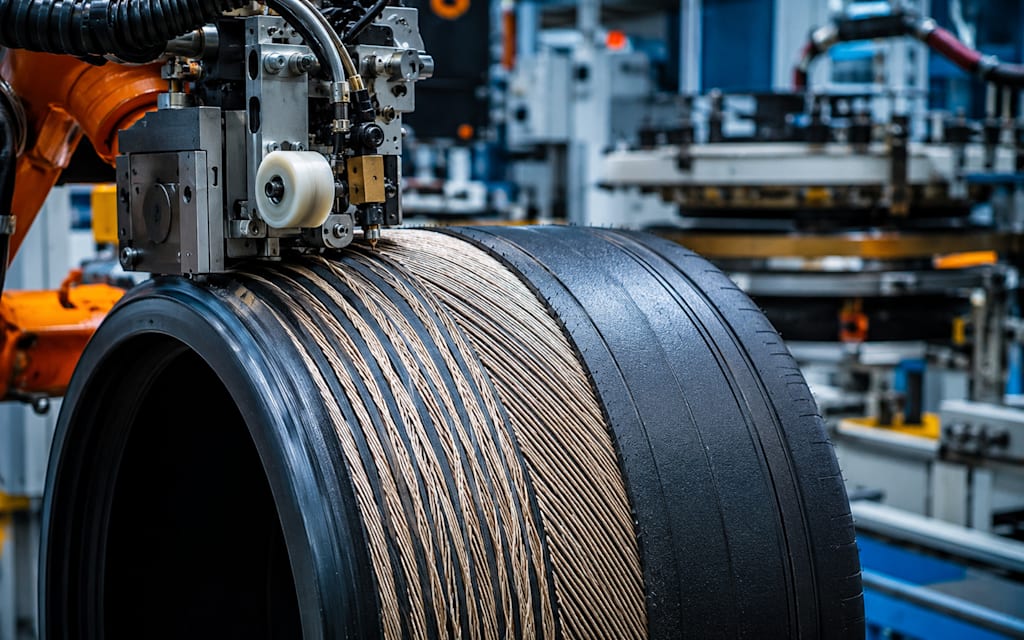
The electric vehicle revolution is usually told as a story of batteries, charging stations, and software intelligence.
It is a clean narrative—silent motors replacing combustion engines, dashboards becoming digital ecosystems, and cities slowly shifting toward electrified transport. But beneath this visible transformation lies something far less discussed and far more foundational.
A tire.
Not the rubber itself—but what holds it together when the vehicle accelerates instantly, carries heavier battery loads, and travels longer distances at sustained torque.
That hidden structure is built from tire cord fabrics.
And while they rarely appear in headlines, they are becoming one of the most strategically important materials in modern mobility systems. According to the Tire Cord Fabrics market, this sector is steadily expanding as automotive manufacturers respond to EV-driven performance demands, safety expectations, and efficiency constraints.
What looks like a simple textile is actually one of the most critical reinforcements in the entire vehicle architecture.
Tire Cord Fabrics Market is projected at 1.85 kilotons by 2031
The Invisible Engineering Layer Inside Every Tire
To understand why tire cord fabrics matter, you first have to understand what a tire really is.
It is not a uniform rubber object. It is a composite structure made of multiple engineered layers, each serving a specific mechanical purpose. At the core of this structure are tire cord fabrics—high-strength textile materials embedded within rubber to provide dimensional stability and load resistance.
These fabrics are typically made from:
- Polyester (for balanced strength and cost efficiency)
- Nylon (for flexibility and fatigue resistance)
- Rayon (for high-performance stability applications)
Their role is simple but essential: prevent the tire from deforming under stress.
Without them, modern vehicles—especially EVs—would not be able to handle acceleration forces, heavy battery weight, or long-distance travel without rapid degradation.
In essence, tire cord fabrics act as the skeletal framework of mobility.
Why EVs Are Changing Everything About Tire Design?
Electric vehicles behave very differently from internal combustion engine vehicles.
They deliver instant torque. They carry significantly heavier battery systems. And they maintain consistent power output across speed ranges that would normally stress conventional tires.
This creates three major engineering challenges:
1. Instant Torque Stress
EVs accelerate faster than traditional vehicles, causing rapid deformation pressure on tires.
2. Increased Vehicle Weight
Battery packs significantly increase total vehicle mass, requiring stronger structural reinforcement.
3. Continuous Load Cycles
EVs often operate at consistent torque levels, increasing fatigue stress over time.
This combination forces tire manufacturers to completely rethink internal reinforcement structures.
And that is where tire cord fabrics become central to innovation—not optional components, but critical design inputs.
The Structural Demand Shift Behind the Market
As EV adoption accelerates globally, the demand for high-performance tire reinforcement materials is increasing in parallel.
The Tire Cord Fabrics market
reflects this shift, highlighting how automotive production growth and evolving vehicle architectures are driving sustained demand for advanced textile reinforcements.
What makes this shift significant is not just volume—it is specification complexity. Manufacturers are no longer simply asking for “stronger” materials. They are demanding:
- Higher tensile strength-to-weight ratios
- Improved heat resistance under continuous EV load
- Better fatigue resistance across longer driving cycles
- Lower rolling resistance to improve battery efficiency
This means tire cord fabrics are evolving from standardized industrial inputs into highly engineered performance materials.
From Commodity to Strategic Material
For decades, tire cord fabrics were treated as commodity industrial textiles.
Their function was clear, their specifications were stable, and innovation cycles were slow.
That is no longer the case.
Today, automotive OEMs are increasingly involved in material co-development. Tire design is becoming an integrated process where vehicle engineers and material suppliers collaborate early in the development cycle.
This shift has elevated tire cord fabrics into a strategic category because they directly influence:
EV driving range
Tire lifespan under high torque conditions
Vehicle safety ratings
Energy efficiency through rolling resistance
In other words, they now impact core consumer-facing vehicle performance metrics.
Global Supply Chain Realignment
The supply chain supporting tire cord fabrics is also undergoing transformation.
Asia-Pacific remains a dominant manufacturing hub due to integrated textile and automotive production ecosystems. However, demand patterns are becoming more specialized, with regional variations in material preference and performance requirements.
Asia-Pacific: High-volume EV and passenger vehicle production
Europe: Premium performance and sustainability-focused materials
North America: Durability and regulatory compliance-driven demand
This geographic diversification is creating a more complex but more resilient global supply structure.
At the same time, sustainability pressures are pushing manufacturers toward:
Recyclable textile reinforcements
Bio-based fiber innovations
Energy-efficient production methods
The material is no longer just mechanical—it is becoming environmental.
The Future of Mobility Is Hidden in Material Science
The most important shift in the EV industry is not always visible on the surface.
Software gets attention. Battery chemistry gets investment. Charging infrastructure dominates policy discussions.
But underneath all of it, materials like tire cord fabrics determine how vehicles actually perform in the real world.
They influence how far an EV can travel, how safely it handles stress, and how efficiently it converts energy into motion.
And as the Tire Cord Fabrics market continues to expand, it signals a broader truth about modern mobility:
Innovation is no longer just about engines or batteries—it is about the invisible materials holding everything together.
Closing Insight
The EV revolution is often described as a shift toward cleaner energy and smarter software.
But the real foundation of that transformation is far less visible.
It is woven into the structure of every tire, embedded in layers of engineered textiles that determine whether mobility systems succeed or fail under real-world conditions.
So the next time an electric vehicle glides silently past, the real question is not what powers it—but what holds it together.
About the Creator
efingutthomas
My expertise is custom research across industries such as aerospace & defense, agriculture, animal wellness, automation, automotive, chemicals, consumer goods, electronics, energy, finance, food & beverages, healthcare, hospitality and ICT
Enjoyed the story? Support the Creator.
Subscribe for free to receive all their stories in your feed.
Comments
There are no comments for this story
Be the first to respond and start the conversation.