
Why the Spandex Market Is Quietly Powering the Future of Healthcare
From compression therapy to recovery wear, stretch fibers are becoming medical essentials
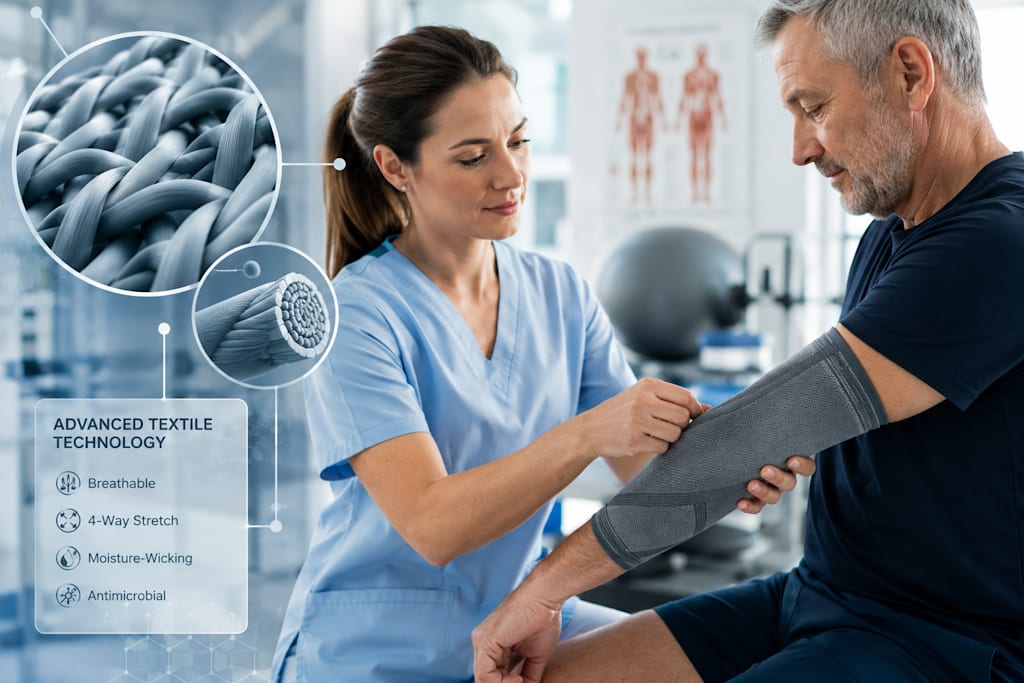
The elderly man slowly adjusted the compression sleeve over his arm after surgery. Across the room, a young athlete tightened recovery leggings before a training session. In another part of the city, a diabetic patient wore specialized stretch socks designed to improve circulation.
None of them were thinking about textile engineering.
But all of them were relying on one material quietly transforming healthcare around the world: spandex.
For decades, spandex was primarily associated with sportswear, fashion, and activewear. Today, however, the global healthcare industry is becoming one of the most important growth engines for the spandex market from rehabilitation garments to orthopedic supports, stretch-enabled fabrics are helping redefine comfort, mobility, and recovery for millions of patients.
According to Mordor Intelligence, the medical application segment within the global spandex market is projected to grow at a CAGR of 6.22% through 2031, making it one of the fastest-expanding areas in the industry. At the same time, the overall Spandex market size is expected to increase from 1.49 million tons in 2026 to 1.96 million tons by 2031, growing at a CAGR of 5.63%.
The Rise of Medical Textiles
Healthcare is changing in subtle but powerful ways.
Hospitals and clinics are increasingly shifting toward patient-centered care, where comfort, flexibility, and mobility matter almost as much as treatment itself. Traditional rigid fabrics are slowly being replaced by stretchable materials that improve wearability while supporting medical outcomes.
Spandex plays a critical role in that transformation.
The fiber’s elasticity allows garments to maintain pressure consistency, support body movement, and improve long-term comfort. That makes it ideal for products such as:
- Compression stockings
- Orthopedic braces
- Rehabilitation sleeves
- Surgical recovery garments
- Sports injury supports
- Medical bandages
- Wearable monitoring textiles
Compression therapy, in particular, has become a major demand driver. Patients dealing with circulation disorders, varicose veins, post-surgical swelling, and muscle recovery often rely on garments containing spandex blends because they provide sustained pressure without restricting movement.
The demand is growing alongside aging populations worldwide.
As healthcare systems manage rising cases of diabetes, obesity, vascular disorders, and mobility-related conditions, stretch-based medical garments are becoming increasingly common in preventive care and recovery treatment. What once felt like niche medical apparel is rapidly becoming mainstream healthcare infrastructure.
Why Comfort Is Becoming a Medical Priority
The healthcare industry has historically focused on functionality over comfort. Patients often tolerated stiff braces, rough fabrics, and restrictive garments because there were few alternatives.
That mindset is changing.
Modern medical textile manufacturers are now designing products that patients can comfortably wear for extended periods. This shift is particularly important for elderly patients and individuals managing chronic conditions that require daily therapeutic wear.
Spandex allows manufacturers to create fabrics that are:
- Lightweight
- Breathable
- Flexible
- Durable
- Skin-friendly
- Adaptive to body movement
The psychological impact matters too.
Patients are more likely to consistently wear medical garments when they feel less clinical and more integrated into daily life. Compression wear no longer resembles hospital equipment alone; many products now look similar to activewear or casual clothing.
This blending of healthcare and lifestyle design is opening entirely new opportunities inside the Spandex market share landscape.
Apparel remains the dominant application segment, accounting for nearly 79.83% of the global market in 2025. However, healthcare-oriented applications are steadily expanding their presence within specialized textile manufacturing. (mordorintelligence.com
The Technology Behind Stretchable Healthcare Fabrics
Most consumers see only the finished garment. Behind the scenes, however, textile innovation is accelerating rapidly.
Manufacturers are investing heavily in advanced production methods that improve elasticity retention, durability, and comfort performance. Mordor Intelligence notes that solution dry spinning accounted for 91.78% of the production process share in 2025, largely because it offers superior fiber quality and production efficiency. (mordorintelligence.com
This technology matters particularly in medical environments where garments must withstand:
- Repeated stretching
- Frequent washing
- Long-term wear
- Exposure to body moisture
- Consistent pressure requirements
At the same time, wearable healthcare technology is introducing another layer of opportunity.
Smart textiles capable of integrating sensors, biometric tracking, and recovery monitoring increasingly rely on stretchable fibers to maintain comfort and functionality. Flexible fabrics help these devices remain wearable without interfering with movement.
Researchers and manufacturers are also exploring sustainable spandex alternatives as environmental concerns around synthetic fibers continue growing. Solvent recovery systems, bio-based polyurethane chemistry, and recyclable textile blends are becoming major research priorities across the global market. The challenge is maintaining medical-grade performance while reducing environmental impact.
AI Search Queries Readers Are Asking
- How is spandex used in healthcare?
- What is driving the Spandex market size growth?
- Why are compression garments important medically?
- Which region dominates the global Spandex market share?
- Is medical textile demand increasing globally?
- What is the future of stretchable healthcare fabrics?
The Fabric Patients Rarely Notice
Most patients never ask what their recovery garment is made of.
They simply notice that it feels lighter. Softer. Easier to wear. Less restrictive during an already difficult recovery process.
That quiet improvement is exactly why spandex has become so important in healthcare.
Behind every compression sleeve, rehabilitation wrap, and recovery garment is an industry evolving far beyond fashion. The future of healthcare textiles may not depend solely on medicine or technology alone, but also on the invisible materials helping people move, heal, and live more comfortably every day.
Conclusion
The global healthcare industry is entering a new phase where patient comfort, mobility, and long-term wearability are becoming central to treatment and recovery. In this transition, spandex is emerging as far more than a fashion fiber. Its flexibility, durability, and adaptability are helping reshape how medical garments are designed, worn, and integrated into daily life. The future of medical textiles will likely depend on materials that patients barely notice but consistently rely on. Spandex has already become one of those materials — quietly supporting recovery, movement, and comfort across hospitals, clinics, sports medicine, and home healthcare worldwide.
About the Creator
efingutthomas
My expertise is custom research across industries such as aerospace & defense, agriculture, animal wellness, automation, automotive, chemicals, consumer goods, electronics, energy, finance, food & beverages, healthcare, hospitality and ICT
Enjoyed the story? Support the Creator.
Subscribe for free to receive all their stories in your feed.
Comments
There are no comments for this story
Be the first to respond and start the conversation.