
Why the Right Agility and Jumping Equipment Actually Changes How Kids Move
How Kids Move

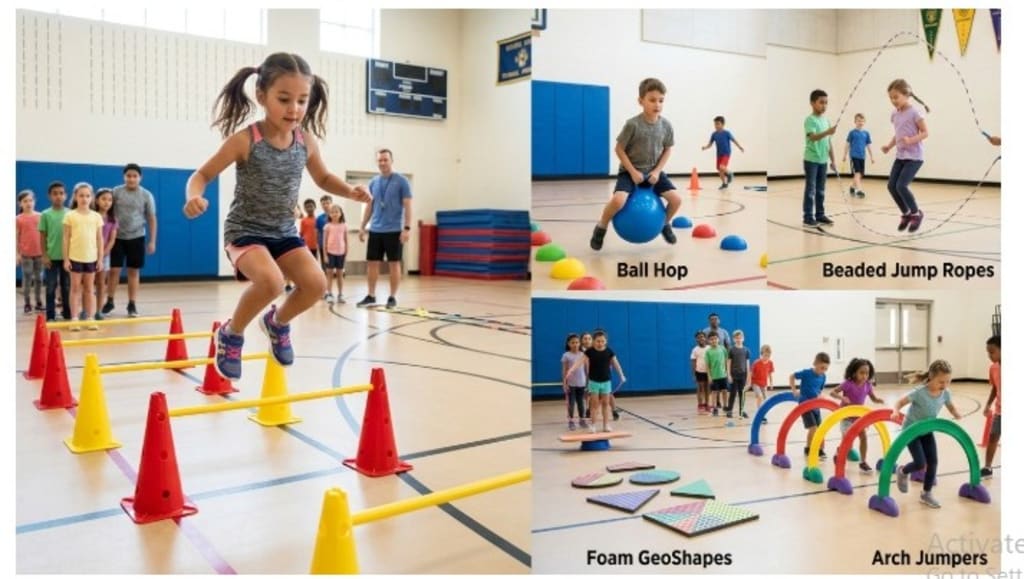
Spend a few minutes watching children during a physical education class or at a playground, and one thing becomes clear very quickly: not every child moves with the same level of confidence. Some sprint naturally through obstacle courses, while others hesitate before stepping over a low hurdle or changing direction during a simple drill.
These differences are not always related to athletic ability. In many cases, they come down to coordination, balance, and body awareness—skills that develop gradually through movement and repetition.
This is where agility and jumping activities can make a meaningful difference. When children regularly interact with movement-based equipment, they begin building the physical confidence that supports everything from sports participation to everyday activities.
Understanding Agility in Childhood Development
The word “agility” is often associated with competitive sports, speed drills, or advanced athletic training. For younger children, however, agility has a much broader meaning.
At its core, agility is about learning how the body moves through space. It includes:
- Starting and stopping with control
- Changing direction smoothly
- Maintaining balance while moving
- Coordinating upper and lower body movement
- Reacting to obstacles and timing challenges
These are foundational movement skills rather than sport-specific techniques. Children who develop them early often become more comfortable participating in physical activities overall.
Importantly, movement confidence tends to influence participation. Kids who feel coordinated are usually more willing to join games, try new activities, and stay physically active over time.
Why Repetition Matters
Children learn movement patterns the same way they learn many other skills: through repetition and feedback.
Activities involving jumping, stepping, hopping, and directional movement help the brain and body communicate more effectively. Over time, these repeated actions improve coordination and spatial awareness.
Simple equipment often works best because it encourages children to practice naturally without overcomplicating the activity. Cones, jump ropes, low hurdles, and balance-based obstacles all create opportunities for repeated movement in a structured but playful way.
The goal is not perfection. It is familiarity and confidence.
The Lasting Value of Jump Rope Activities
Despite the rise of digital fitness trends and specialized training tools, jump ropes continue to remain relevant in schools and recreation programs.
Part of the reason is their simplicity. A jump rope requires rhythm, timing, and coordination all at once. Children quickly receive feedback through the movement itself—either the rhythm flows naturally, or the rope catches.
Beaded ropes are especially popular in group settings because they move at a pace that beginners can track more easily. The sound and weight of the rope help children understand timing without needing detailed instruction.
Long-rope group activities add another layer of development. Children must coordinate with others, judge timing, and move confidently into shared space. These exercises combine physical skills with communication and social interaction.
Obstacle-Based Activities Build Decision-Making Skills
Cones and hurdle-style setups are common in youth programs because they can be arranged in many different ways. What makes these activities useful is not simply the act of running around objects—it is the decision-making involved during movement.
When children approach a low barrier, they must quickly judge spacing, timing, and body position. Should they step over it? Jump it? Slow down or maintain spe
These small decisions help improve reaction time and movement awareness in ways that flat running drills often do not.
Safety also plays an important role. Equipment designed to shift or release on contact encourages children to move more naturally without fear of failure. When obstacles feel forgiving rather than intimidating, participation tends to increase.
How Spatial Awareness Develops Through Movement
Some movement activities challenge more than speed or balance. They also develop spatial awareness—the ability to understand where the body is in relation to surrounding objects.
Arch-shaped obstacles, stepping zones, and patterned movement stations encourage children to think while moving. They must adjust posture, timing, and direction continuously.
This type of movement can benefit children beyond sports. Everyday actions such as climbing stairs, navigating crowded spaces, or carrying objects while walking all rely on spatial awareness and coordination.
Developing these skills early often makes physical activity feel less stressful and more intuitive later on.
Why Variety Keeps Kids Engaged
One challenge in youth fitness and recreation is maintaining interest. Children naturally adapt to routines, which means repetitive setups can lose their appeal quickly.
Programs that rotate movement patterns and rearrange equipment tend to keep engagement higher. A set of cones used for sprint drills one day might become part of an obstacle course the next.
The flexibility of movement-based equipment is part of its value. Small adjustments in spacing, direction, or sequence can create entirely different challenges without requiring new materials.
For younger children especially, novelty often increases participation.
The Connection Between Play and Physical Confidence
Children rarely think about movement in technical terms. They respond to activities that feel playful, achievable, and rewarding.
Hopping games, relay races, balance tasks, and jumping challenges may appear simple from an adult perspective, but they often involve complex coordination skills underneath the surface.
When children succeed at these activities repeatedly, they begin developing physical confidence. That confidence influences how willing they are to engage in future activities, whether in sports, recreation, or everyday play.
In many cases, the emotional impact matters as much as the physical development itself.
Creating Better Movement Environments
Whether in schools, recreation centers, or home settings, the most effective movement spaces tend to share a few qualities:
- Activities are varied rather than repetitive
- Equipment is adaptable and safe
- Children are encouraged to explore movement freely
- Challenges are achievable but still engaging
- Participation feels playful rather than overly structured
These environments help children associate movement with enjoyment rather than pressure.
Looking Beyond Athletic Performance
Not every child will become an athlete, and movement development should not depend on competitive goals alone.
Agility and jumping activities support broader physical literacy—the ability to move confidently and comfortably through different environments. This includes balance, coordination, reaction time, and body awareness.
These skills influence long-term health and activity levels more than many people realize.
Final Thoughts
Movement-based activities are often viewed as simple games or gym exercises, but their impact can extend much further. Through repetition, play, and gradual challenge, children develop coordination skills that shape how they interact with physical activity as they grow.
The right equipment does not need to be elaborate. What matters most is creating opportunities for children to move, experiment, and build confidence through experience
Over time, those small moments of movement—jumping a hurdle cleanly, timing a rope swing correctly, or navigating an obstacle without hesitation—become part of a much larger foundation for physical confidence and lifelong activity
About the Creator
Abbasi Publisher
I’m a dedicated writer crafting clear, original, and value-driven content on business, digital media, and real-world topics. I focus on research, authenticity, and impact through words
Enjoyed the story? Support the Creator.
Subscribe for free to receive all their stories in your feed.
Comments
There are no comments for this story
Be the first to respond and start the conversation.