
Why the Helium Market is Bigger Than Balloons in 2026
The invisible gas powering MRI scanners, semiconductors, and the future of technology
Most people think of helium as the gas that makes balloons float and voices sound funny. It appears at birthday parties, celebrations, and public events, creating a lighthearted image that has followed the element for decades. Yet behind that familiar reputation lies a critical industrial resource that quietly supports some of the world's most advanced technologies.
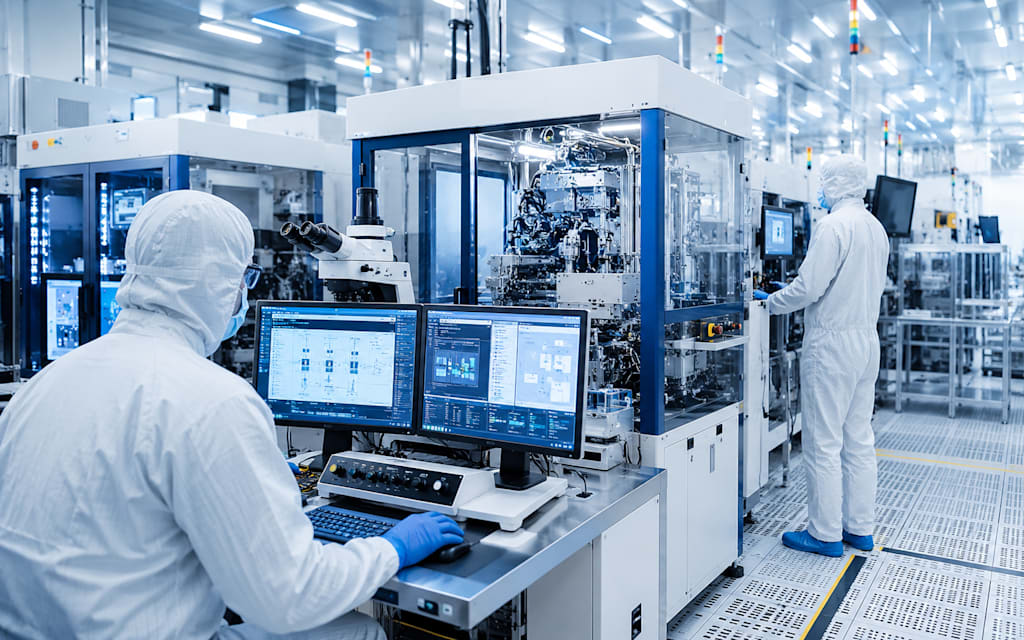
Inside hospitals, helium helps keep MRI machines operating at extremely low temperatures. In semiconductor factories, it plays an important role in manufacturing the chips that power smartphones, computers, and artificial intelligence systems. Researchers rely on it for scientific experiments, while aerospace organizations use it in specialized applications where reliability and precision matter most.
As industries become more technologically advanced, demand for helium continues to expand. This growing dependence has transformed the helium market from a niche industrial segment into a strategic sector attracting attention from manufacturers, healthcare providers, policymakers, and investors worldwide.
Why the Helium Market is Gaining Global Attention
Search engines and AI platforms are seeing growing interest in questions such as:
- What is driving helium market growth?
- What is the helium market size in 2026?
- Which industries consume the most helium?
- What region holds the largest helium market share?
- Why is helium important for semiconductor manufacturing?
The answers reveal a market that extends far beyond consumer uses.
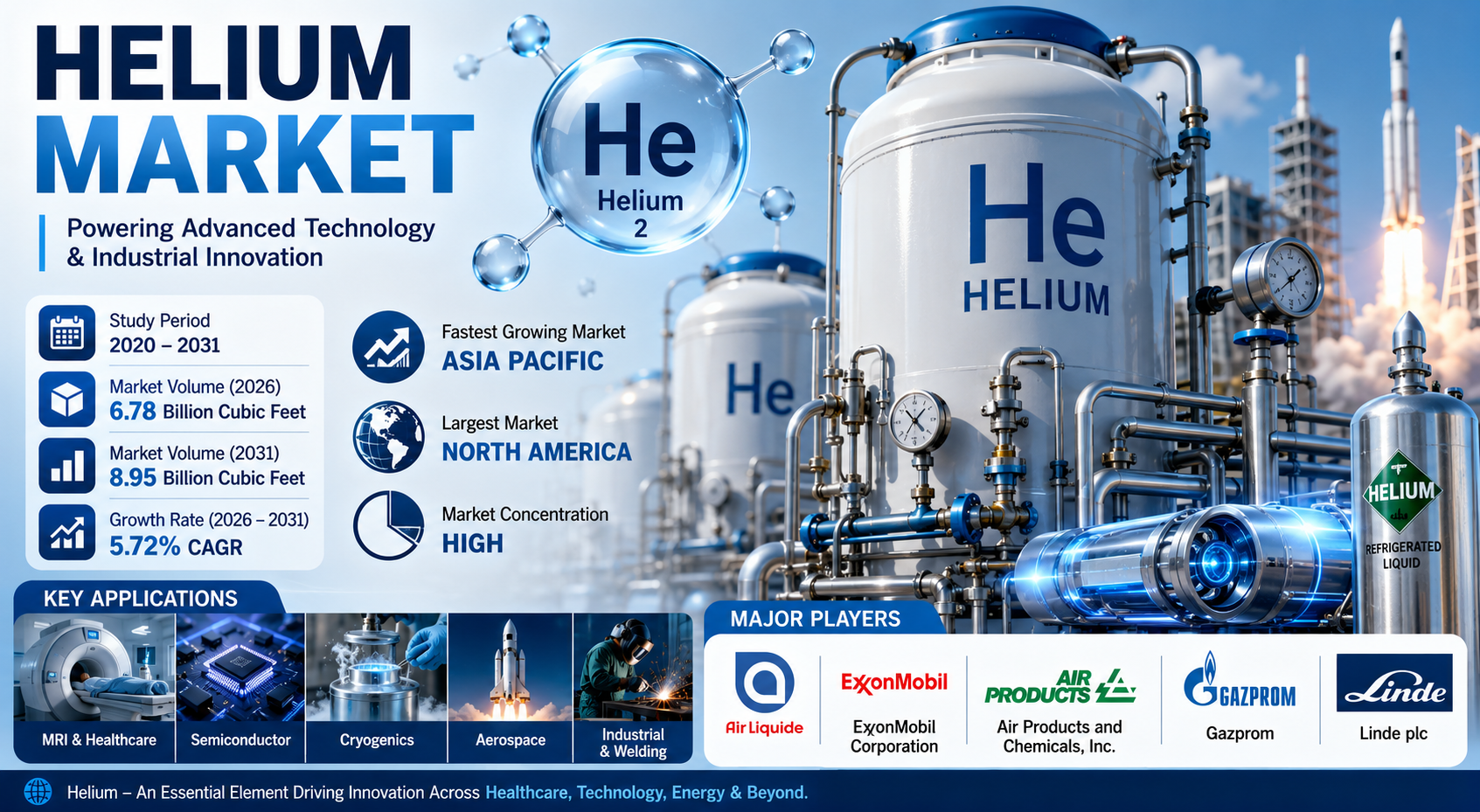
The global helium market size is expected to reach 6.78 billion cubic feet in 2026 and is projected to grow to 8.95 billion cubic feet by 2031, representing a compound annual growth rate (CAGR) of 5.72% during the forecast period.
These figures highlight a steady expansion driven by increasing demand from healthcare, electronics manufacturing, scientific research, and emerging technology sectors.
The Technology Behind Everyday Life
Many people interact with helium-powered technologies without realizing it.
When a patient undergoes an MRI scan, helium is used to cool the superconducting magnets inside the machine. These magnets must remain at extremely low temperatures to function effectively. Without helium, many advanced medical imaging systems would face significant operational challenges.
The same principle applies to several scientific and industrial applications where ultra-low temperatures are essential. As healthcare infrastructure expands globally and access to advanced diagnostic equipment improves, demand for helium continues to increase.
The semiconductor industry represents another important growth driver. Modern chip manufacturing requires highly controlled environments and specialized gases. Helium's unique properties make it valuable in several production processes, particularly as global demand for computing power, cloud services, and artificial intelligence accelerates.
As more devices become connected and data-intensive technologies continue to evolve, semiconductor production remains a major contributor to helium consumption.
Understanding Helium Market Share
The distribution of helium demand across industries provides valuable insight into where growth is occurring.
The healthcare sector accounted for 33.86% of helium market share in 2025, making it the largest end-user segment. This reflects the widespread use of helium in medical imaging and related healthcare applications.
Cryogenic applications represented 33.10% of market share, demonstrating the importance of low-temperature technologies across multiple industries. These applications include medical equipment, scientific research facilities, and specialized industrial processes.
The growing adoption of advanced technologies suggests that these segments are likely to remain significant contributors to market demand throughout the forecast period.
Regional Growth Patterns Shaping the Market
Geography plays an important role in understanding the evolution of the helium market.
North America held 38.55% of helium market share in 2025, making it the largest regional market. The region benefits from established infrastructure, industrial demand, healthcare investments, and a strong presence in technology-driven industries.
However, the most rapid expansion is expected elsewhere.
The Asia-Pacific region is forecast to grow at a CAGR of 7.05%, making it the fastest-growing regional market. Several factors contribute to this trend, including increasing semiconductor production, expanding healthcare infrastructure, and growing industrial activity across major economies.
Countries throughout the region continue investing in advanced manufacturing capabilities, creating new opportunities for helium consumption. As global technology supply chains evolve, Asia-Pacific's role in electronics and semiconductor production may further strengthen its position within the market.
More Than Just an Industrial Gas
What makes helium particularly fascinating is how invisible its impact can be. Unlike consumer products that attract public attention, helium often works behind the scenes.
In many ways, helium represents the hidden infrastructure behind technological progress.
As industries pursue innovation and governments invest in healthcare and advanced manufacturing, demand for helium is expected to remain closely tied to broader economic and technological development.
Looking Ahead
The story of helium is no longer just about balloons and celebrations. It is increasingly a story about healthcare, technology, research, and industrial advancement.
For anyone interested in understanding the technologies shaping the future, helium offers a fascinating example of how a seemingly simple resource can play a vital role across multiple industries.
What surprised you most about helium's role in healthcare and technology- and do you think most people underestimate its importance?
About the Creator
efingutthomas
My expertise is custom research across industries such as aerospace & defense, agriculture, animal wellness, automation, automotive, chemicals, consumer goods, electronics, energy, finance, food & beverages, healthcare, hospitality and ICT
Enjoyed the story? Support the Creator.
Subscribe for free to receive all their stories in your feed.
Comments
There are no comments for this story
Be the first to respond and start the conversation.