
Why the Christmas Tree Industry Is Bigger Than You'll Ever Imagine
That pine-scented tradition in your living room is the tip of a multibillion-dollar industry quietly growing behind the tinsel.
It starts with the smell.
You walk into the lot — or step off the shuttle at the farm — and before you've even looked at a single tree, your whole body relaxes. Pine. Cold air. Something that smells like every good December you've ever had. You pick the one that feels right, you strap it to your car, and you spend an evening arguing about where the star goes. The whole experience feels beautifully, stubbornly analog. Immune to markets, algorithms, and quarterly projections.
Except it isn't. Behind that ritual — behind every farm, every roadside lot, every online delivery service shipping a fresh-cut Fraser fir in a box with a water tube — is one of the most quietly massive seasonal industries in the world.
The Numbers Nobody Talks About at the Tree Lot
According to Mordor Intelligence, the global Christmas tree market is estimated at USD 6.32 billion in 2025 and is projected to reach USD 7.80 billion by 2030, expanding at a CAGR of 4.31% during the forecast period. Read that again: nearly eight billion dollars, growing steadily, year after year, with no signs of slowing.
That is not the picture most people carry in their heads when they think about Christmas trees. Most of us picture a guy in a parka, a cash box, and a string of bare bulbs over a gravel parking lot. The reality is a globally tracked, research-analyzed, supply-chain-managed industry that spans five continents and employs hundreds of thousands of people — from seedling nurseries in Oregon to artificial tree factories in Guangdong to premium decoration retailers in London.
The Christmas tree market size didn't arrive at billions by accident. It got there through decades of agricultural investment, retail evolution, and one powerful, immovable human force: the unwillingness to let go of a tradition.
Browse Japanese Version of the Report: https://www.mordorintelligence.com/ja/industry-reports/christmas-tree-market?utm_source=vocal
A Decade of Work Behind One Purchase
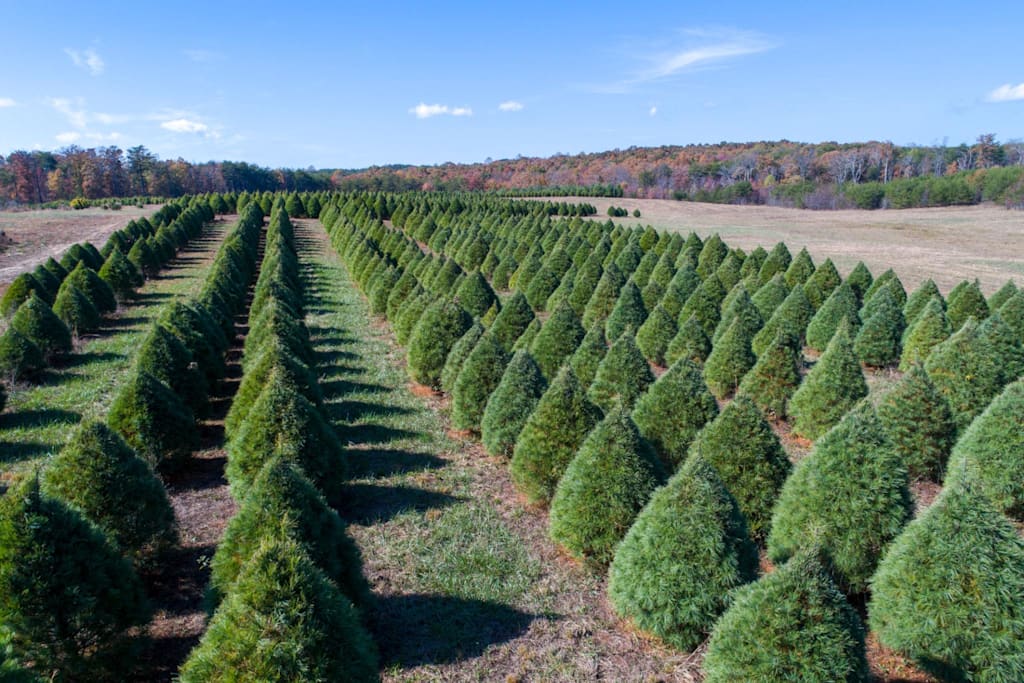
Here's the part that reframes the whole transaction. The tree you buy in December — the one that takes 20 minutes to choose and fits in your trunk — took between seven and ten years to grow. Someone planted that seedling around 2015 or 2016, betting on demand that wouldn't materialize for a decade. They sheared it by hand every single year, coaxing it into that conical shape it doesn't naturally have. They harvested it, netted it, loaded it onto a truck, and sent it hundreds of miles to reach you.
That's not a commodity. That's a ten-year wager made by a farmer who had to guess, in advance, what you'd want to spend money on in 2025.
The Christmas tree market share is won or lost on decisions made years before a single ornament is hung. Farms that underplanted in the years after the 2008 financial crisis — when demand dropped and seedling orders fell sharply — created a shortage that hit the market in the mid-2010s and kept tree prices elevated for nearly a decade. You can't fast-forward a seedling. The agriculture is unforgiving and utterly uninterested in market corrections.
Why It Keeps Growing — And What's Driving It
The steady 4.27 % CAGR in the Christmas tree market isn't driven by one thing. It's a combination of forces pulling in the same direction at the same time. Millennial nostalgia is real, measurable, and commercially potent. The generation most likely to research a purchase's environmental footprint is also the generation most likely to choose a sustainably farmed real tree over a petroleum-based artificial one.
Agritourism has transformed many farms from commodity operations into destination experiences — hay rides, hot cider, wreath-making workshops, Instagram-worthy light displays. The tree is the excuse. The memory is the product, and it commands a premium.
Direct-to-door delivery of fresh-cut trees has opened urban markets that couldn't previously support a traditional lot. Same-day delivery of a live Noble fir to a Manhattan apartment is now a real service with real demand.
Eco-conscious alternatives — living tree rentals, potted specimens returned to farms for replanting — are growing faster than the overall market, driven by consumers who want the experience without the footprint.
The Tree in Your Living Room Is the Last Thing You See
The next time you stand back and look at a decorated tree — lights glowing, ornaments catching the color, that smell still faintly hanging in the room — consider everything that got it there. A decade of farming. A compressed, brutal selling window. A global supply chain that somehow delivers 25 to 30 million real trees across North America alone every single season.
The Christmas tree market is growing because the thing it sells cannot be replicated by an algorithm, shipped as data, or replaced by a screen. It is physical, perishable, and deeply felt.
About the Creator
efingutthomas
My expertise is custom research across industries such as aerospace & defense, agriculture, animal wellness, automation, automotive, chemicals, consumer goods, electronics, energy, finance, food & beverages, healthcare, hospitality and ICT
Enjoyed the story? Support the Creator.
Subscribe for free to receive all their stories in your feed.
Comments
There are no comments for this story
Be the first to respond and start the conversation.