
Why the Biodegradable Plastics Market Is Growing Faster Than Expected
Driven by policy changes, innovation, and demand for sustainable packaging, the market is projected to reach $11.5 billion by 2034.

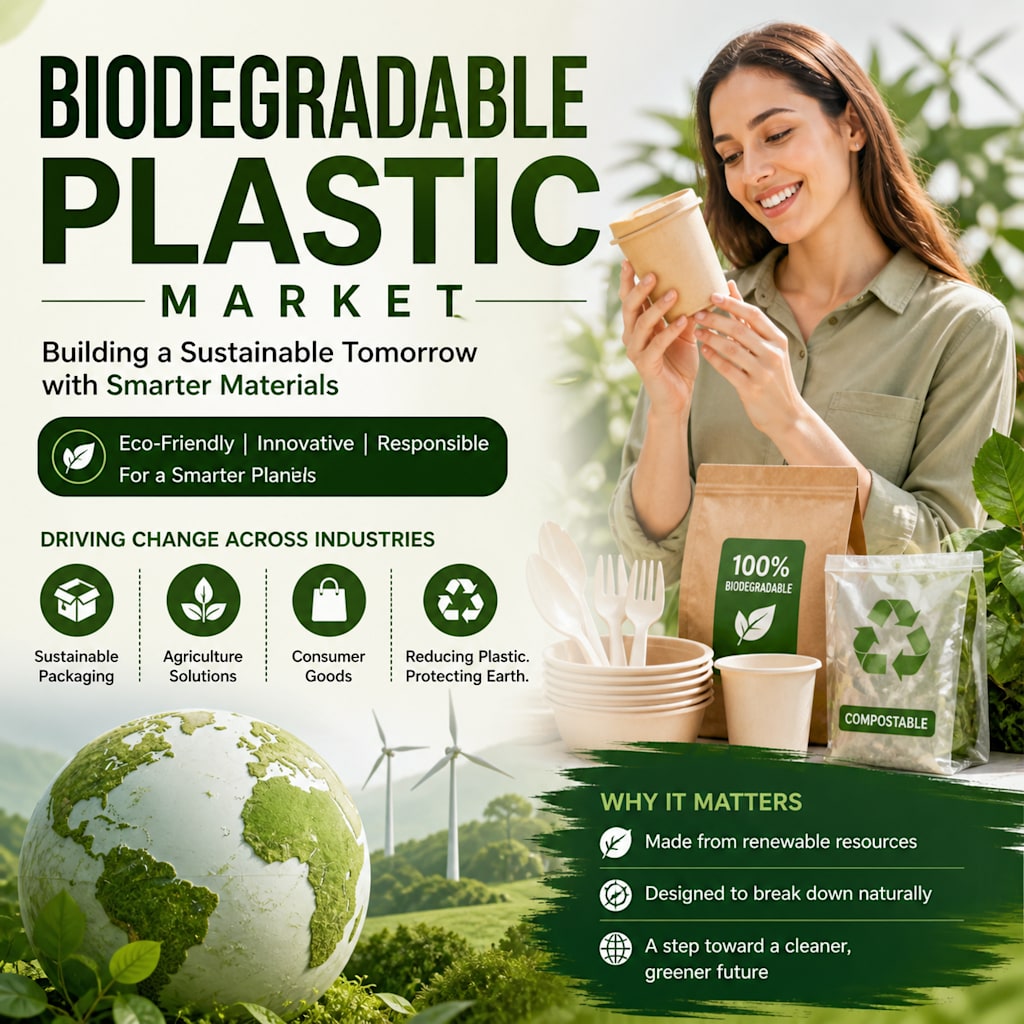
Plastic has made more of an impact on modern life than perhaps any other material. It is cheap, light and incredibly versatile. Yet that very same durability is now creating one of the most pressing environmental crises of our time.
From ever-growing landfills to the problem of plastic in the oceans, the implications are becoming too much to ignore and this has led to companies, governments and consumers alike looking for alternative materials and the area which is leading the charge is biodegradable plastics. What has traditionally been a niche solution is slowly becoming one of the core elements in a move towards a sustainable world.
A market gathering pace and then some!
The global market for biodegradable plastics reached USD 6.1 billion in 2025 and is expected to be worth approximately USD 11.5 billion by 2034. This represents growth of roughly 7 percent per year and marks a decisive shift in the way we are looking at materials across the board, indicating that these are more than a passing fad but the sign of long-term structural change. It's not a trend but a long-term shift toward alternatives, moving from an alternative option to one that's increasingly necessary.
Why the world is moving away from traditional plastics
Perhaps the biggest driving force behind the shift is the need to tackle plastic pollution head-on. Restrictions on single-use plastics are being introduced by governments globally at a pace that shows no sign of slowing, at the same time as consumers become more aware of their impact. All these factors are combining to create intense pressure on businesses to start finding alternatives that won't negatively affect the planet. Whether this is within food packaging, agriculture or textiles businesses are trying to do their bit to use alternatives that will work without damaging the environment-which is what biodegradable plastics can do. They work in the same way as traditional plastics but can decompose into natural substances.
Material science innovation
The field of material science has been playing an instrumental role in the viability of biodegradable plastics. Materials such as PLA and PHA have improved tremendously in recent years with a range of strengths and usages. These materials can be used across the board for various applications such as:
- Food packaging
- Agriculture
- Consumer goods
- Textiles
The fact that these are being produced using methods that make them increasingly cost-effective is of course important to their wider adoption.
Packaging is leading the transformation
However in terms of industry it is packaging that is becoming the biggest consumer of biodegradable plastics, and this growth isn't surprising. As consumption grows and we rely more on online deliveries and food services this is putting a great deal of strain on the system and creating too much waste. Companies, both retailers and food delivery services, are therefore beginning to look toward biodegradable plastics as a way of offering the eco-conscious consumer what they are looking for, without necessarily breaking the bank or compromising on quality. It's no longer a niche application it is becoming a major selling point.
Consumer awareness is changing the game
It's obvious but true that consumer awareness is increasing dramatically. Surveys repeatedly show a huge percentage of people wanting a reduction in the amount of plastic that is being produced and used. This is affecting the way we buy things with customers increasingly looking to support businesses that they see as being more environmentally aware. This shift in buying behavior is making businesses look much more favorably at sustainable materials which in turn has the knock-on effect of further fueling the demand for biodegradable plastics.
Government policies are the backbone
Added to this the fact that governments across the globe are introducing regulations banning or limiting the use of certain plastics is proving to be a major catalyst for change. Incentives are being given for use of sustainable materials alongside initiatives for recycling and composting which are helping to push industries towards using alternatives. Where legislation is more rigid this can directly be linked to an increase in biodegradable plastic usage.
Europe leads the way
With stringent environmental laws, public acceptance and governmental support Europe is currently leading the world in the biodegradable plastics market. Countries like Germany, France, Italy and the UK are at the forefront of this revolution and seeing demand for biodegradable materials grow significantly. This is driven by the fact that Europe is working towards a circular economy and therefore seeking materials that can contribute to this process more than plastics can.
Growth opportunities abound across the US
The market for biodegradable plastics is beginning to take hold in the US. We are seeing a rise in adoption from various sectors such as food retailers, institutions and educational organizations who are now moving towards a greener model. Product innovation and a growing public appetite for the material has also contributed to the growing usage. The market is expected to boom in coming years as the nation moves further forward.
Developing markets are catching up
Developing countries across Asia, South America and the Middle East are also looking towards biodegradable plastics. Rapid development and increased waste generation, together with heightened awareness of environmental issues, means these areas have a clear need to transition. While the main benefit here appears to be a solution to growing waste issues and reducing overall landfill impact, they too are realizing the financial long-term benefits of using the new materials.
Still with a few bumps on the road
However there are still problems to be overcome within the biodegradable plastics market. One of the biggest is of course cost and it is generally more expensive to produce these materials than traditional ones. Infrastructure is also an issue with not all areas equipped to handle biodegradable waste. Consumer perception and confusion surrounding what it really means to be biodegradable can also be a problem but these issues are being worked through with increasing efforts from manufacturers and support from governments.
A growing and competitive market
The market is indeed developing and growing rapidly. Manufacturers are actively trying to innovate the way materials are produced as well as the way that they are made to increase durability and decrease time it takes to decompose. Collaborations between businesses and research institutions are also helping to accelerate progress in the market.
Looking towards the future
Ultimately, biodegradable plastics will be a fundamental part of any attempt to move towards a truly sustainable world. With a constantly growing population and continued emphasis on green technology and material sourcing this is a market that is only going to rise in popularity and value over the coming years to more than double by 2034 to reach over USD 11 billion.
In summary, the biodegradable plastics market is more than just a current trend; it's a fundamental shift in our thinking about materials, waste management and environmental sustainability, moving from being a novelty to an absolute necessity across a range of industries.
About the Creator
Robert
Senior Market Researcher at IMARC Group, specializing in global market analysis, industry trends, and data-driven insights across diverse sectors.
Enjoyed the story? Support the Creator.
Subscribe for free to receive all their stories in your feed.
Comments
There are no comments for this story
Be the first to respond and start the conversation.