
Why Sri Lanka is a Global Leader in Robotics Education in 2026
How Sri Lanka is shaping the future of robotics education in 2026

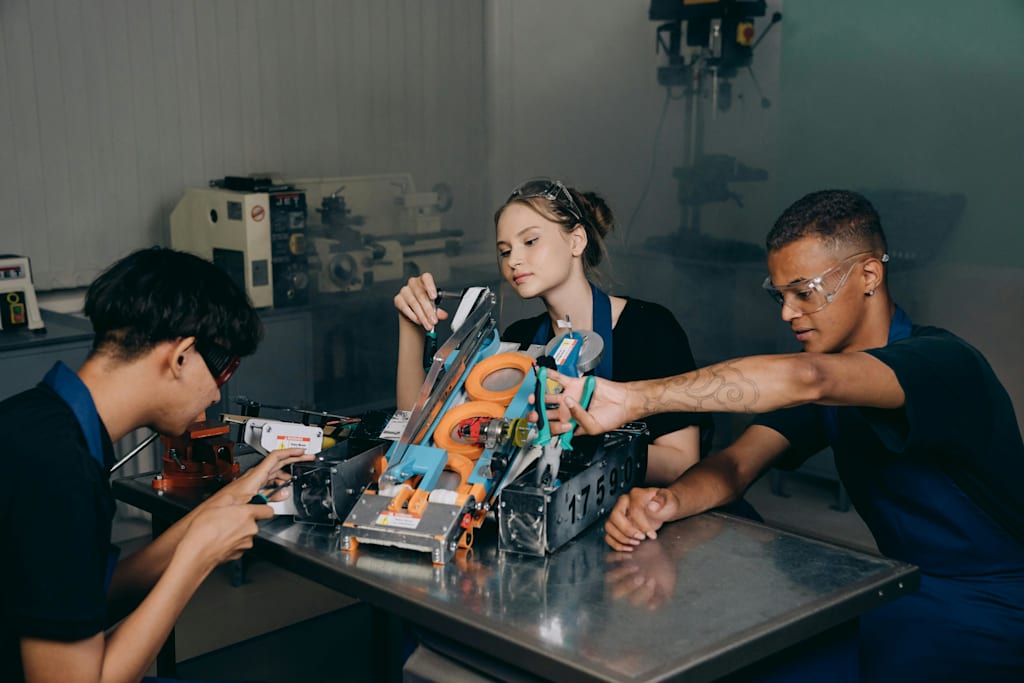
The island’s rapid ascension in the technical education sector reflects a strategic pivot towards high-value automation and artificial intelligence. By fusing rigorous theoretical foundations with an aggressive practical application, these programmes have successfully redefined regional standards for engineering. As of 2026, Sri Lanka has become a focal point for international students and tech firms alike, proving that a nation’s size is no barrier to its digital ambitions. The excellence found here is not accidental; it is the result of a coordinated effort to modernise the workforce for the Fourth Industrial Revolution.
Interdisciplinary Integration and Practicality
One of the most striking features of the current academic landscape is the seamless blending of technical engineering with broader commercial acumen. Many students are now choosing to supplement their technical training with business management courses in Sri Lanka to ensure their robotic innovations are actually viable in a competitive global market. This dual focus ensures that graduates are not merely capable of assembling complex circuitry but are equally adept at navigating the fiscal complexities of the tech industry.
The curriculum usually demands that students build functional prototypes that solve specific local problems, such as automated harvesting in the tea sector or precision irrigation systems for paddy fields. This lends a sense of purpose and real-world grit to their studies that is often lacking in purely theoretical degrees elsewhere. By the time they graduate, these students aren't just engineers; they are entrepreneurs who understand how to scale a product from a lab bench to a factory floor. This practical edge is exactly what makes the local talent pool so attractive to international tech giants looking for versatile employees.
Institutional Specialisation and Industry Alignment
The role of established educational bodies remains central to maintaining the high trajectory of this niche sector. For instance, NIBM has been instrumental in bridging the gap between historical academic standards and the disruptive demands of 2026’s automation landscape. The emphasis here is on creating a workforce that is "plug-and-play" for multinational corporations looking for high-tier engineering talent in South Asia.
Courses are designed in direct consultation with industry leaders, ensuring that the software and hardware being taught are the same ones used in modern smart factories. This alignment means that internships often transition into full-time roles, as students already possess the specialised skills needed for high-stakes environments like nuclear robotics or underwater ROV operations. Beyond just the technical skills, institutions have focused on "employability," teaching students how to collaborate in agile, cross-functional teams. This professional polish, combined with deep technical knowledge, has created a standard of excellence that is now recognised as a benchmark for the region.
The Proliferation of Competitive Innovation Hubs
Beyond the confines of a traditional lecture hall, the island has seen a massive surge in dedicated robotics labs and innovation clusters. These spaces operate more like high-stakes incubators where students from different disciplines collaborate on autonomous systems, often working late into the night to perfect a single line of code or a mechanical joint’s range of motion. Events like the World Robot Olympiad and the Sri Lankan Robotics Challenge have seen record participation in 2026, with over 500 teams competing at the national level.
Global observers have noted that Sri Lankan teams are increasingly dominating international robotics competitions, frequently outperforming far wealthier nations in categories like RoboMission and Future Engineers. This competitive spirit is nurtured from a very young age, with regional schools feeding into university programmes that treat robotics as a high-performance sport rather than a dry academic requirement. This cultural obsession with "out-building" the opposition is a core reason why the island’s output is so highly regarded. It has created a community of "digital pioneers" who see every challenge as an opportunity to showcase their mechanical mastery.
Strategic Focus on Cost-Effective Engineering
A defining characteristic of the local approach is the ability to engineer sophisticated solutions under significant resource constraints. This "frugal innovation" mindset means that students are exceptionally skilled at optimising hardware and software to achieve maximum efficiency with minimal waste. While a developer in a Western nation might simply purchase an expensive, pre-made component, a Sri Lankan student is more likely to design and 3D-print a custom alternative that performs just as well.
This specific skill set is incredibly valuable to global firms in 2026, as the world moves toward more sustainable and cost-conscious manufacturing processes. It turns out that learning to build in a resource-limited environment creates a much more resilient and creative type of engineer. These graduates are experts at "agentic AI"—combining analytical decision-making with practical, low-cost physical execution. This ability to deliver high-tier results without needing a blank check is perhaps the most significant competitive advantage the island offers to the global tech market.
Early Adoption of AI-Driven Robotics
While some nations are still debating the ethics of automated intelligence, the local curriculum has already fully embraced the union of AI and physical robotics. Courses now almost universally include modules on neural networks and computer vision as standard, rather than as elective specialities. This forward-thinking approach means that by the time a student enters the workforce, they already have a deep familiarity with how to give "eyes" and "brains" to their mechanical creations using platforms like ROS 2 and OpenCV.
The integration of edge computing, where processing happens on the robot itself rather than in a distant cloud, is another area where local courses are punching well above their weight. In 2026, it is common to see undergraduates building robots that can navigate complex, unfamiliar environments or perform delicate agricultural tasks with human-level precision. It is quite a thing to see such advanced concepts being handled so casually by the current generation, and it suggests a very bright future for the island's tech exports. This early adoption ensures that Sri Lanka remains at the cutting edge of the global "AI revolution," proving itself as a true powerhouse in the world of modern robotics.
About the Creator
Amy Jones
Every destination has a story....Going beyond the surface...Capturing the culture, emotions and little details that make each place unique
Enjoyed the story? Support the Creator.
Subscribe for free to receive all their stories in your feed.
Comments
There are no comments for this story
Be the first to respond and start the conversation.